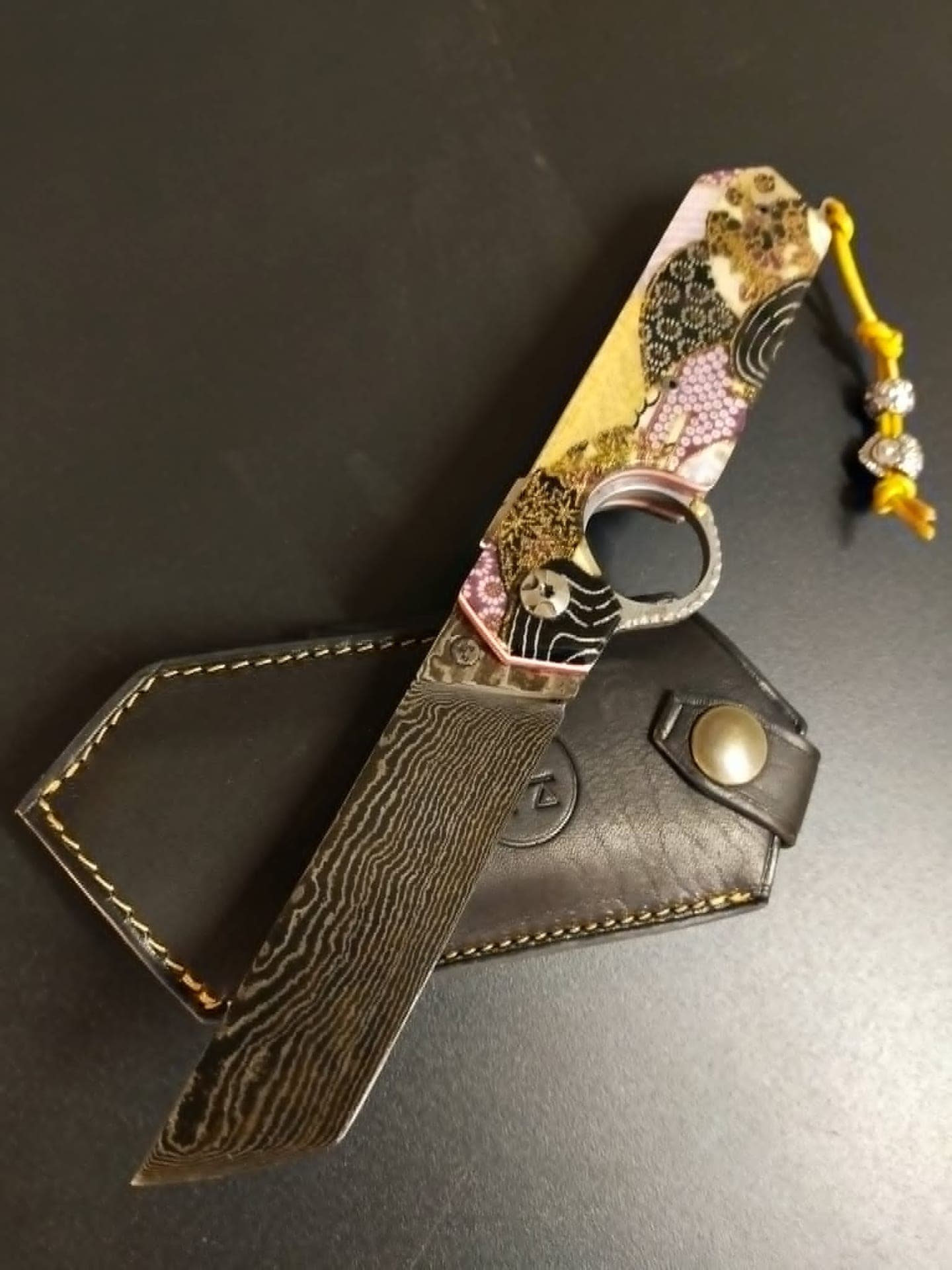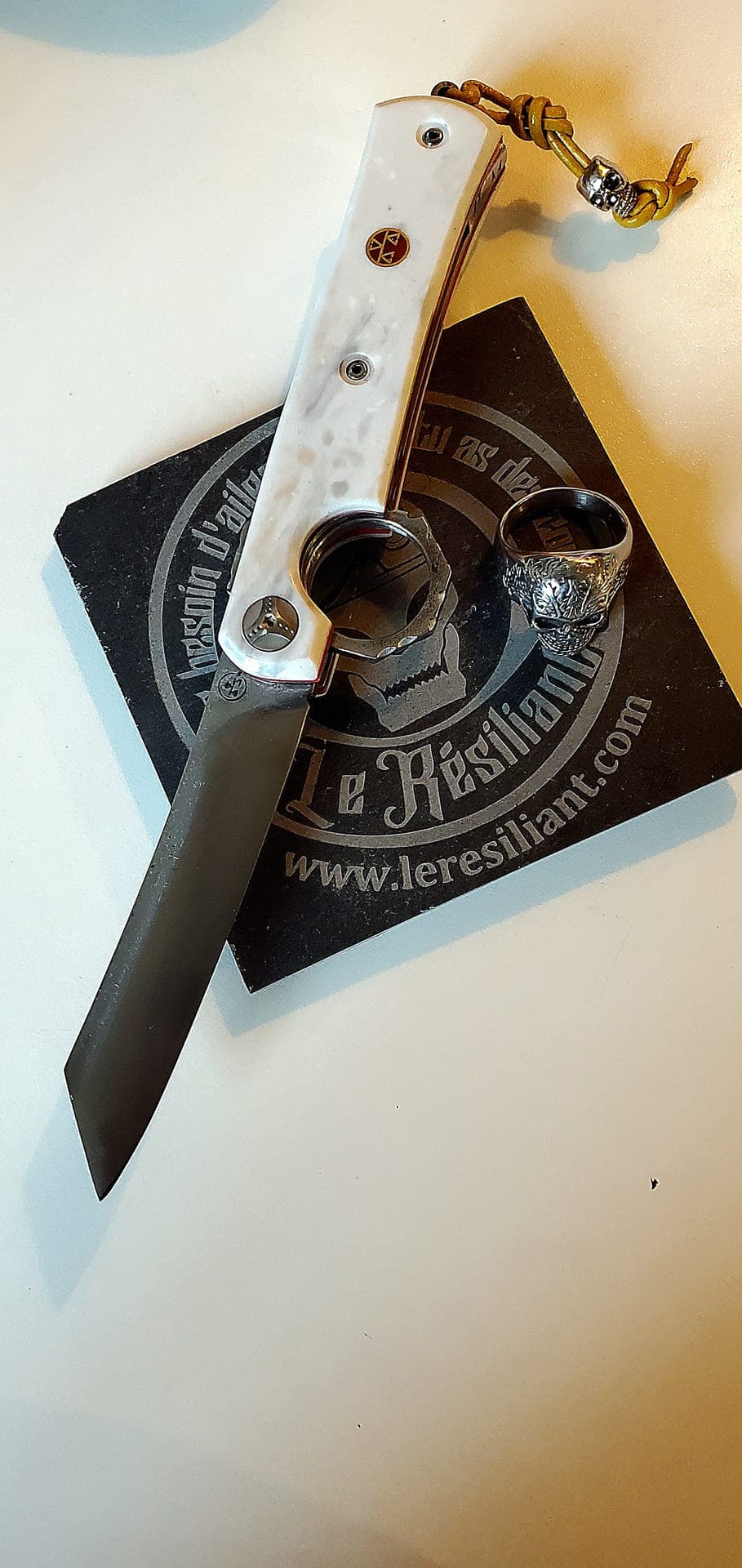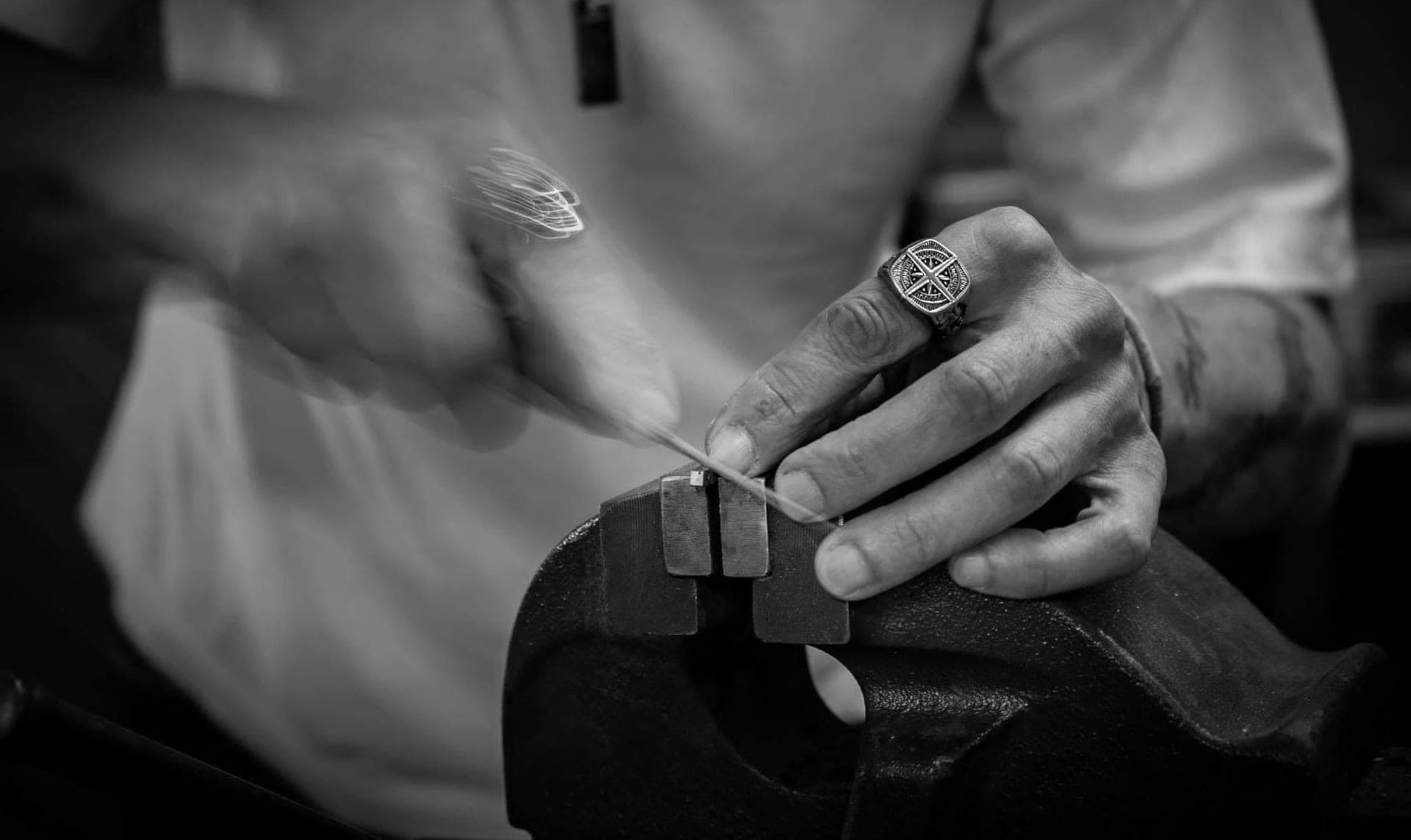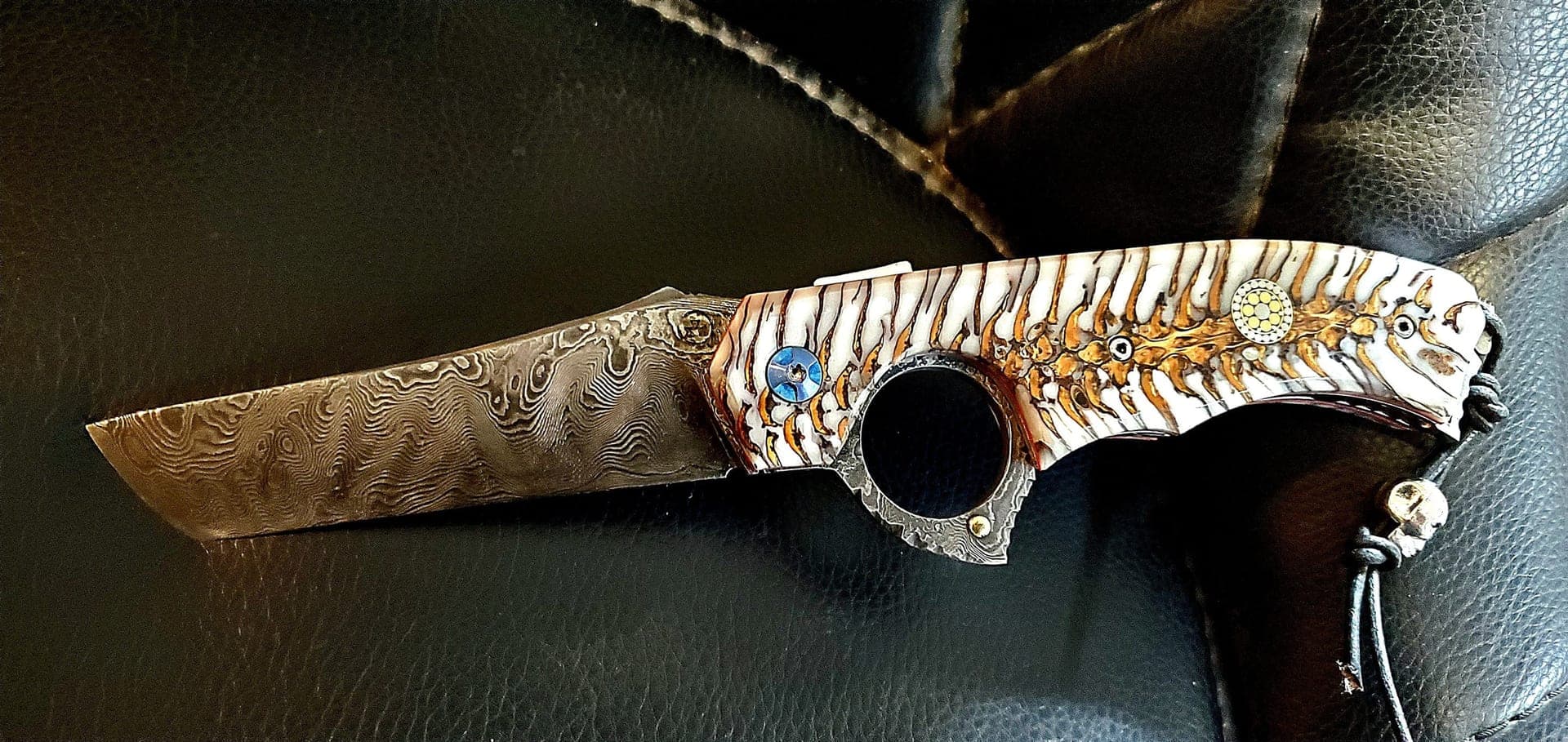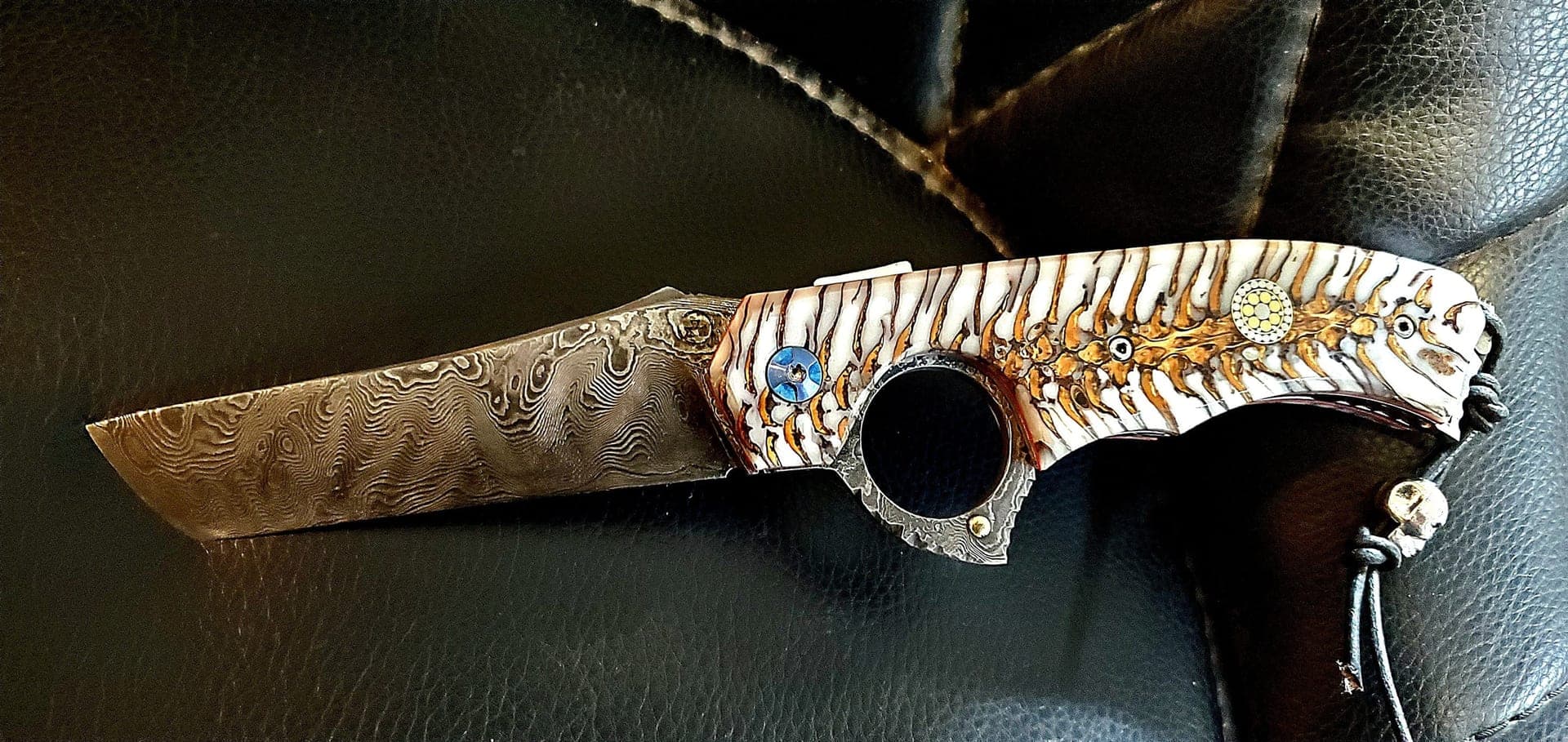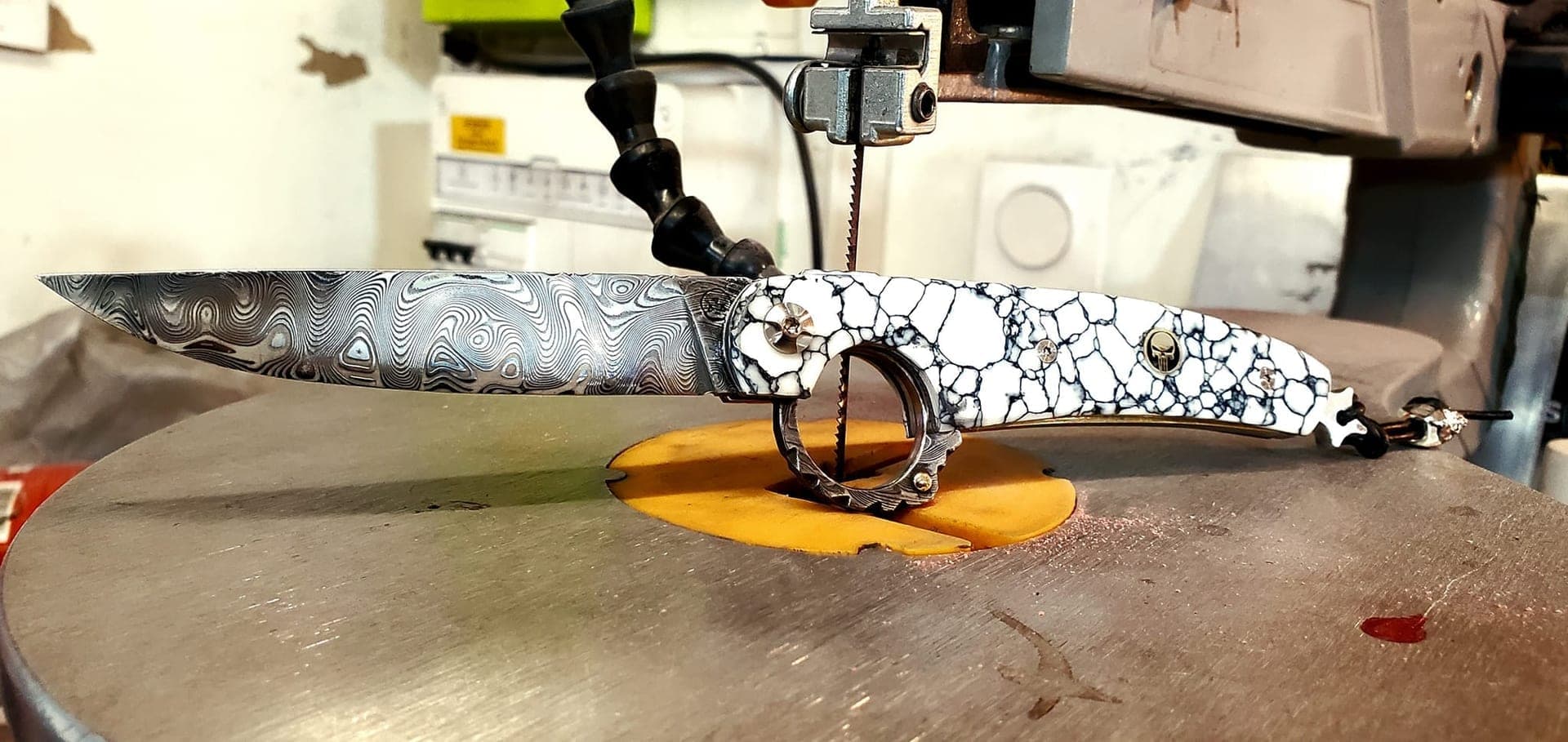
A sharpening stone sold as "grit 1000" still tells you almost nothing about what it will do to an edge. The number changes everything, but on its own it says nothing about whether the stone wants water or oil, what it is made of, or how it will age on the workbench.
This article does not cover the sharpening motion itself: angle, strokes, burr and leather stropping belong to another article in the Journal. It stops at what comes before the motion, and asks the more upstream question first: not which stone to choose, but whether a stone is even needed. Then comes the choice of equipment itself: which grit to pick, how water and oil act differently on the abrasive, what sets a natural stone apart from a synthetic one, and when diamond becomes necessary.
Eight landmarks, in the order they actually come up when caring for a blade: the steel, which is enough for everyday use and comes before the stone, the grit that decides everything once a stone is needed, how many stones are really useful, the choice between water and oil, the difference between natural and synthetic, the case of the hardest steels, the upkeep of a stone that must first stay flat, and the point at which a cutler takes over from a stone.
Before the stone, the butcher's steel
A well-kept knife does not need a stone: routine care is done with a butcher's steel, medium-cut, never diamond, because a diamond steel removes material instead of realigning the edge. The stone comes after, once the edge has genuinely suffered, not after every meal.
A butcher's steel does not do what a stone does. It realigns an edge bent by use, without removing any steel: that is honing. A stone, by contrast, removes material to reform an edge once it no longer realigns: that is sharpening. This distinction, and the motion of the steel itself, are covered in « How to sharpen a knife: a cutler's method »; they are not repeated here.
A diamond steel abrades instead of realigning: with every pass it wears away a little of the blade, exactly what everyday care is meant to avoid. The workshop therefore recommends a medium-cut steel, which realigns the edge without wearing it down, the only kind suited to a gesture repeated without a second thought.
What actually leads to the stone is an impact on the edge, a use the blade was not made for, or long neglect, never everyday use. A Résiliant leaves the workshop razor sharp, and cared for with a steel, it stays that way for a long time without a stone being necessary. The stone then becomes the exception, not the routine: what it takes once it truly is needed is the subject of the rest of this article.
Grit, the one characteristic that really decides
The grit of a sharpening stone is a number that reflects the density of its abrasive particles: the higher it is, the finer the particles and the softer the finish. Japanese tradition distinguishes three grades, ara-to for coarse shaping, naka-to for regular sharpening, shiage-to for polishing.
Grit is the number attached to every sharpening stone sold commercially. It reflects the density of the abrasive particles bonded or aggregated within the stone: the higher it is, the finer and more numerous the particles, and the smoother the surface left on the steel.
A low grit cuts fast but leaves deep scratches; a high grit removes almost no material but polishes the edge to a mirror finish. Between the two, no grit is "better" than another: each answers a different state of the blade, from a badly damaged edge to simple finishing maintenance.
Japanese sharpening tradition sorts stones into three grades that follow this same logic: ara-to for shaping very worn or chipped blades, naka-to for routine sharpening, and shiage-to for finishing, the stage that gives the edge its final polish. This three-tier hierarchy, born in Japan, has spread well beyond its stones of origin and now structures most ranges sold today, Japanese or not.
Choosing a grit therefore comes down to a single question: what state is the edge in? A blade that is merely dull only needs a medium to fine grit; a chipped or badly worn blade first needs a low grit, before moving progressively toward the fine end. That progression is the subject of the next section.
Three stones are enough: shaping, sharpening, finishing
A complete progression fits in three stones: a coarse one for shaping a damaged blade, a medium one for routine sharpening, a fine one for finishing. For simple regular maintenance, a single medium to fine stone is plenty; the sharpening motion itself belongs to a different method.
A complete sharpening progression rests on three grit stages, each with its own role: shaping a chipped or badly worn blade, sharpening an edge that needs reforming, then finishing and polishing that edge so it cuts cleanly. Jumping straight from a coarse stone to a finished edge without an intermediate step leaves marks a fine stone alone cannot undo.
In practice, few knives need all three stages at once. A coarse stone is only needed on a damaged, chipped or long-neglected blade: that is the exception, not the routine. For the vast majority of sharpening sessions, a single medium-grit stone, or a combination medium/fine stone, covers the needs of a pocket or kitchen knife. Le Résiliant 2.0, in carbon steel with a finer grind than the Tanto, illustrates the point well: its blade, known for being easy to sharpen, comes back sharp with that single medium stage.
The motion that follows, once the stone is chosen, angle held, regular strokes, forming then removing the burr, is not the subject of this article: it is covered step by step in « How to sharpen a knife: a cutler's method ».
A combination stone, with two grits on its two faces, remains the most economical option for anyone owning a single accessory: it covers light shaping on one side and finishing on the other, without multiplying purchases.
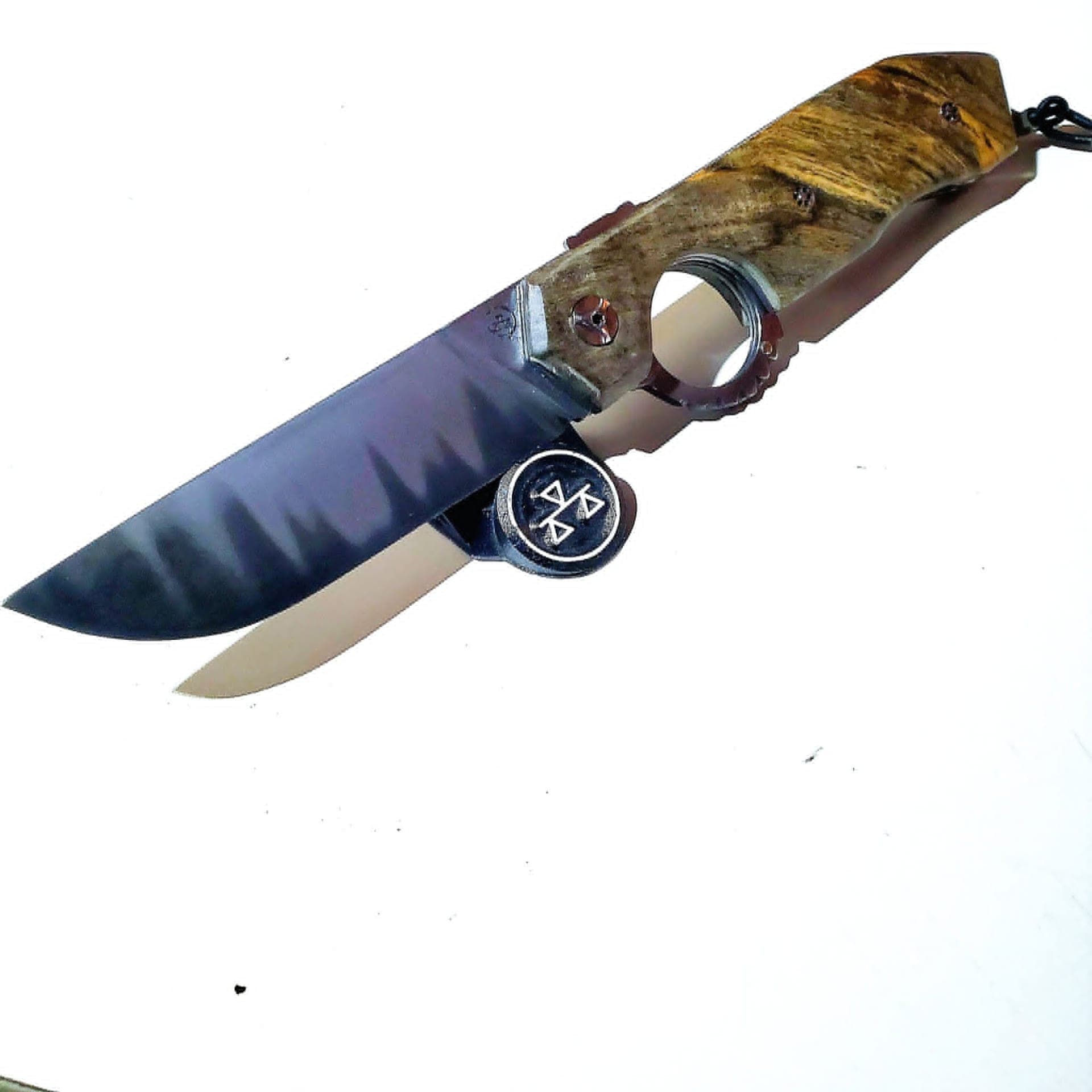
Water or oil: two ways to carry the abrasive
At equal grit, a stone used with water bites harder than with oil, which slows abrasion but protects the surface better against clogging. Mineral or vegetable oils that are too viscous or drying should be avoided: they clog instead of carrying worn particles away. Both liquids have been in use since Antiquity.
The liquid applied to a stone is not a matter of comfort: it has a precise mechanical role, keeping afloat the slurry of abrasive particles and metal torn from the blade. Without that film of liquid, the slurry clogs the stone's pores and the abrasive stops biting efficiently.
At equal grit, water is the more aggressive liquid: low in viscosity, it flows fast, clears the slurry continuously and keeps the abrasive in direct contact with the steel. That is why a water stone seems to "cut" faster than an oil stone of the same grit: the abrasive itself has not changed, only how exposed it stays.
Oil, being more viscous, slows that movement: it traps part of the slurry at the surface instead of clearing it, which wears the stone more slowly but makes each stroke a little less biting. Not every oil suits the task, though: mineral or vegetable oils that are too viscous or drying, which harden as they dry, end up gumming the stone's surface instead of cleaning it.
Neither liquid is a recent invention: Pliny the Elder was already describing the use of water and oil for sharpening in Roman Antiquity. The choice between the two is therefore not a matter of fashion, but a trade-off between speed of abrasion and ease of upkeep, to be made according to the stone chosen rather than personal taste.
Natural or synthetic: what corundum changed
Natural stones, such as Arkansas novaculite, owe their abrasive power to microscopic quartz crystals, 3 to 5 microns across, which confines them to finishing stages. Synthetic stones, corundum ones especially, offer a more regular, harder-biting grit, better suited to hard, modern steels.
Natural stones are cut from rock whose abrasive is an integral part of it: it is the mineral structure itself that wears the steel down. The best documented is Arkansas novaculite, a siliceous rock whose quartz crystals measure 3 to 5 microns, roughly equivalent to an American grit of 600 to 1200. That natural fineness confines it to finishing stages, not shaping.
A natural stone also carries an irregularity synthetic stones do not know: the density and size of the crystals vary slightly from block to block, even within the same quarry, which gives every stone its own behaviour, slower to master but often prized for the quality of the polish it leaves.
The arrival of synthetic abrasives, corundum in particular, changed the picture: their grit is calibrated industrially, so it stays constant from stone to stone, and their biting power is higher at equal grit. That consistency and aggressiveness make them the tool of choice for modern steels, harder and more heavily loaded with carbides than traditional ones.
The choice between the two is therefore not tradition versus modernity, but a matter of use: a fine natural stone works well on a softer steel already close to sharp, a synthetic stone gets there faster on a hard steel that resists abrasion.
Diamond and ceramic: when a stone is not enough
A steel rich in carbides, such as D2 (also called Z160), used on Le Résiliant Tanto and Le Mancharicou, wears out an ordinary stone far faster than a simpler steel. A diamond stone, whose abrasive barely dulls, or a very hard ceramic stone, then become useful additions rather than a luxury.
Not every steel abrades the same way. Its hardness and its carbide content, those very hard particles scattered through the steel's matrix, resist the abrasive to very different degrees from one grade to the next: the more numerous and harder the carbides, the harder and more aggressive the abrasive must be to cut into them.
That is the case with D2, also designated Z160 in Europe, two names for the same steel: an ordinary stone, corundum or novaculite, takes longer to get through it than through a simpler steel, and wears out faster itself in the process. Two models in the collection are directly concerned: Le Résiliant Tanto and Le Mancharicou, both built in D2 steel.
Faced with this kind of steel, two abrasives take over from ordinary stones. Diamond, the hardest material known, barely dulls on contact with carbides: a diamond stone or plate keeps its cutting power far longer than an ordinary stone on these steels. Very hard ceramic plays a similar role, mostly for finishing, polishing an edge without heating it.
Le Shotokan, offered depending on the version in carbon steel, semi-stainless Z160 or damascus, illustrates this diversity well: each version calls for an abrasive suited to its own hardness, without any version being harder to maintain day to day. This is never a matter of comparing steel families against each other: every grade, whatever its family, calls for an abrasive proportioned to its hardness and its carbide load.
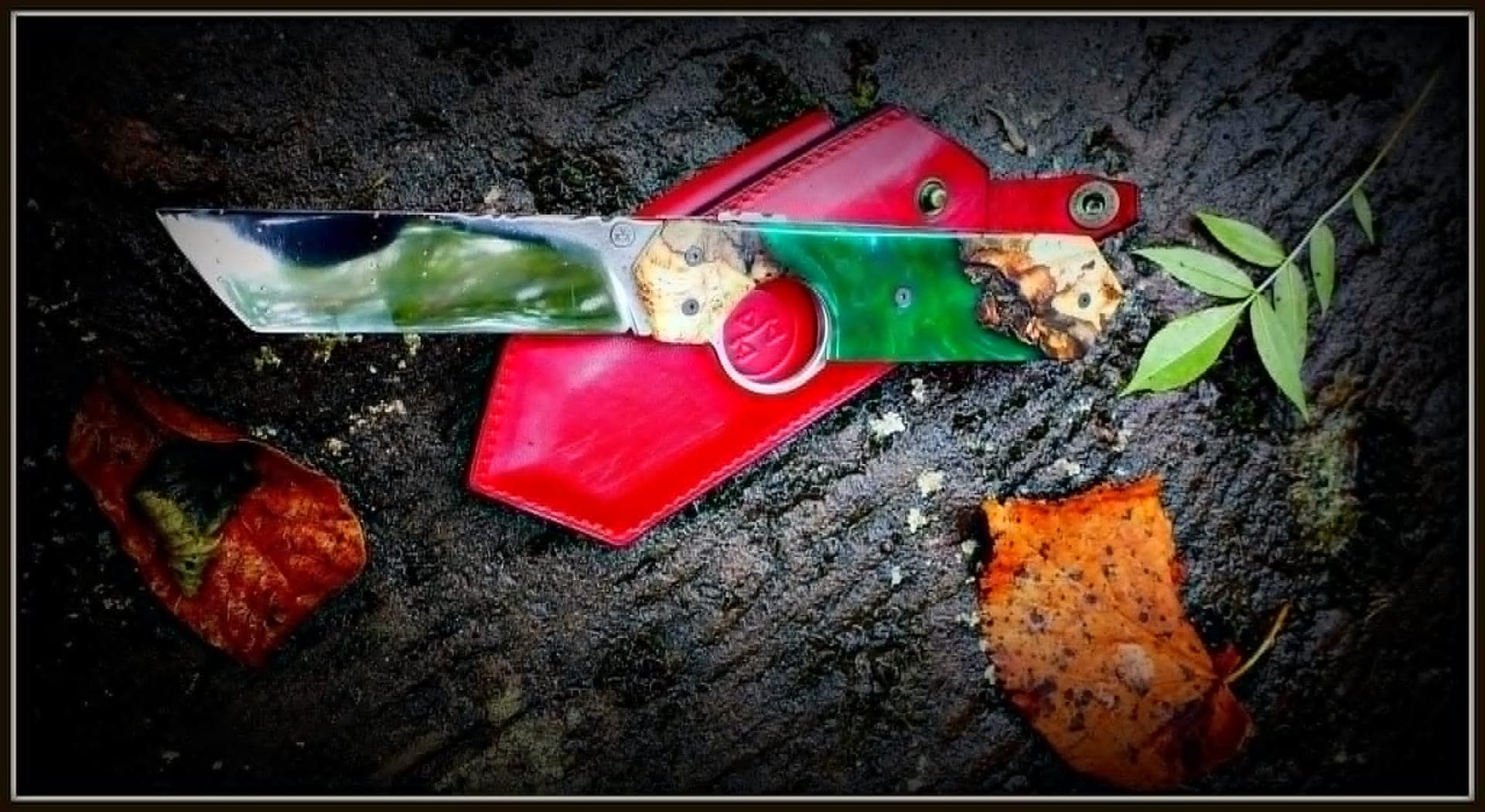
A stone needs care too, starting with staying flat
A sharpening stone wears unevenly, hollowing at the centre, which throws off the angle of every later stroke unless it is flattened regularly on a flat abrasive surface. Soaking or simple wetting depending on the stone, rinsing between uses, drying fully before storage: caring for the stone is part of caring for the blade.
A sharpening stone does not wear evenly: the centre, used the most, hollows out faster than the edges. That dip, invisible at first, then throws off the angle of every stroke without you noticing, making results more and more uneven from one session to the next. A stone that is never flattened ends up imposing its own curve on the blade instead of the other way round.
Flattening means rubbing the stone flat against a dedicated abrasive surface, often a coarser stone or a purpose-made plate, until a perfectly flat surface returns. How often depends on use: the more a stone works, the more it hollows, the more it needs flattening.
Next comes routine care, which differs by stone type. A water stone soaks before use, until air bubbles stop rising to the surface, then rinses during sharpening. An oil stone is never soaked: a few drops before each session are enough, and a careful wipe afterward keeps it from clogging. Either way, the stone must dry fully before being put away, out of reach of lingering damp.
When a blade needs to go back to a cutler
An edge that is truly gone is better entrusted to a cutler than to a first attempt with a stone: for a professional, restoring it takes only minutes. Any knife that has left the workshop can be sent back for its edge to be restored free of charge; only return shipping is down to its owner.
Sharpening on a stone is a skill of its own, learned with practice: holding a constant angle, judging each stroke, recognising the burr. A repeated mistake can bend the edge to the point where the whole grind and polish need reforming. On a blade worth keeping, the attempt then costs more than the service: neither drama nor fatalism, just a motion that takes practice before being tried alone.
That is why the workshop recommends, once an edge is truly gone, entrusting it to a cutler rather than risking it alone. Any knife that has left the workshop can be sent back for its edge to be restored, free of charge: only return shipping is down to its owner. A message to the workshop before any shipment. The site's contact page is the starting point for arranging the return. The accessories page notes, for that matter, that sharpening stones will one day join the range; they are not there yet today.
- Do you need a sharpening stone for everyday knife care?
- No. Routine care is done with a butcher's steel, medium-cut, never diamond: it realigns the edge without removing material. A stone only comes into play once the edge has genuinely suffered, after an impact, misuse or long neglect, not after every meal.
- What grit should you choose for a sharpening stone?
- It depends on the edge's condition. A low grit shapes a chipped or badly worn blade, a medium grit covers routine sharpening, a fine grit polishes the finish. For the routine upkeep of a pocket knife, a medium grit is plenty.
- Should a water stone be soaked before use?
- Yes, most water stones need soaking until air bubbles stop rising to the surface, usually several minutes. An under-soaked stone dries out quickly during sharpening and loses its bite. Oil stones, by contrast, are never soaked: a few drops are enough.
- Can cooking oil be used on an oil stone?
- No, ordinary food oils are too drying or too thick: they end up hardening and clogging the stone's surface instead of carrying the abrasive along. Fine mineral oils, made for sharpening, stay liquid far longer and avoid that clogging.
- How can you tell a stone is no longer flat?
- The simplest sign: a metal ruler or the spine of a blade laid flat on the stone reveals a gap at its centre. In use, sharpening becomes uneven from one end of the edge to the other, proof that the stone has hollowed and needs flattening.
- What should you do when a knife truly will not cut anymore?
- Have it restored by a cutler rather than attempting a stone for the first time. At Le Résiliant, restoring the edge of a knife sent back to the workshop is free of charge; only return shipping is down to its owner. Contact through the site's dedicated page.
Sources
- Pierre à aiguiser — Wikipédia — Établit qu'à grain égal une pierre utilisée à l'eau est plus agressive qu'à l'huile, que les pierres de synthèse au corindon sont plus mordantes et destinées aux aciers durs, et que les huiles minérales ou végétales visqueuses ou siccatives sont à éviter.
- Sharpening stone — Wikipedia (EN) — Établit la définition du grain (densité des particules abrasives), les trois grades japonais ara-to, naka-to et shiage-to, les cristaux de 3 à 5 microns de la novaculite d'Arkansas, et l'usage de l'eau et de l'huile déjà décrit par Pline dans l'Antiquité.
- Science of Sharp — Micrographies au microscope électronique montrant l'effet réel du grain sur le fil d'une lame et la nécessité d'une progression de grains.
- Knife Steel Nerds — Analyses techniques du lien entre la composition d'un acier, ses carbures, et l'abrasif nécessaire pour le travailler.