Le RésiliantKnifemaker · Thiers
Workshop stories

The Résiliant Journal

The know-how of a Thiers knifemaker, told from the workbench: how the models are born, the steel, the gesture, caring for your blades, and the behind-the-scenes of an adventure born of resilience.
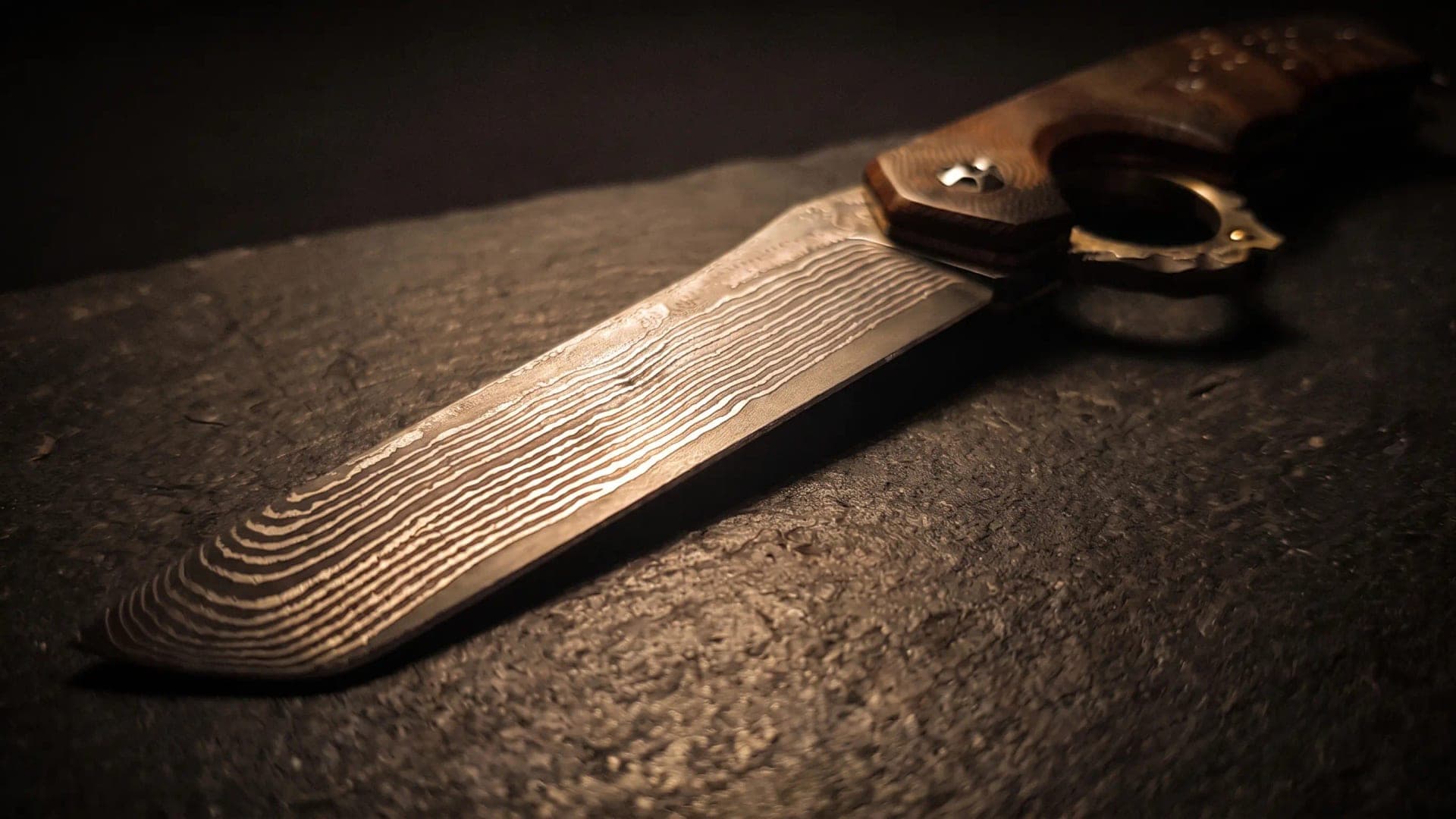
Generated illustration: macro close-up on a damascus steel blade with wavy layered bands, warm light on a dark background.Craft · The price

September 14, 2026

How much does a damascus steel knife cost?

A damascus steel knife is not priced like a classic-bladed one: damascus does not add to the price, it replaces it. Here is the logic behind Le Résiliant's grid, what that price includes, and what it never includes.

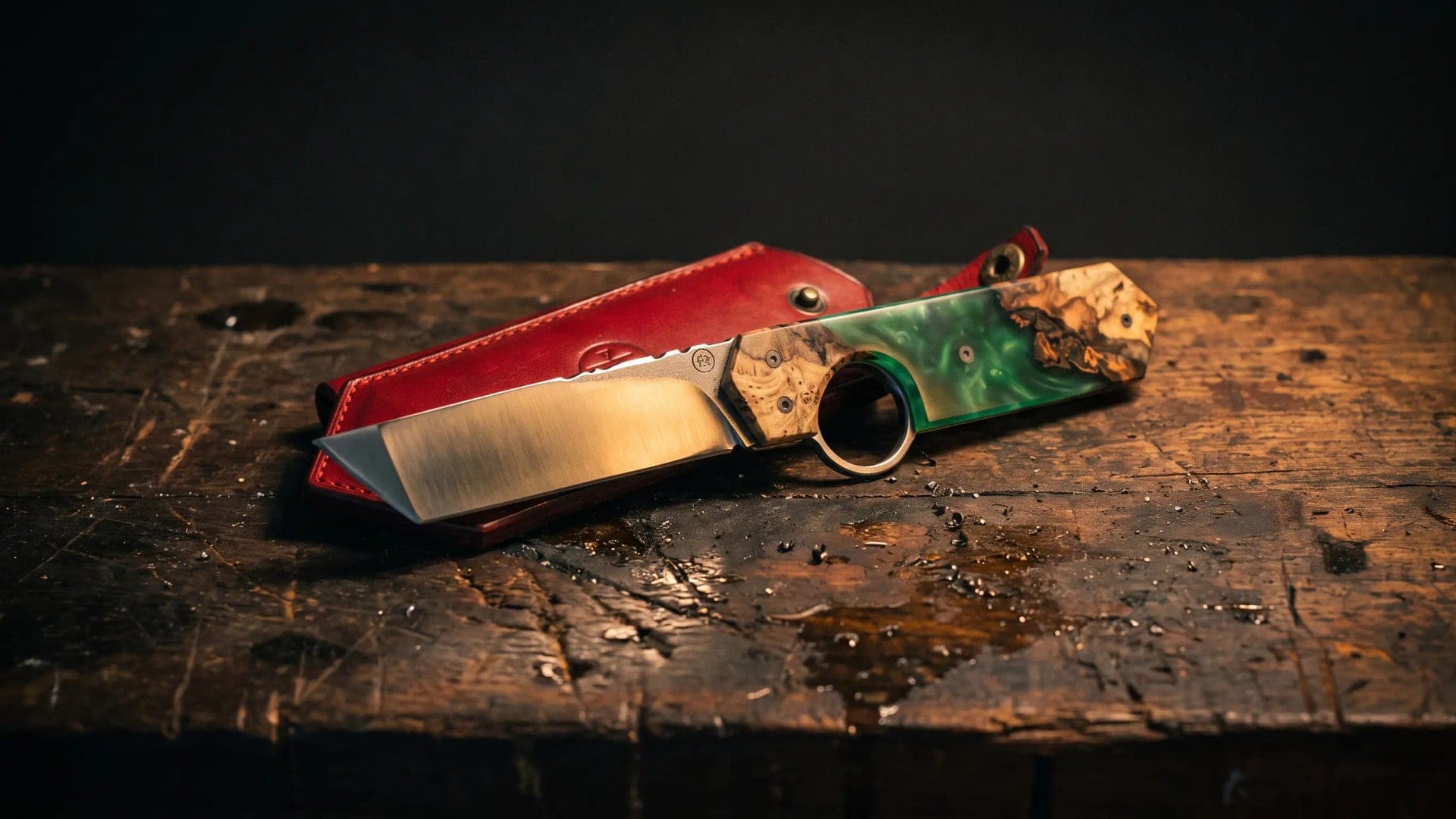
AI-generated illustration based on a real photograph: the Résiliant Tanto open, its tanto point lit in a dark, brass-toned workshop atmosphere.Shape and origin

September 9, 2026

The Tanto Knife: Where This Blade Comes From, What It's For

The tanto point comes from a short Japanese blade, reinterpreted on modern folding knives in the 1980s. What it really changes at the cut, what it takes at the tip, and the Résiliant Tanto, the workshop's original model, made in Thiers.

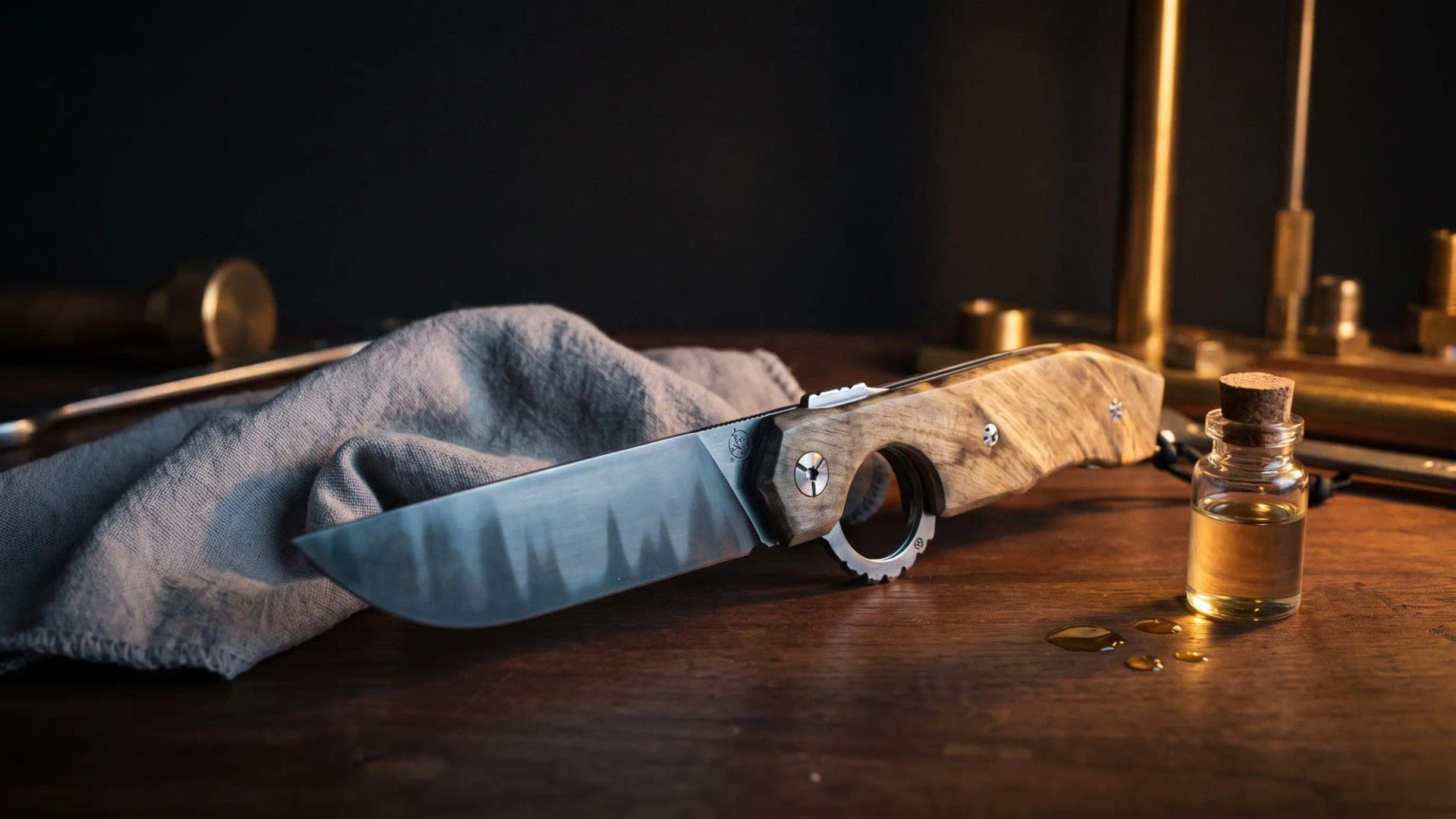
AI-generated illustration: an open Résiliant 2.0 with a patinated carbon steel blade, resting on a dark workbench next to a cloth and a small oil bottle, under warm directional light.Care · The blade

September 7, 2026

Rust or patina: caring for a carbon steel blade

An orange spot is not the same thing as a grey-blue haze. Rust eats away at a carbon steel blade, patina protects it. Here is how to tell them apart, treat surface rust without ruining the edge, and the habits that prevent most of it.

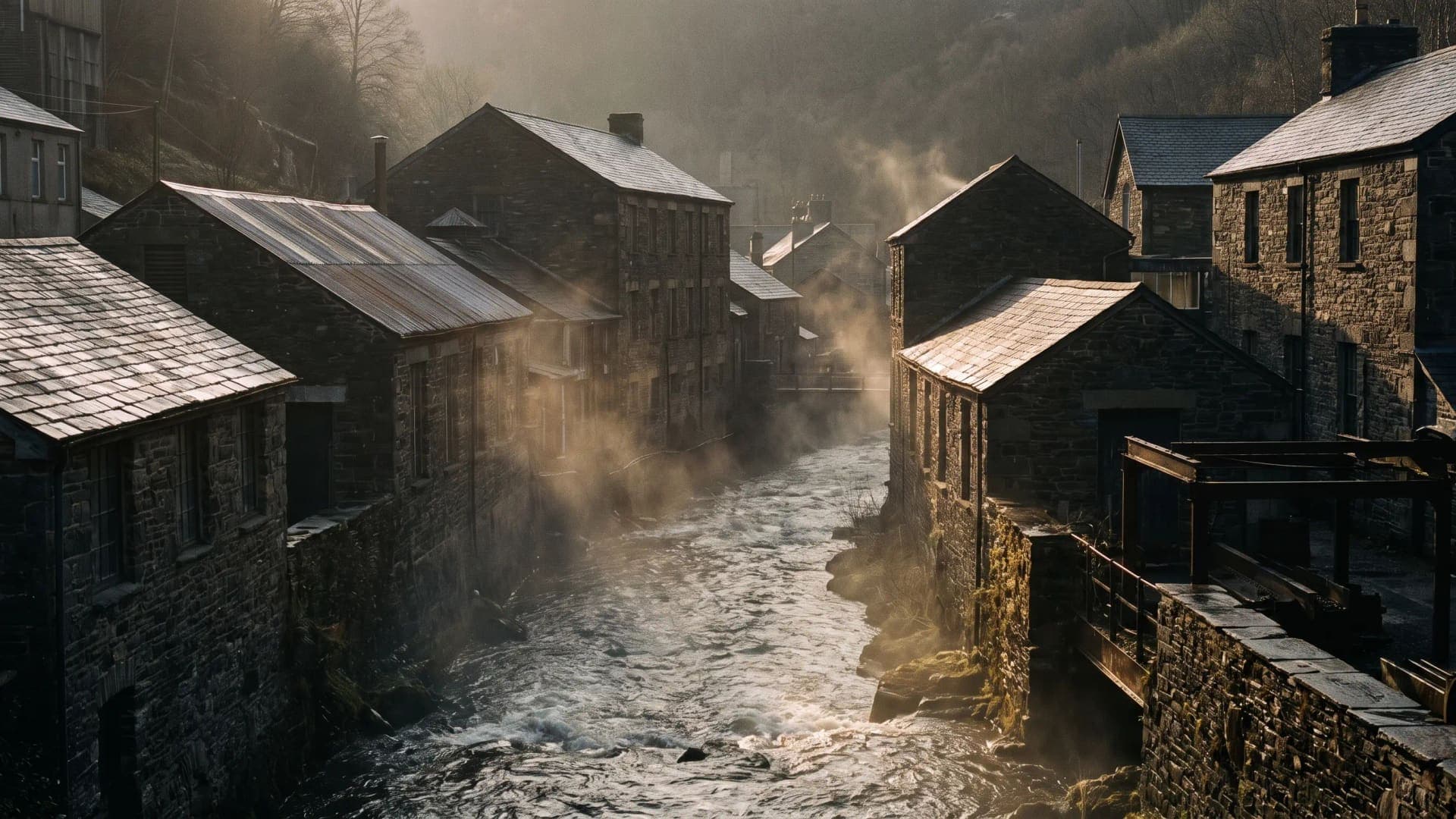
A narrow valley lined with old stone industrial buildings beside a river in warm morning light: AI-generated illustration.Thiers, knife capital

September 2, 2026

Visiting Thiers: the cutlery museum and the factory valley

The cutlery museum on two sites, the Vallée des Rouets by the water, the factory valley turned into a place of art: what Thiers actually shows, in what order to discover it, and where the Résiliant workshop is open by appointment.

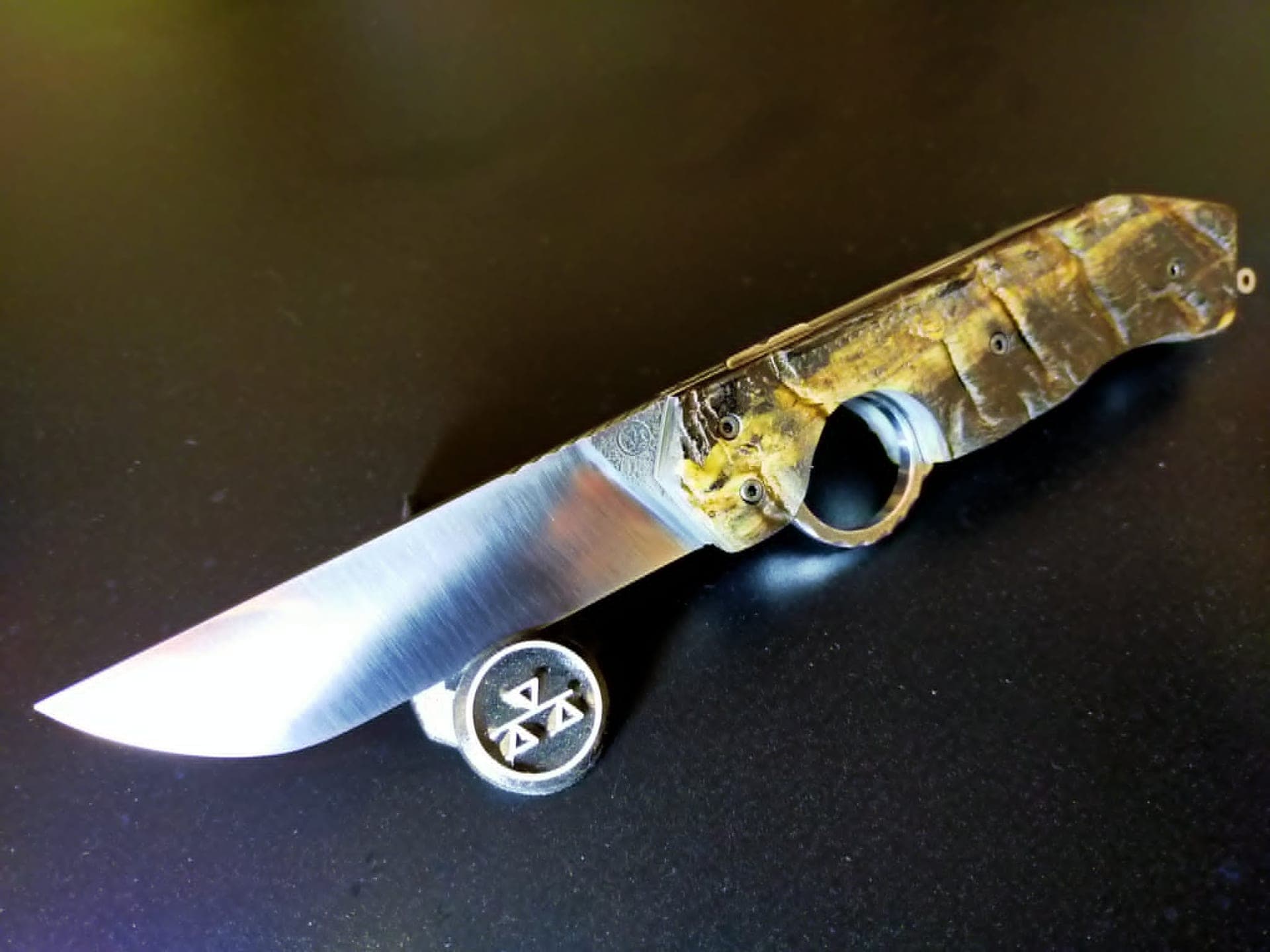
An open Résiliant 2.0 with a plain satin-finished 90MCV8 carbon steel blade, an amber brown-veined handle and its reverse-opening ring, on a dark background.Craft · The steels

August 31, 2026

Carbon or stainless steel: which steel for a knife blade?

Carbon, stainless, semi-stainless: three steel families, one same trade-off between edge, upkeep and corrosion resistance. This article explains what each one changes in daily use, and introduces the five grades, from 90MCV8 to 14C28N, that the Résiliant workshop works in Thiers.

AI-generated illustration. Macro close-up of an engraved damascus steel blade resting on a knife maker's workbench, warm raking light on a charcoal background.Bespoke

August 26, 2026

Personalising a knife: what a cutler's bespoke work really allows

Model, steel, handle material, engraving: what a cutler in Thiers can really personalise on a knife, and what is never open to negotiation, the template. Four choices for the client, a frame set by the workshop, and nothing more to sell than that.

AI-generated illustration: the five great families of French pocket knives, Laguiole, Opinel, Douk-Douk, Nontron and le Thiers, blades open, fanned out on black workshop leather in warm light. No brand markings are depicted.The families

August 24, 2026

French pocket knives: a guide to the great families

Nontron, Laguiole, Opinel, Douk-Douk, Le Thiers: five regional families, the mechanism that truly sets them apart, and what French law actually allows. A way to place, without ranking, where a reverse-opening knife made in Thiers fits in.

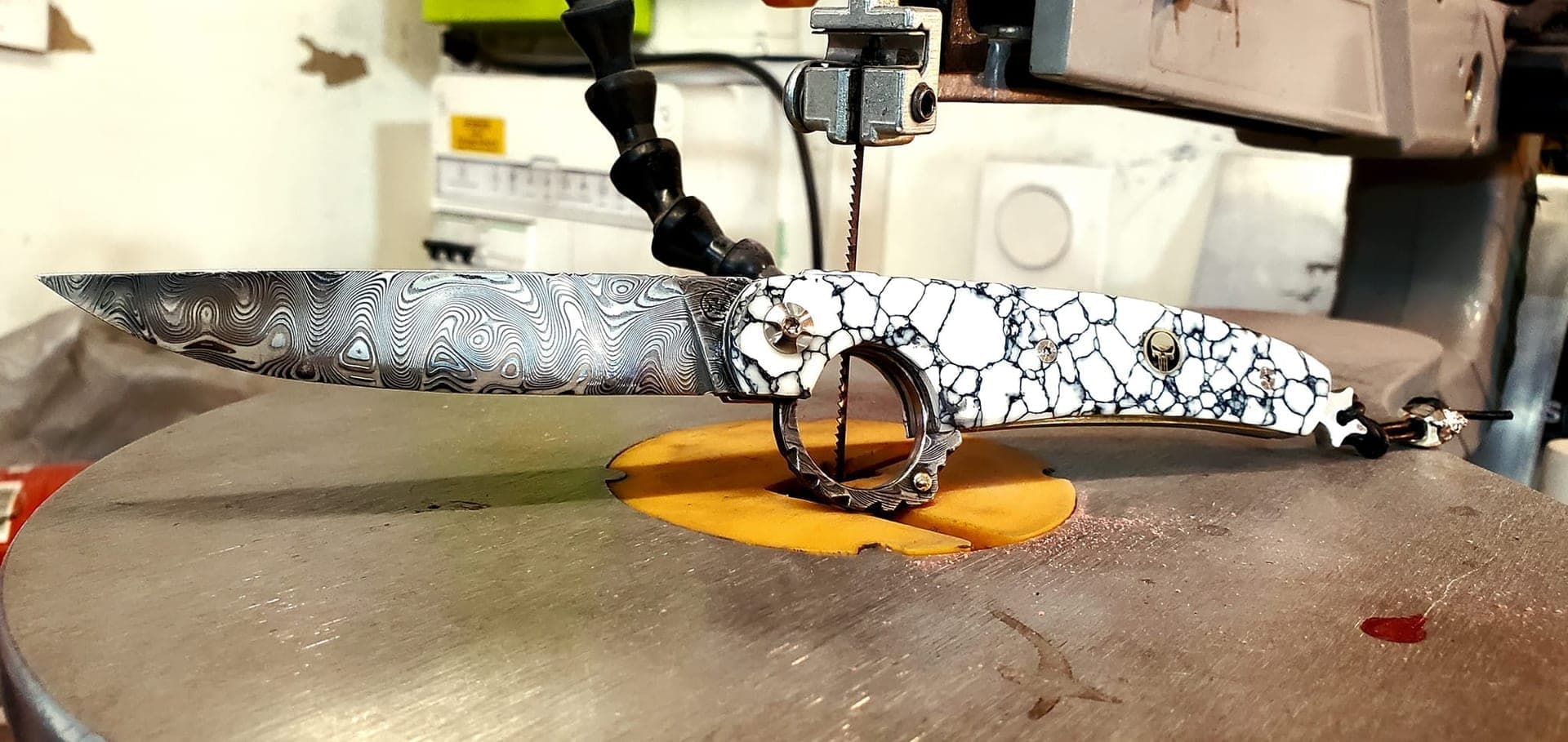
A finished Le Fhiers, damascus blade and pale veined handle with a skull-engraved medallion, resting on the band saw table in the Thiers workshop.Care · The kit

August 19, 2026

Choosing a sharpening stone: grit, water or oil

Before the stone, there is the steel: a Résiliant's routine care does not need one. Once the edge has truly suffered, grit, water or oil, natural or synthetic decide the result, and a cutler restores what a mishandled stone can damage.

Close-up of an L'Archétype damascus steel blade, distinct patterns, dark backgroundWorkshop

August 17, 2026

From Steel Plate to Finished Blade: How a Résiliant Knife Is Made

The Résiliant workshop doesn't forge its blades: it cuts, quenches and assembles them in Thiers from steel or damascus plates already shaped by specialists. Here are the real steps, without the blacksmith myth.

A Résiliant 2.0 with a damascus blade and a pale handle engraved with its owner's name, resting on its hand-stitched tan leather sheath.Traditions

August 12, 2026

Giving a knife as a gift: the tradition of the coin

"A knife isn't given, it's sold." The saying is passed down in every French family, and settled with a one-cent coin. Where the belief comes from, what the gesture really means, and why it has survived so well.

Two Archétype knives side by side, one with a dark handle inlaid with a golden rosette, the other in light grained wood extended by a burl, resting on a French flag.Materials

August 10, 2026

Knife handles: which woods, which materials?

You choose a knife for its blade, you keep it for its handle. Ebony, amboyna burl, aluminium honeycomb, reconstituted turquoise: what is really at stake in the part your hand never leaves, told from the workshop.

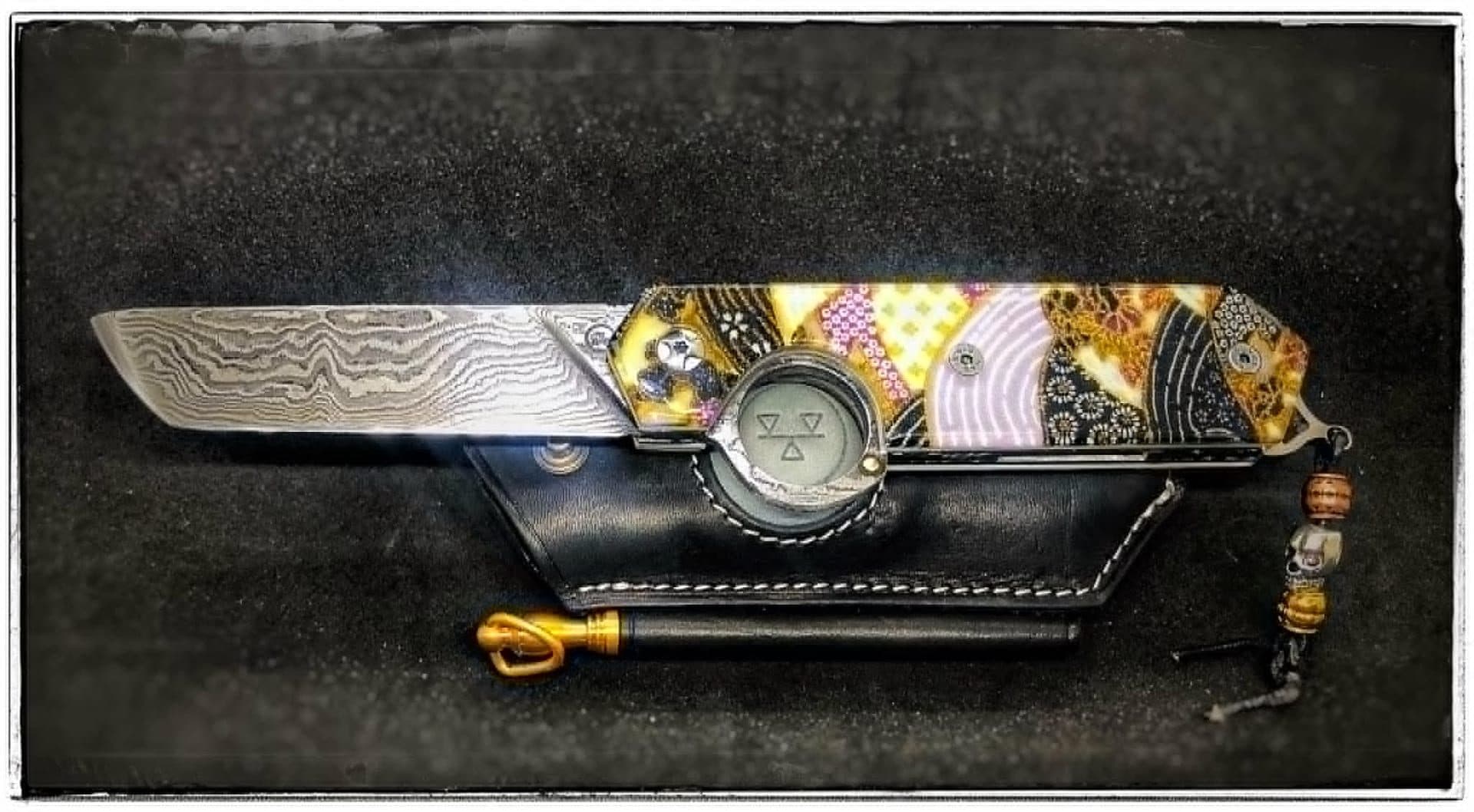
Le Résiliant Tanto open, damascus blade and reverse-opening ring clearly visible, resting on its black leather sheath.The invention

August 5, 2026

What is a reverse-opening knife?

Folding knives have opened the same way for centuries. One does the opposite: the blade comes out of the top of the handle, cutting edge first, driven by a ring. Anatomy of a mechanism born in Thiers.

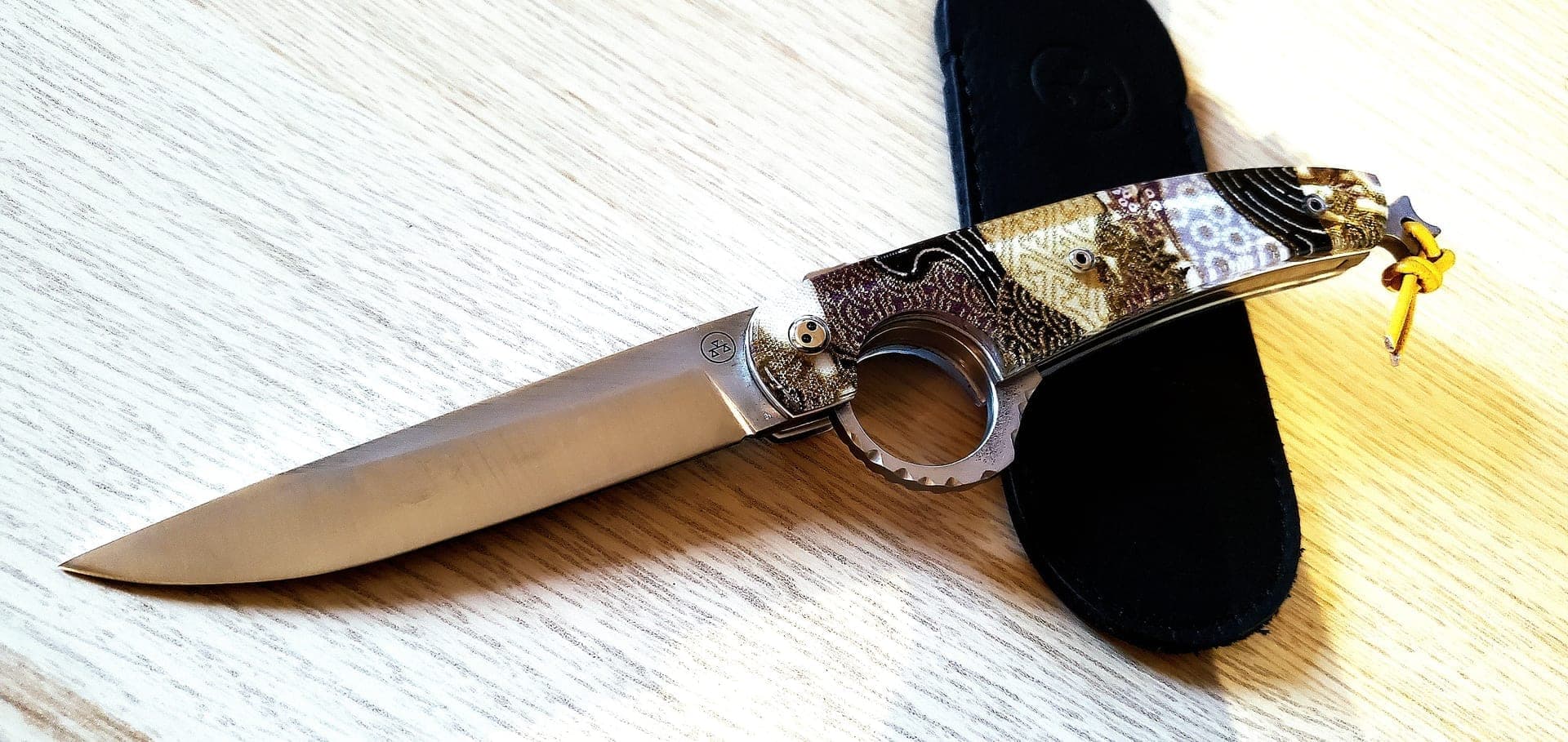
Le Fhiers, a reverse-opening knife forged in Thiers, with a stabilised Japanese fabric handle, resting on its black leather sheath.Thiers, knife capital

August 2, 2026

Thiers or Laguiole: what is the difference between France's two great cutlery names?

One is a village of the Aubrac that gave its name to a knife, the other a town in Auvergne that forges most French blades. Shapes, labels, geographical indication: what really sets them apart.

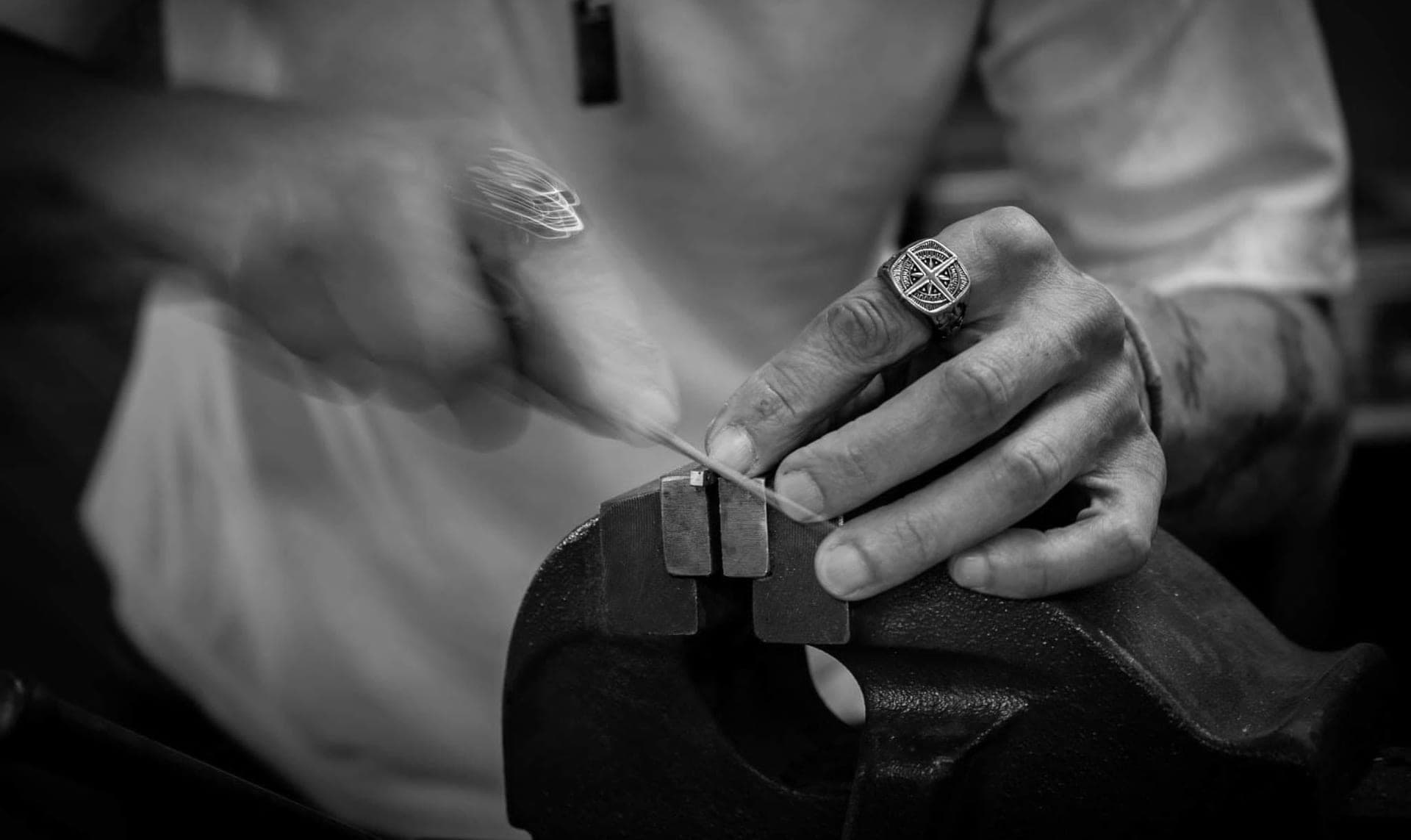
Precision work at the vise in Le Résiliant's workshop: the cutler's hands adjusting a part, black and white photograph.Care · The craft

July 29, 2026

How to sharpen a knife: a cutler's method

A knife that no longer cuts is not dead: its edge has rolled or worn. Constant angle, steady stone, burr, leather strop: the workshop method to bring back a clean edge without damaging the blade.

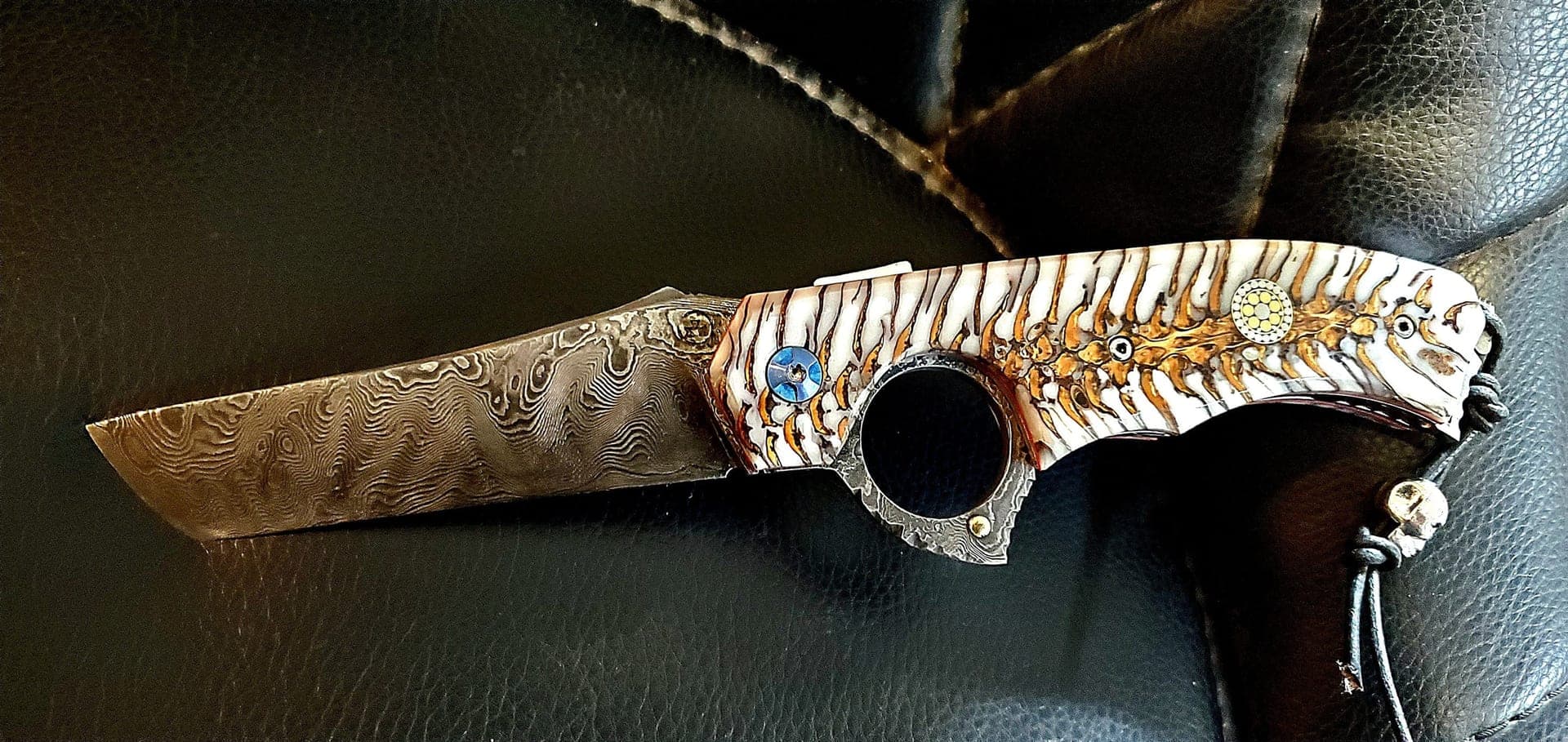
Close-up of a Résiliant damascus blade: raindrop pattern and mammoth tooth handle.Craft · The steel

July 27, 2026

Damascus steel: how the patterns of a blade are born

The waves, raindrops and ladders running across a damascus blade are not engraved: they are forged into the metal itself. A journey through steel, from the lost wootz to a workbench in Thiers.

A cutlery workshop in Thiers: workbench, files and a blade being assembled under warm light.Thiers, knife capital

July 23, 2026

The knife of Thiers: history of France's cutlery capital

Since the Middle Ages, a small town in Auvergne has forged the great majority of France's knives. The story of the Durolle river, of grinders lying flat on their bellies, and of a craft still alive today.