The Collection
From the everyday companion knife to the one-of-a-kind damascus piece for collectors. Every Résiliant is shaped and assembled by hand in Thiers, France.
Reverse-opening knives
8 models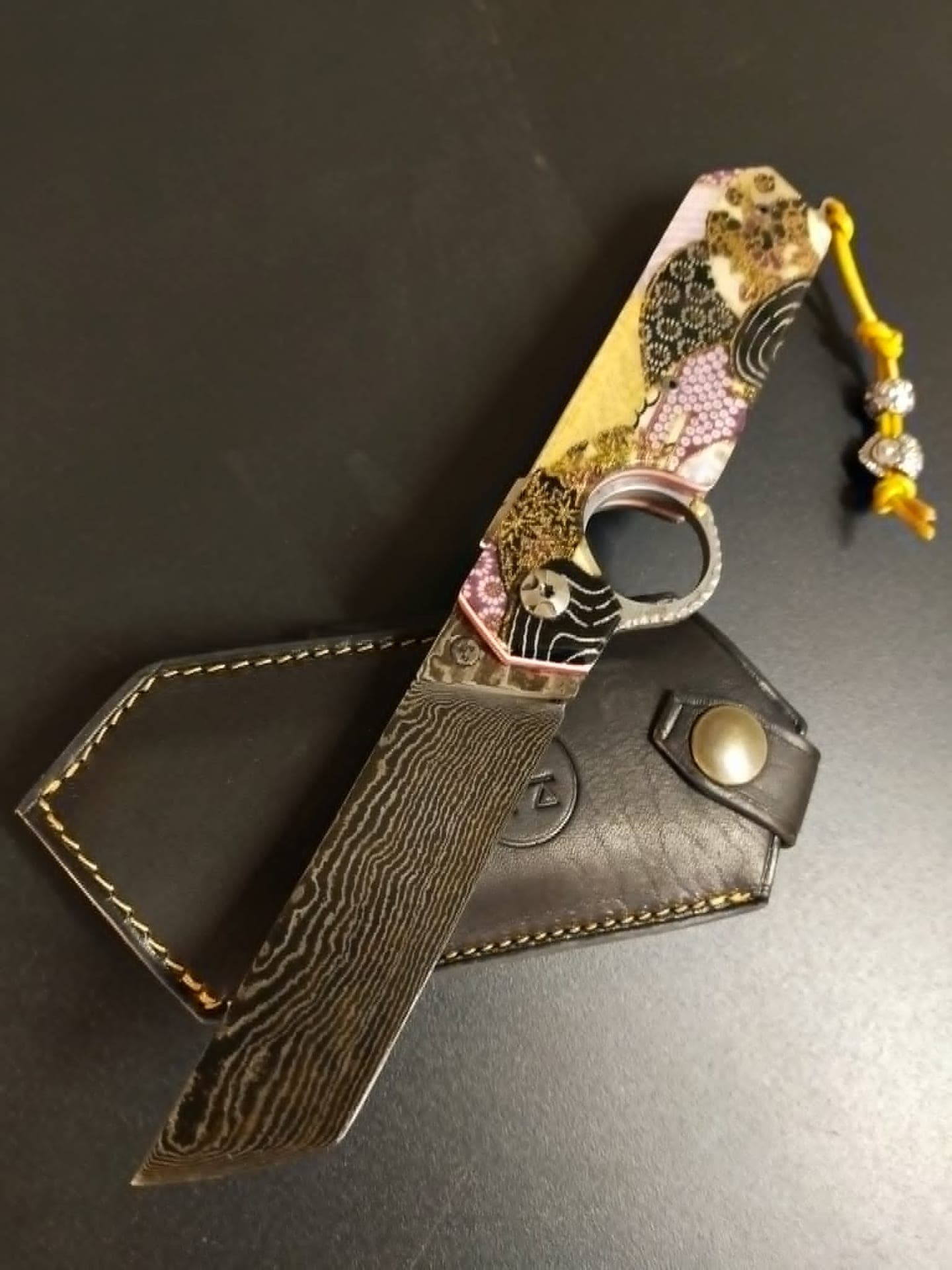
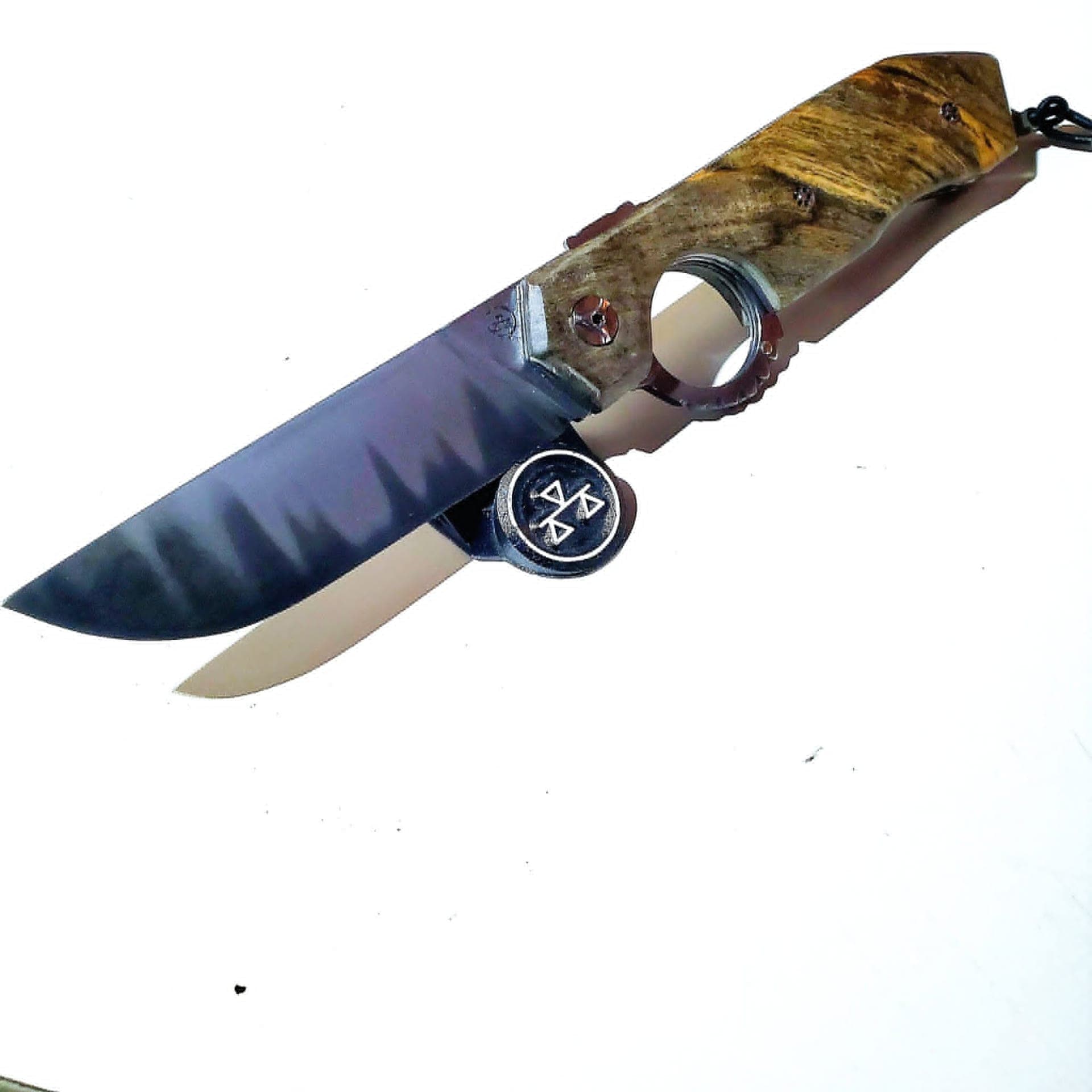
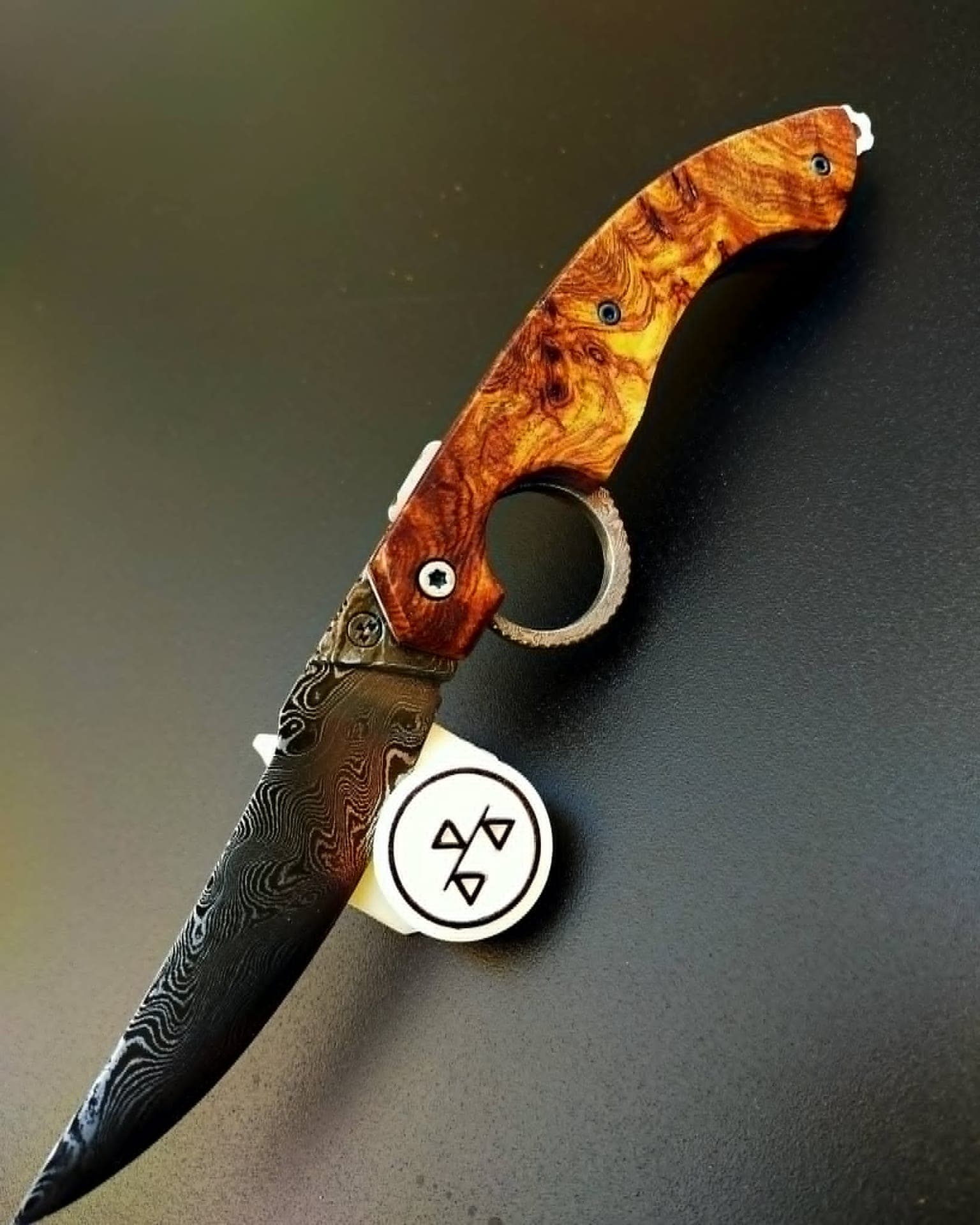
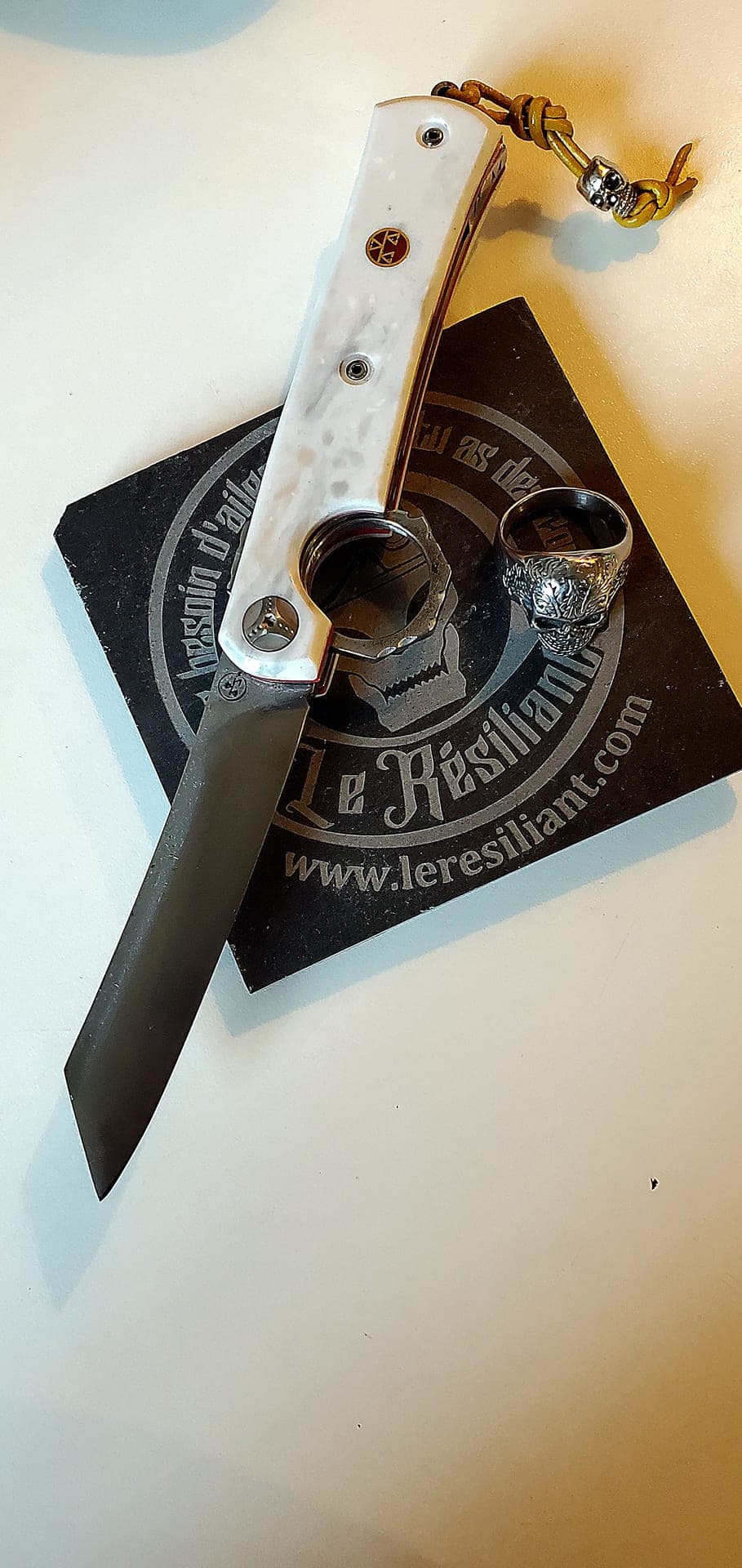
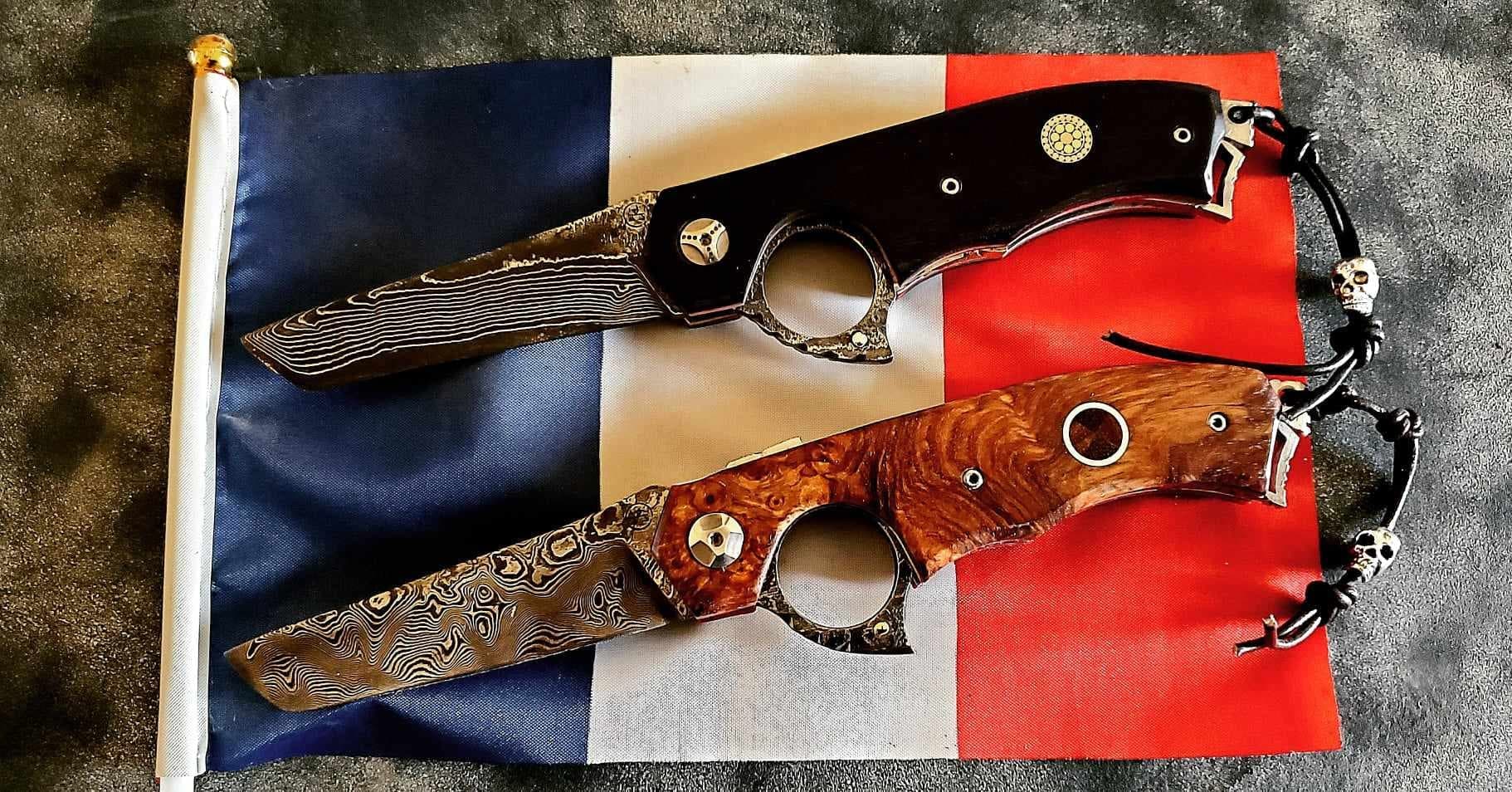
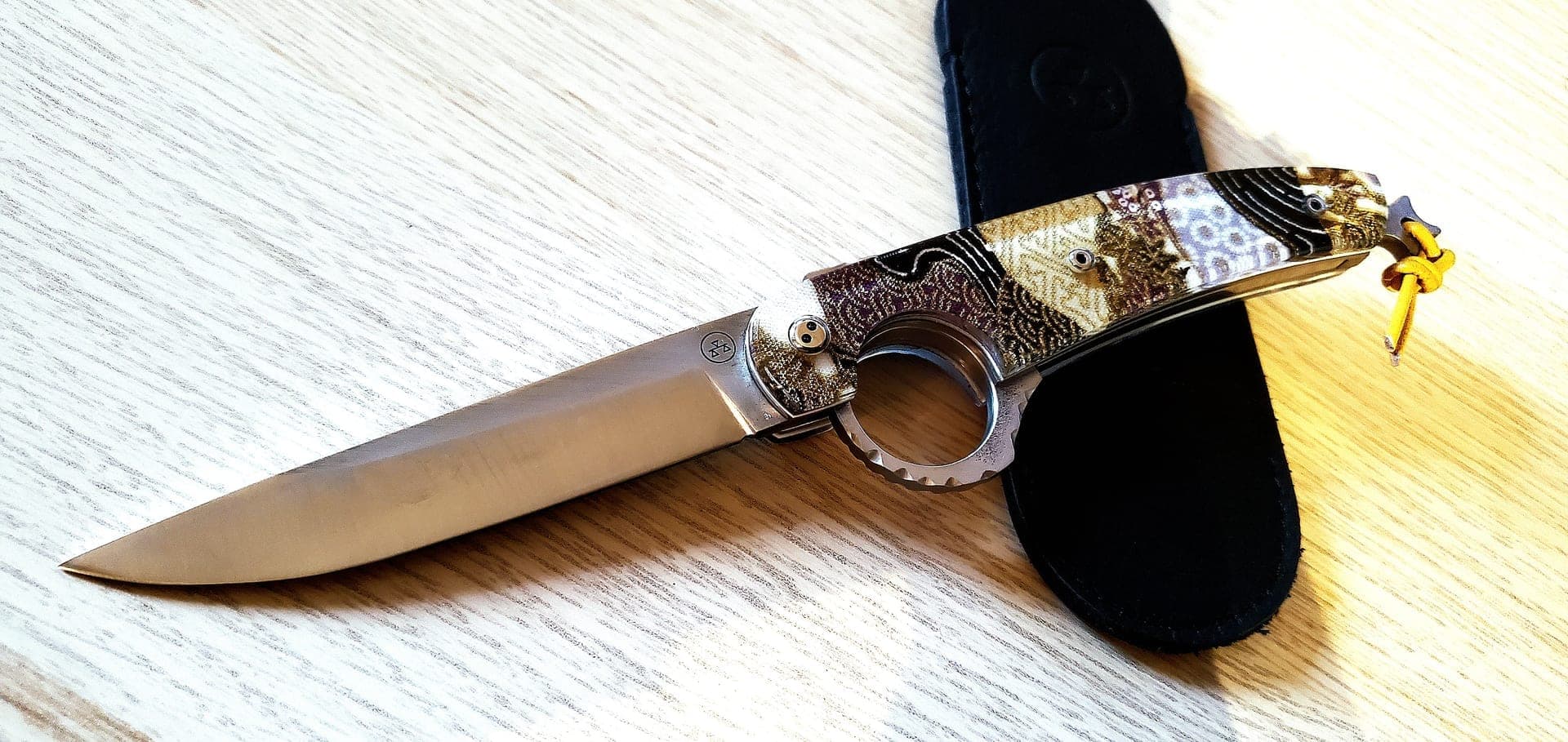
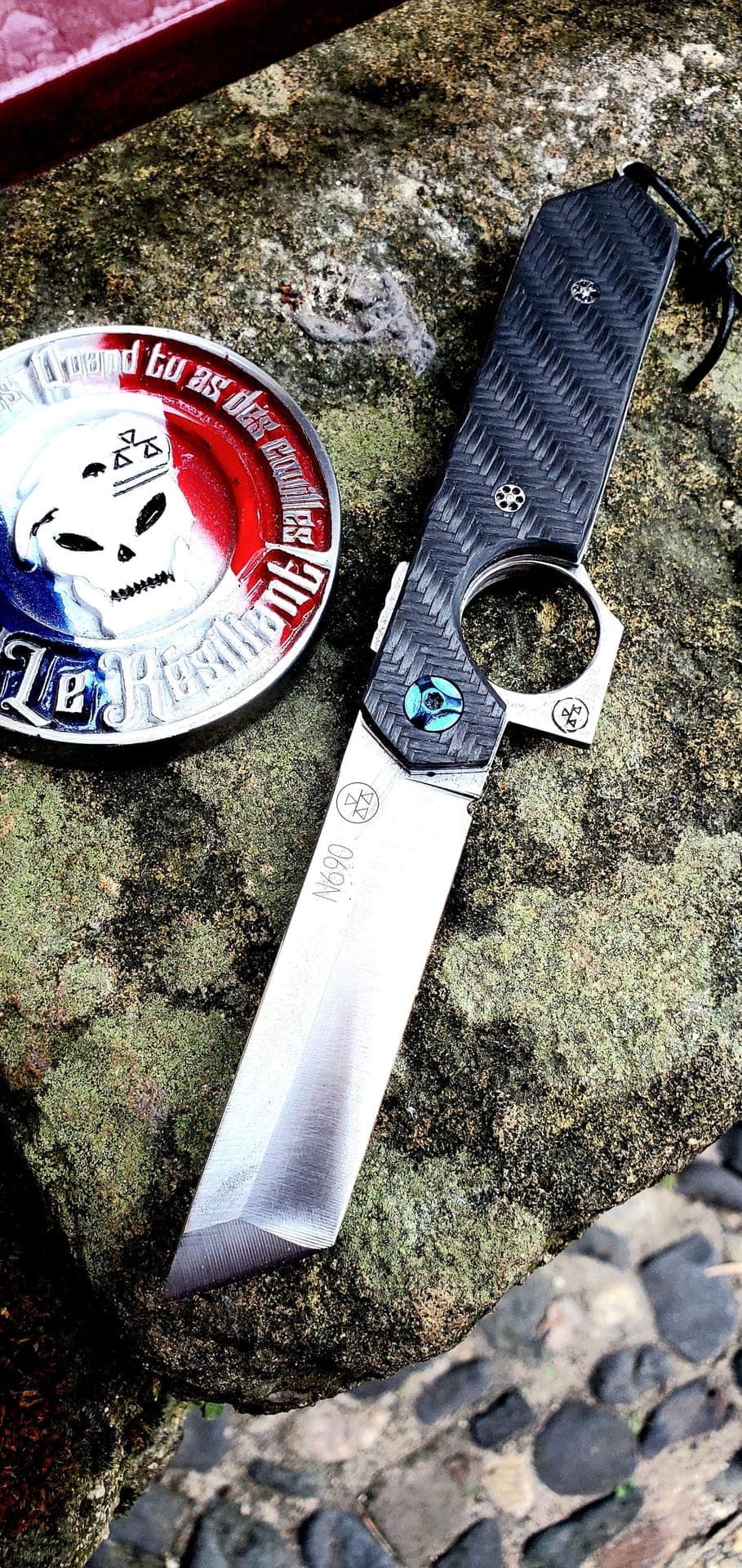

The eight models in this collection are handmade folding knives, designed, assembled and tuned by hand in our cutlery workshop in Thiers, the town that has supplied France with its blades for seven centuries. They all share the same signature: the reverse opening, a mechanism invented by Le Résiliant that exists nowhere else.
To understand what makes a true Thiers knife, the Journal tells the story of France's cutlery capital and untangles the difference between a Thiers and a Laguiole. As every model is made to order, it all starts with a direct exchange with the cutler, from the quote to the handover of the piece.
Choosing among the eight mostly comes down to knowing what you expect from a folding knife. The models with a plain carbon or stainless blade are worn on the belt in a hand-stitched leather sheath chosen at the quote stage, and used every day. The damascus pieces, rarer, are kept as much as they are used. The Archétype, damascus from the outset, belongs in a display case rather than in daily use. Only the Mini Tanto, thanks to its smaller size, truly slips into a pocket. Each model page states its starting price, its blade and the finishes available.
Frequently asked questions
How many models are there in the Résiliant collection?
The collection comprises eight models, all with a reverse opening: the Résiliant 2.0, the Tanto, the Mancharicou, the Shotokan, the Fhiers, the Archétype, the Mini Tanto and the Tracker. Each one applies the same mechanism, designed and tuned in the Thiers workshop, in a different size and with different materials.
Which model should I choose for everyday use?
The models with a plain carbon or stainless blade are the ones made for daily use: they are worn on the belt, in a leather sheath chosen at the quote stage. Only the Mini Tanto, thanks to its smaller size, truly slips into a pocket. Damascus pieces are kept as much as they are used.
Should I choose a plain blade or a damascus blade?
A plain blade, carbon or stainless, is made for use: it sharpens easily and is included in the model's base price. A damascus blade is as much an aesthetic choice as a technical one, and starts from a different price. How its patterns are born is covered in the Journal.
Can I order a Résiliant online?
No, there is no online shop. Every knife is made to order, after a direct exchange with the cutler. The configurator on each model page lets you compose your piece and see its price, and the request then goes out as a quote.
How much does a knife from the collection cost?
Each model page shows its starting price, for the knife alone. The amount depends on the model, on the blade chosen, plain or damascus, and on the finishes selected. The Archétype, damascus throughout, is the highest piece in the collection; the Mini Tanto and the Tracker are the most affordable.
Is the leather sheath included in the price?
No, it is chosen at the quote stage. It comes in two versions: plain black leather, or leather with an inlay matching the handle. It is hand-stitched in Thiers. The price shown on each model page is for the knife alone.
Can I choose the handle material?
Yes. The handle is one of the choices settled at the quote stage, along with the model, the blade steel and the leather of the sheath. Materials range from precious woods to composites, some being better suited than others to the screwed construction of a Résiliant.
Are all the models made entirely in the workshop?
No, and that is stated openly. On six of the eight models, everything is done in the workshop. The Mini Tanto and the Tracker involve steps entrusted to outside craftsmen, including polishing, drilling and fitting. The assembly, however, always stays at the bench.