At a market stall, in a town-centre shop or in front of an online listing, the gesture is always the same: you open the knife, you weigh it in your hand, you look for something written on the blade. And there, more often than not, almost nothing: a name you do not know, a bee, or the word "Thiers" on its own.
Let us say it straight away: the word "Thiers" is protected by no geographical indication. Unlike the Laguiole knife, which has had one since 2024, nothing prevents anyone from writing it on a knife made elsewhere. What exists in Thiers is something else: Le Thiers®, a voluntary collective trademark that not every cutler in the area uses.
Authenticity therefore has to be checked another way: through what is written on the piece, through what the seller is willing to say about it, and through what the shape itself will never prove. Here are the useful markers before buying, and the three questions that are usually enough to know who you are dealing with.
The name Thiers is protected by no geographical indication
No geographical indication protects the knife of Thiers. The one approved on 24 September 2024 covers the Laguiole knife and 24 communes of northern Aveyron. What exists in Thiers is different: Le Thiers®, a voluntary collective trademark registered by the trade, which not every cutler in the area uses.
A geographical indication is a public protection. It is applied for by a group of makers, examined by the French National Institute of Industrial Property, then approved with a defined perimeter of communes and a binding set of specifications. That is what happened for the Laguiole knife on 24 September 2024, after the annulment of a first, broader indication obtained in 2022.
A collective trademark follows a different logic: it belongs to those who registered it, and its use is voluntary. Le Thiers® is one of them. It requires a registered design, manufacture within the Thiers area and precise marking, but it stops nobody from writing the word Thiers elsewhere, nor from selling a knife made in Thiers without ever applying for it.
The practical consequence is simple: a knife can genuinely be made in Thiers without carrying any label at all, and a knife carrying the word Thiers can come from anywhere. The absence of public protection does not make verification impossible: it moves it onto the piece, and onto the person selling it.
The Le Thiers stamp: what it guarantees and what it leaves out
The "T" stamp identifies a knife made to the Le Thiers® design, a collective trademark registered in 1994 by the cutlers of Thiers. It certifies membership of that scheme, manufacture within the area and a maker's name engraved beside it. It says nothing about how old a workshop is, nor how much of the work was done by hand.
The history fits in two sentences, and it is told elsewhere: a confraternity was founded in Thiers in 1993, registered the collective trademark Le Thiers® in 1994 and unveiled its reference knife, with its double-wave design. The detail is in the article "Thiers or Laguiole: what is the difference between France's two great cutlery names?".
What matters to the buyer lies elsewhere. The stamp applies to one precise model, the one that follows the registered design, and not to everything the workshop produces. A cutler can therefore sign double-wave Thiers® knives and assemble, at the same bench, pieces of an entirely different design that will never carry the stamp.
The reverse deserves to be said just as plainly: not using the trademark is a sign of nothing. The scheme is voluntary, and many workshops work outside that design because their work lies elsewhere. The stamp is a reliable marker when it is there; its absence is not a clue.
What the shape of a knife never proves
The silhouette says nothing about origin. Between 1950 and 1985, nearly every Laguiole knife came out of workshops in Thiers, and a regional shape is copied all over the world today. Provenance is read from the markings and asked of the seller, never from the drawing of the blade.
The Thiers area makes close to 80% of the knives produced in France. It long manufactured the regional models of the whole country, and for more than thirty years nearly every Laguiole knife. A shape born in the Aubrac, in Savoie or in Périgord therefore stands every chance of having been made elsewhere, quite legitimately.
The reasoning works the other way round too. A design can be copied: it is protected neither by the place where it was born, nor by the name that common usage gave it. Knives of regional shape are mass-produced on the other side of the world and sold under the name of the village that invented them.
Then comes the most common objection: quality would be visible to the eye. Clean fitting, even polishing and an assembly without play do say how much care went into the piece, not where it was made.
- A shape proves nothing: not the country of manufacture, not the workshop, not the hand that assembled the piece.
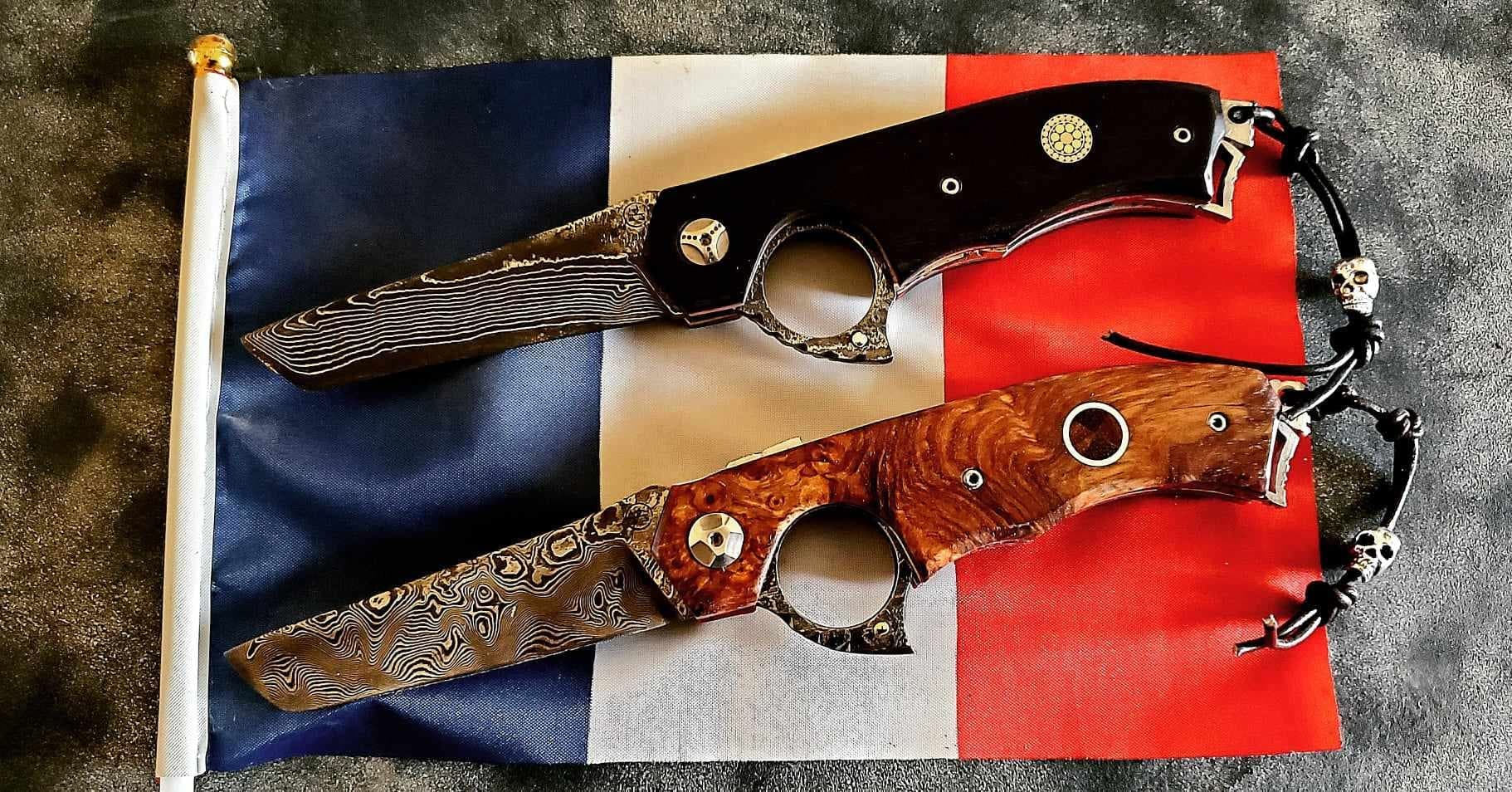
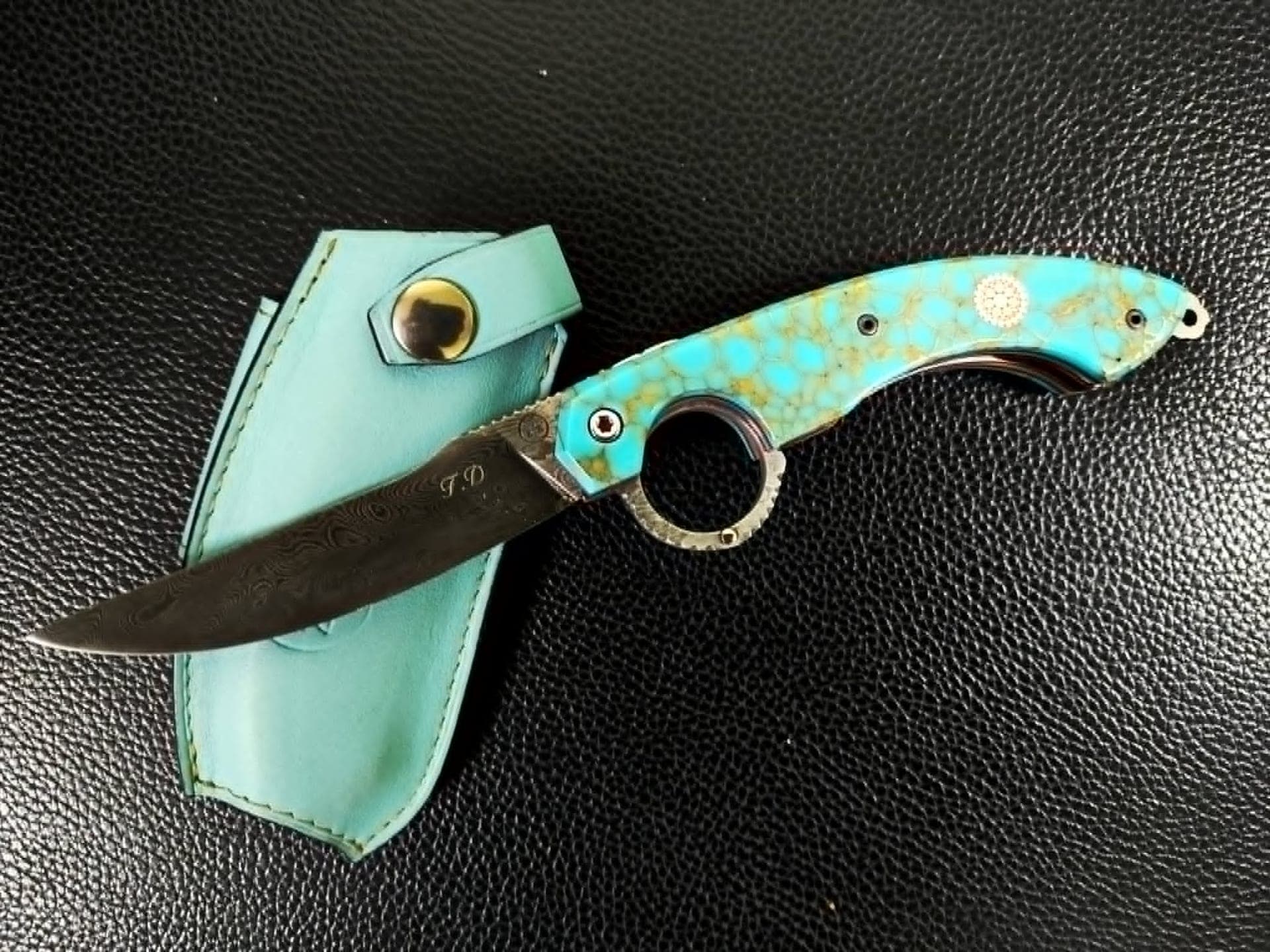
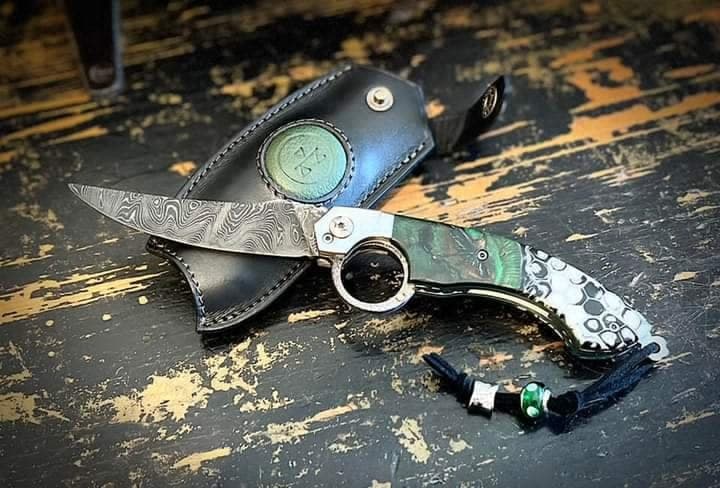
- A damascus pattern proves no more: it comes from the steel plate, not from the hand that cut the blade out of it.
What you read on a blade: maker's mark, signature, number
On an artisan knife, the marking on the blade is the most direct clue: the maker's name or mark, sometimes a signature of the workshop's own. It is a common practice of the trade, not a legal obligation. With no public register, it is what allows you to trace the person who made the piece.
Turning the knife over and reading the blade remains the first thing to do. On pieces covered by the collective trademark, the maker's name goes with the "T" stamp: the specifications require it. Elsewhere, nothing obliges a maker to name himself, and many older knives carry no mark at all.
A legible name has one simple virtue: it can be checked. You look it up, you find a workshop, an address. A number, when there is one, refers to the records of whoever engraved it: it is worth something only if you can trace him. A mark that leads nowhere proves no more than a bare blade.
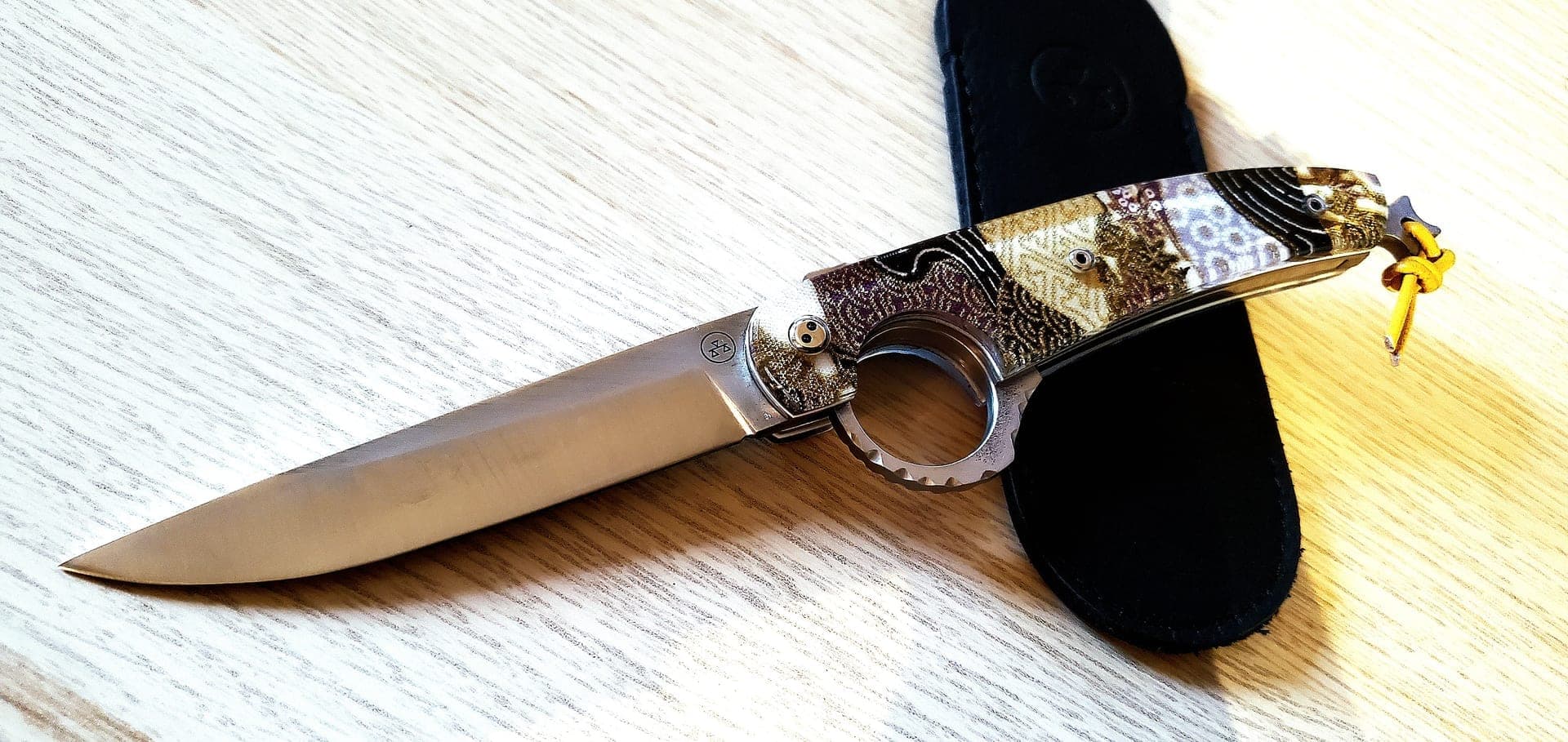
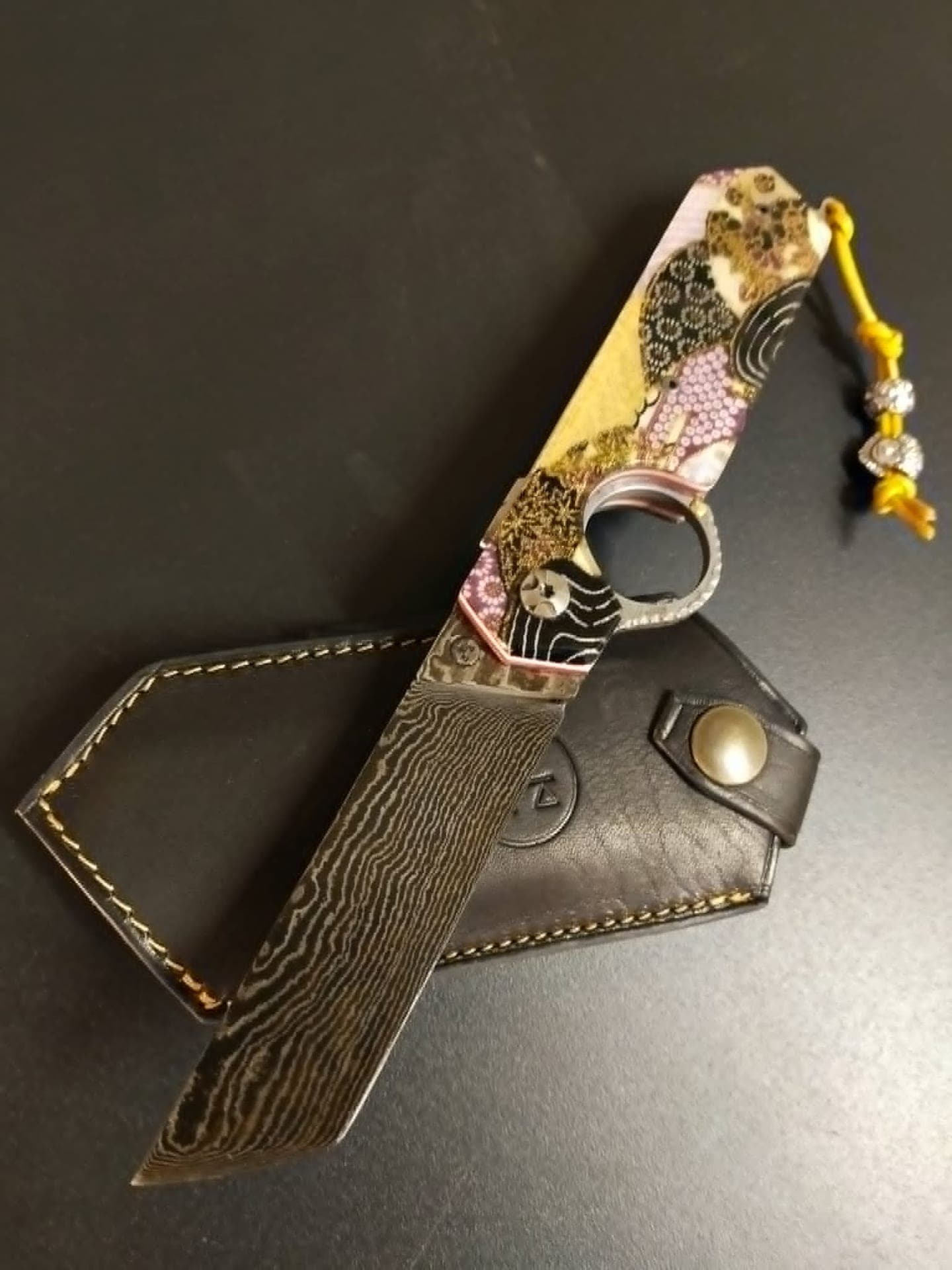
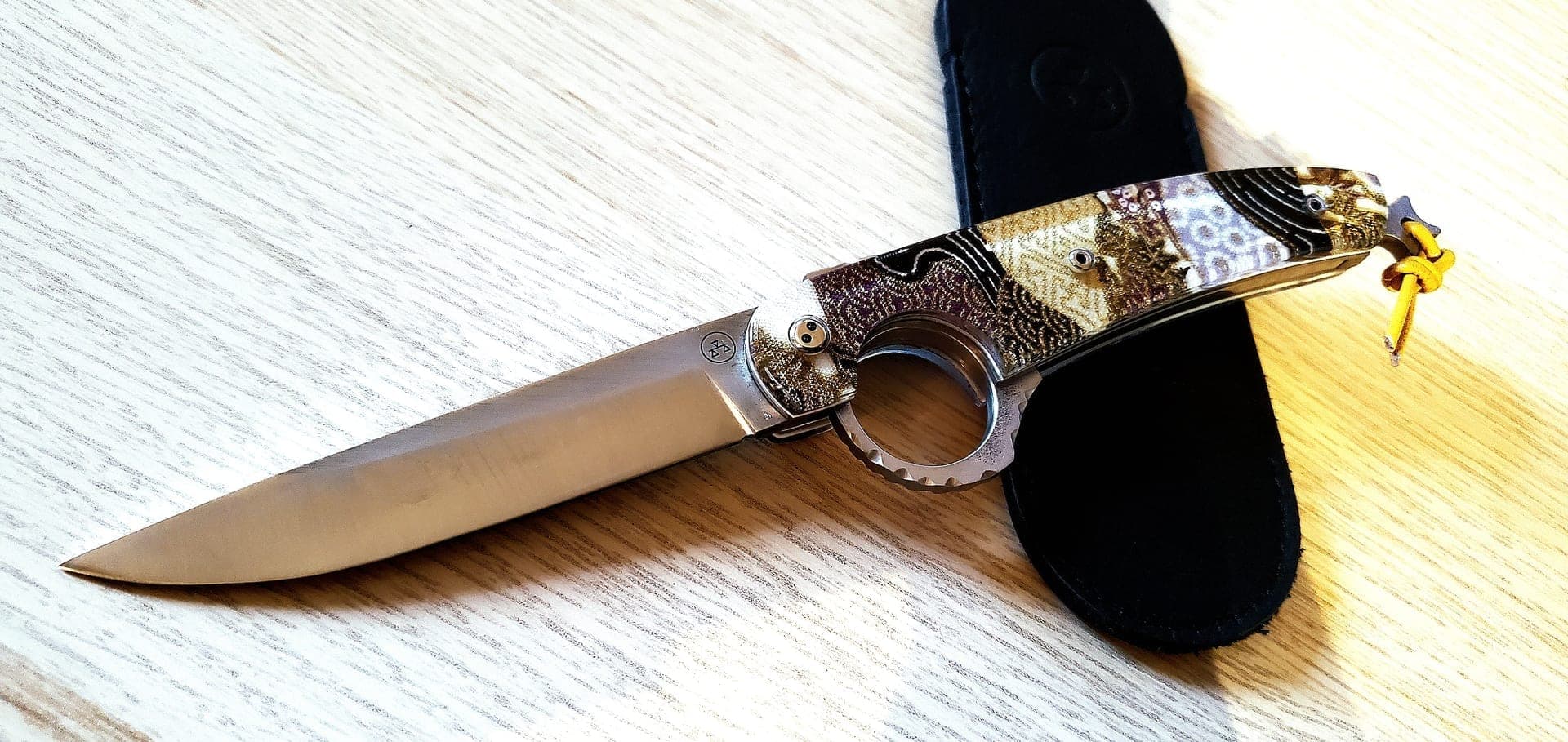
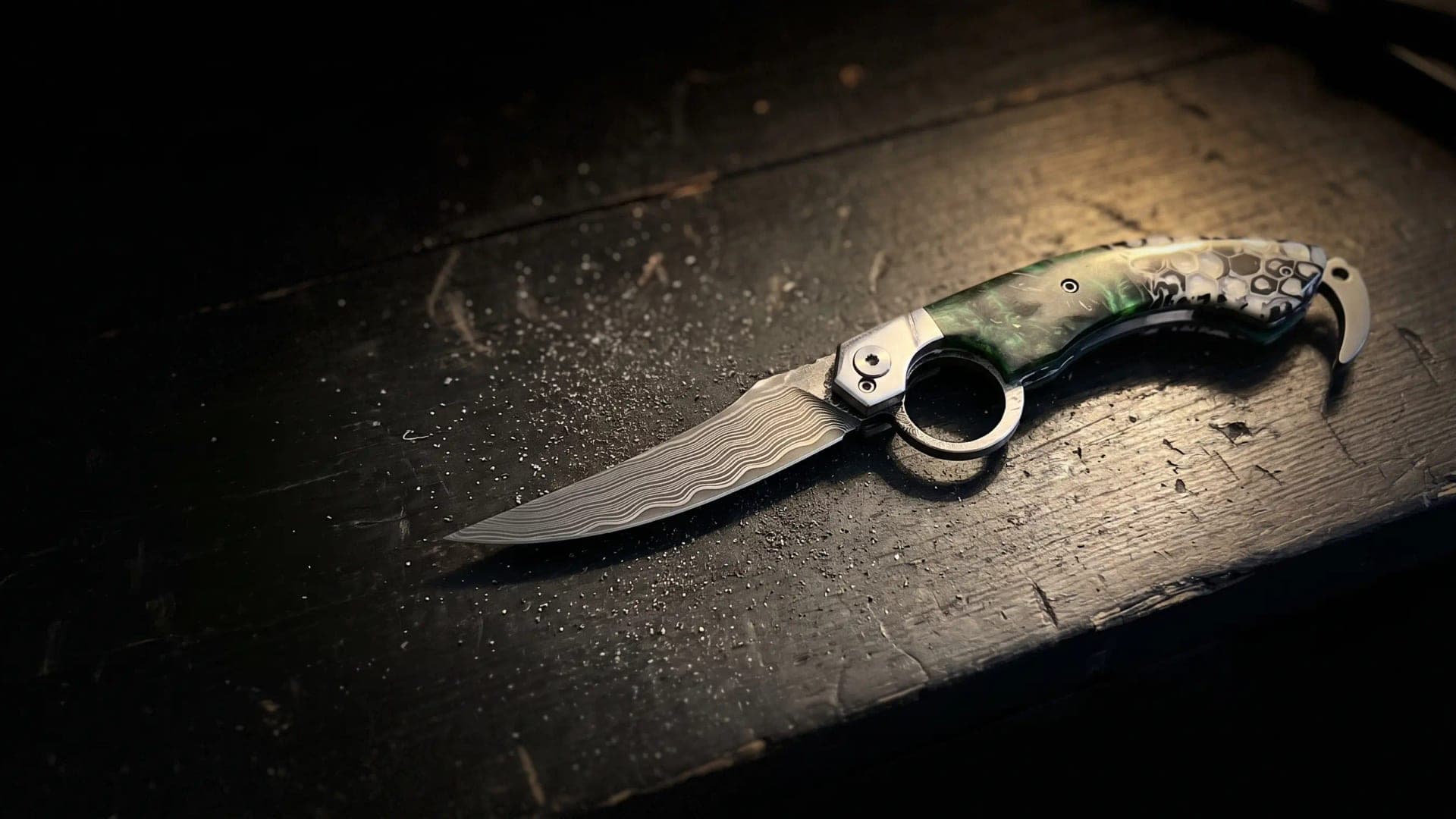
Some workshops add a signature that is not easily copied. In Thiers, Le Résiliant inlays a small silver fish into its damascus-bladed models, at no extra cost: it is not an engraving requested by the customer, it is the workshop's own mark. Those blades are cut by hand from the damascus plate; the D2 series, also designated Z160, is cut at a factory, then hardened, polished and assembled on site.
The questions to ask before buying
Three questions are usually enough: where the piece was made, who made it, and which steps were entrusted to outside workshops. A craftsman who works cleanly answers without hedging, naming a town and a workshop. Evasion, on the other hand, is a signal in itself, far more telling than a label.
The right questions are not traps: they are the ones a maker answers every day, and the answer takes one sentence.
One distinction is worth settling once and for all: "made in France" and "made in Thiers" do not say the same thing, and neither phrase on its own specifies which steps were carried out where. It is the detailed answer that informs, not the wording.
The Résiliant workshop answers those questions without hedging. It does not forge its blades: damascus is bought in plates and cut by hand, the series are cut at a factory, and hardening, polishing and assembly are done in Thiers. On six of the eight models everything is done on site; two models include steps entrusted to outside workshops, and the cutler says so openly.
- The workshop and the town: where was the piece assembled, and can that be checked?
- The steel: which grade, under which designation, and who carried out the heat treatment?
- The division of work: what is done on site, and what is entrusted to others?
- Access: can the workshop be visited, or can you at least speak directly to the maker?
In Thiers, the best check is still to go and see
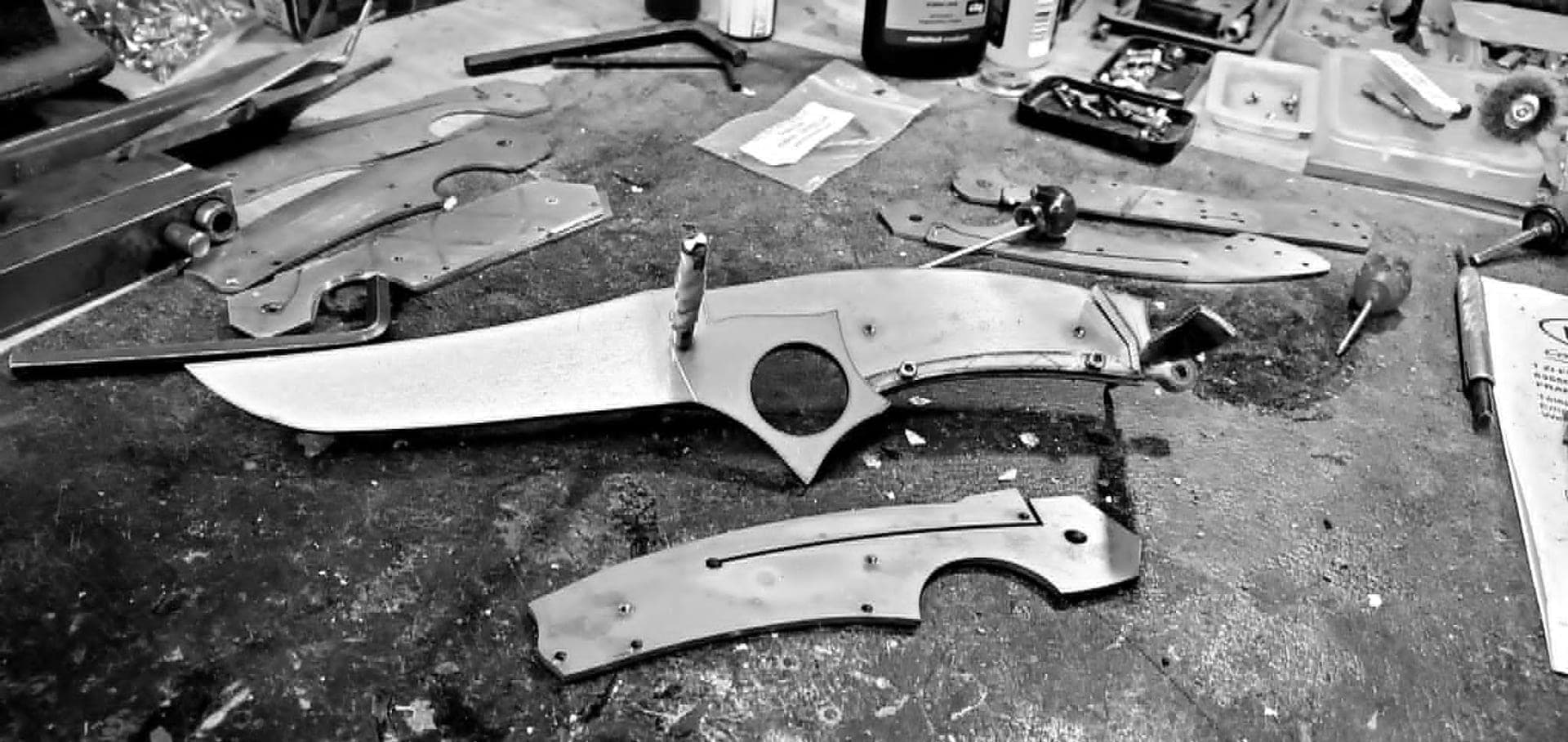
The simplest check is still to buy where the knife is made. In Thiers the workshops are in the town itself, and Le Résiliant's, on rue Alexandre Dumas, receives visitors by appointment. Seeing the bench where a piece is assembled, and speaking to the person who assembles it, is worth every label. No document replaces what you see for yourself.
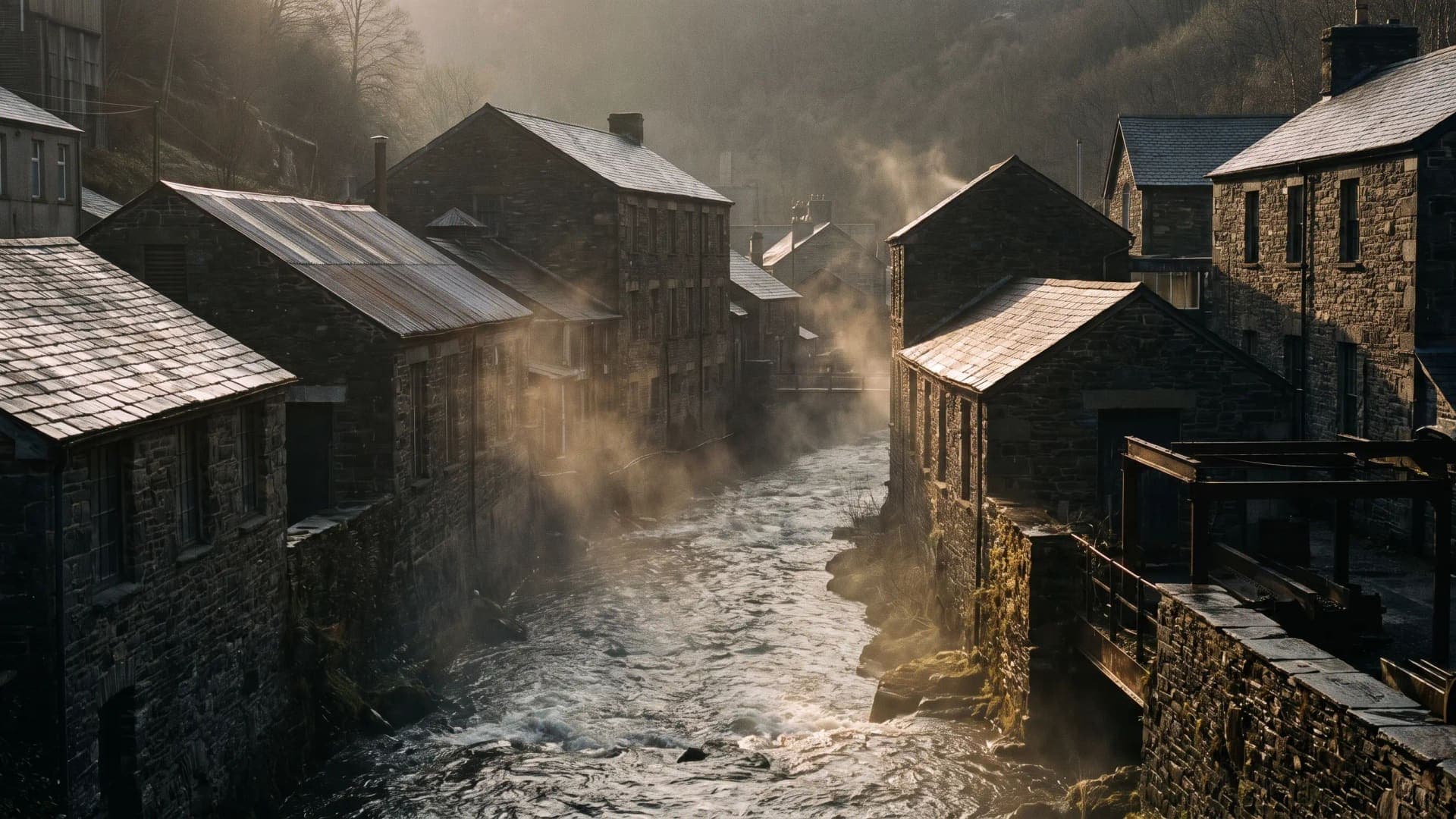
Thiers is not a stage set: cutlery is still practised there, in the town and along the Durolle. You can visit the cutlery museum and the valley of the works, described in the article "Visiting Thiers: Cutlery Museum and Factory Valley", and you can also push open the door of a workshop.
Le Résiliant's workshop can be visited by appointment, at 15 rue Alexandre Dumas. You see the bench, the vice where each mechanism is adjusted piece by piece, and the eight models of the collection. Nothing is sold online there: every piece is quoted individually, direct with the cutler, which settles the question of who you are buying from.
On site, the essentials are visible. Le Résiliant Tanto, the workshop's first model, is in D2 steel and carries the marks of the tool it is. Le Fhiers, whose name contracts "fier" and "Thiers", pays tribute to generations of the town's cutlers. L'Archétype, in damascus, represents five years of assembling, adjusting and fitting: it is handed down rather than replaced. Three pieces, one single town, and somebody to talk to.
- Is the name "Thiers knife" protected?
- Not by a geographical indication: none covers the knife of Thiers, unlike the Laguiole knife, approved on 24 September 2024. The town has a voluntary collective trademark, Le Thiers®, registered in 1994, which imposes a design, a manufacturing area and a marking.
- What does the T stamp on a blade mean?
- It marks a knife made to the registered design of the collective trademark Le Thiers®, manufactured within the Thiers area and also carrying its maker's name. It guarantees membership of that voluntary scheme, nothing more: neither the age of the workshop nor the share of handwork.
- Is a knife sold in Thiers necessarily made in Thiers?
- No. No rule ties the place of sale to the place of manufacture, and the town draws buyers from far away. The useful question is about the workshop: where the piece was assembled, by whom, and which steps were entrusted to others.
- How can you find out who made an artisan knife?
- By reading the blade first: the maker's name or mark is usually there, sometimes with a signature of the workshop's own. Then by asking the seller for the town of manufacture and the name of the workshop. An identifiable maker can be found and contacted.
- Is a knife with no marking necessarily a fake?
- No. Marking is a practice of the trade, not a legal obligation: older pieces, subcontracted series and knives assembled for a third party often carry none. An unmarked blade simply means the information has to be found elsewhere, from the seller or the workshop.
Sources
- Confrérie Le Thiers® — Autorité du label thiernois : établit que Le Thiers® est une marque collective déposée en 1994, au dessin à double vague, dont l'usage impose une fabrication dans le bassin de Thiers, le nom du fabricant et le poinçon « T » sur la lame.
- INPI, base des indications géographiques « Couteau de Laguiole » — Fiche officielle de l'indication géographique homologuée le 24 septembre 2024 : elle établit qu'une IG artisanale suppose un cahier des charges, un organisme de défense et de gestion et une zone géographique délimitée, et qu'elle porte ici sur le couteau de Laguiole, non sur celui de Thiers.
- Millavois.com : l'IG des couteaux de Laguiole limitée au Nord-Aveyron — Presse locale : établit la réduction de la zone à 24 communes du Haut-Rouergue, après l'annulation en 2024 de l'indication géographique élargie obtenue en 2022.
- Wikipédia « Coutellerie de Thiers » — Référence sur le bassin thiernois : établit qu'il produit près de 80 % des couteaux fabriqués en France et qu'il a longtemps fabriqué les modèles régionaux de tout le pays.
- Wikipédia « Laguiole (couteau) » — Synthèse encyclopédique : établit qu'entre 1950 et 1985 la quasi-totalité des couteaux de Laguiole était fabriquée dans les ateliers thiernois.