Ask the question around a table: « Thiers or Laguiole, what's the difference? ». You will often get muddled answers, and that is normal. One of the two names refers to a town that makes knives; the other refers first to a knife that bears the name of a village.
Behind the confusion lies a singular French story: that of a village in the Aubrac that became a worldwide icon, and that of a town in Auvergne which for decades made everyone else's knives, including the other's.
As cutlers in Thiers, we untangle fact from fiction here: the origins, the shapes, the labels, and what the new geographical indication of 2024 changed for the buyer.
A village, a town: two very different realities
Laguiole is a village of the Aubrac plateau, in Aveyron, which gave its name to a knife shape created in 1829. Thiers, in the Puy-de-Dôme, is France's cutlery capital: its area forges nearly 80% of the knives made in France. One primarily refers to a model, the other to a place of manufacture.
Let us clear up the main ambiguity first: « Laguiole » and « Thiers » do not play in the same category. Laguiole is a village of around 1,200 inhabitants on the Aubrac plateau, in Aveyron. Its name is attached to one precise knife model, recognisable among all others, which became a symbol of French craftsmanship.
Thiers, nearly 200 kilometres away, is a town in the Puy-de-Dôme where knives have been forged since the 13th century. It is not tied to a single shape: its area produces close to 80% of French knives, from table cutlery to art knives, and long manufactured the regional models of the whole country.
The honest comparison is therefore not « one knife versus another », but « a model turned legend versus a land of production ». And the two stories are far more intertwined than most people imagine.
The Laguiole: a knife born in the Aubrac in 1829
The Laguiole knife was born around 1829, when Pierre-Jean Calmels crossed the local capuchadou, a fixed-blade peasant knife, with the Spanish folding navaja. Its silhouette then settled: a slender blade known as yatagan, and a forged « fly » on the spring, which became the famous bee in the early 20th century.
The story of the Laguiole begins in cattle country, among the herdsmen and farmers of the Aubrac. Around 1829, cutler Pierre-Jean Calmels imagined a folding knife crossing two influences: the capuchadou, the local fixed blade, and the navaja, the large folding knife that seasonal workers brought back from Spain.
Over the decades the model took its definitive silhouette: a slim, slender blade called yatagan, after the Ottoman sabre, a curved handle, and on top of the spring a « fly », the forged piece of metal that cutlers sculpt. In the early 20th century it mostly took the shape of the bee everyone knows, wings spread.
A peasant's knife turned collector's piece, the Laguiole knew glory, then a long decline of its local manufacture, before a rebirth in the village itself at the end of the 1980s. In the meantime, its production had almost entirely moved... to Thiers.
Thiers: the town that made the Laguiole, and created its own
Between 1950 and 1985, nearly all Laguiole knives were made in Thiers, whose workshops produced the regional models of the whole of France. In 1994, the cutlers of Thiers finally created their own knife: « Le Thiers® », a collective trademark with a double-wave design, controlled by its Confrérie and its « T » stamp.
It is the least-known paradox of this story: for decades, buying a Laguiole almost always meant buying a knife forged in Thiers. When the cutlery of the Aveyron village died out in the middle of the 20th century, the workshops of Thiers kept the model alive. Between 1950 and 1985, nearly every Laguiole came out of their hands.
Thiers thus made other people's knives: the Laguiole, but also most of France's regional models. A town able to forge everything, without a knife of its own name. The Confrérie du couteau de Thiers changed that in 1994 by registering the collective trademark « Le Thiers® »: a design of its own, with a double wave, mandatory manufacture within the Thiers area, the maker's name and the « T » stamp on the blade.
There lies the difference in nature: the Laguiole is a historic model whose name comes from a village; « Le Thiers » is a recent collective trademark that guarantees a place of manufacture. One spread so far that it escaped its cradle; the other was created precisely so it never would.
Who has the right to be called « Laguiole »? The label saga
The name « Laguiole » was long considered generic: anyone could use it, including for imported knives. Since 24 September 2024, the geographical indication « Couteau de Laguiole », approved by the INPI, reserves the label for knives made in 24 communes of northern Aveyron, around the village.
For a long time, French courts considered « laguiole » a generic name for a knife shape, much like a chef's knife or a basque beret. The consequence: « Laguiole » knives made in Pakistan or China flooded the markets, and neither the village nor French makers could effectively oppose them.
The law on craft geographical indications reshuffled the deck, not without twists. A first GI, « Couteau Laguiole », approved in 2022, covered 94 communes across six departments, including the Thiers area on account of its history as the model's manufacturer. Challenged by the Aveyron cutlers, it was annulled by the Aix-en-Provence court of appeal in July 2024.
On 24 September 2024, the INPI approved a new geographical indication, « Couteau de Laguiole », carried by the Aveyron makers and limited to 24 communes of the Haut-Rouergue. In practice: a knife bearing this GI now comes from the Aubrac. A Laguiole-shaped knife can still be made elsewhere, notably in Thiers, but without the label. As for « Le Thiers », it remains protected by its own collective trademark.
Shape or origin: what the buyer should look for
To know what you are buying, look for the maker's name engraved on the blade, a clearly stated place of manufacture, and the official signs: the « T » stamp for a Le Thiers®, the geographical indication for a Laguiole knife from the Aubrac. A « Laguiole » with no identifiable maker is almost always an imported knife.
The first reflex is simple: turn the knife over. A craftsman who stands behind his work engraves his name or mark on the blade, and never hides where it was made. A « Laguiole » sold for a few euros, with no maker's name and a vague bee, is an imported product that has nothing of the Laguiole but the silhouette.
Then, the official signs speak. On a Le Thiers®: the « T » stamp and the cutler's name, guaranteed by the Confrérie. On a Laguiole knife from the Aubrac: the geographical indication approved in 2024. In both cases you are buying a place, a set of specifications and identified hands, not just a drawing.
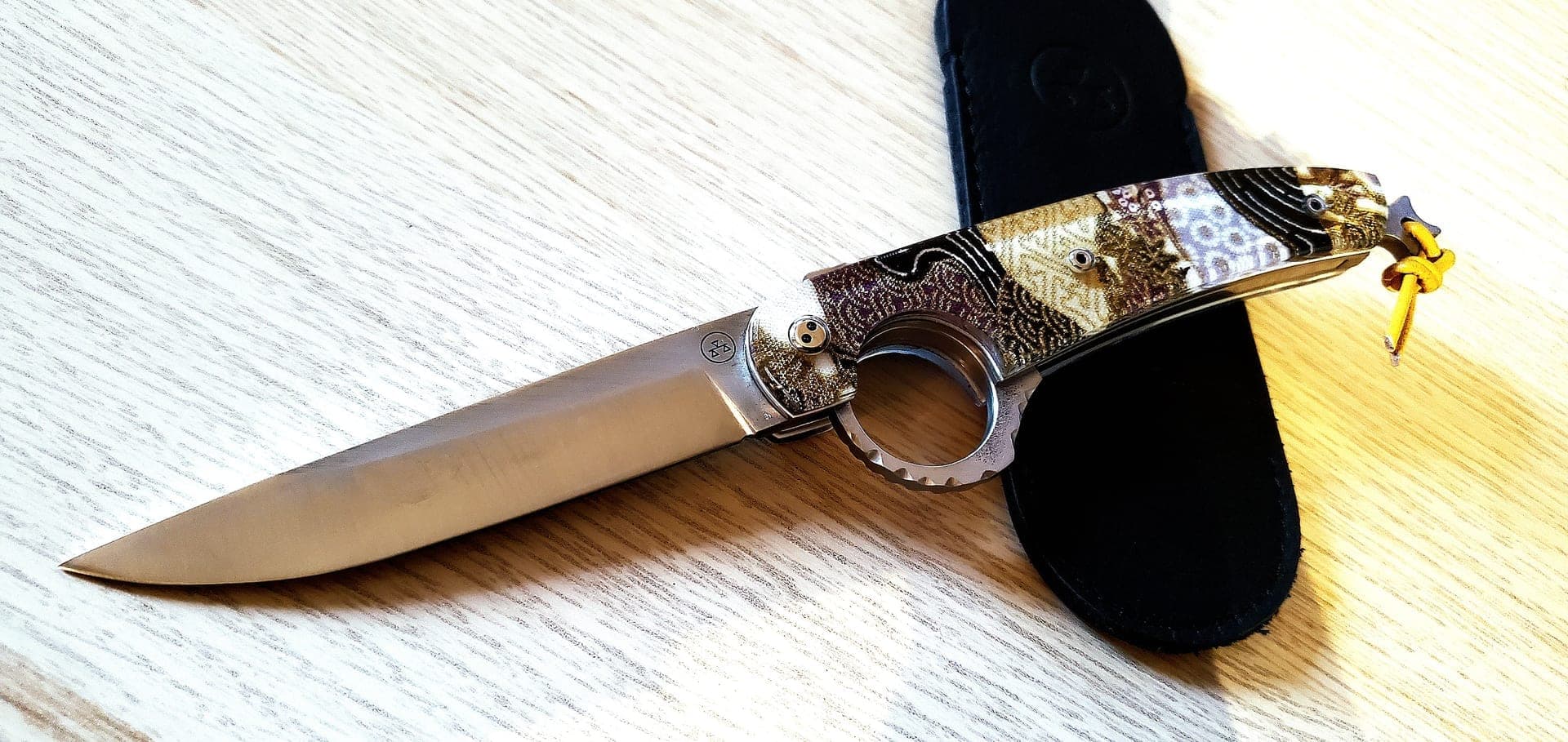
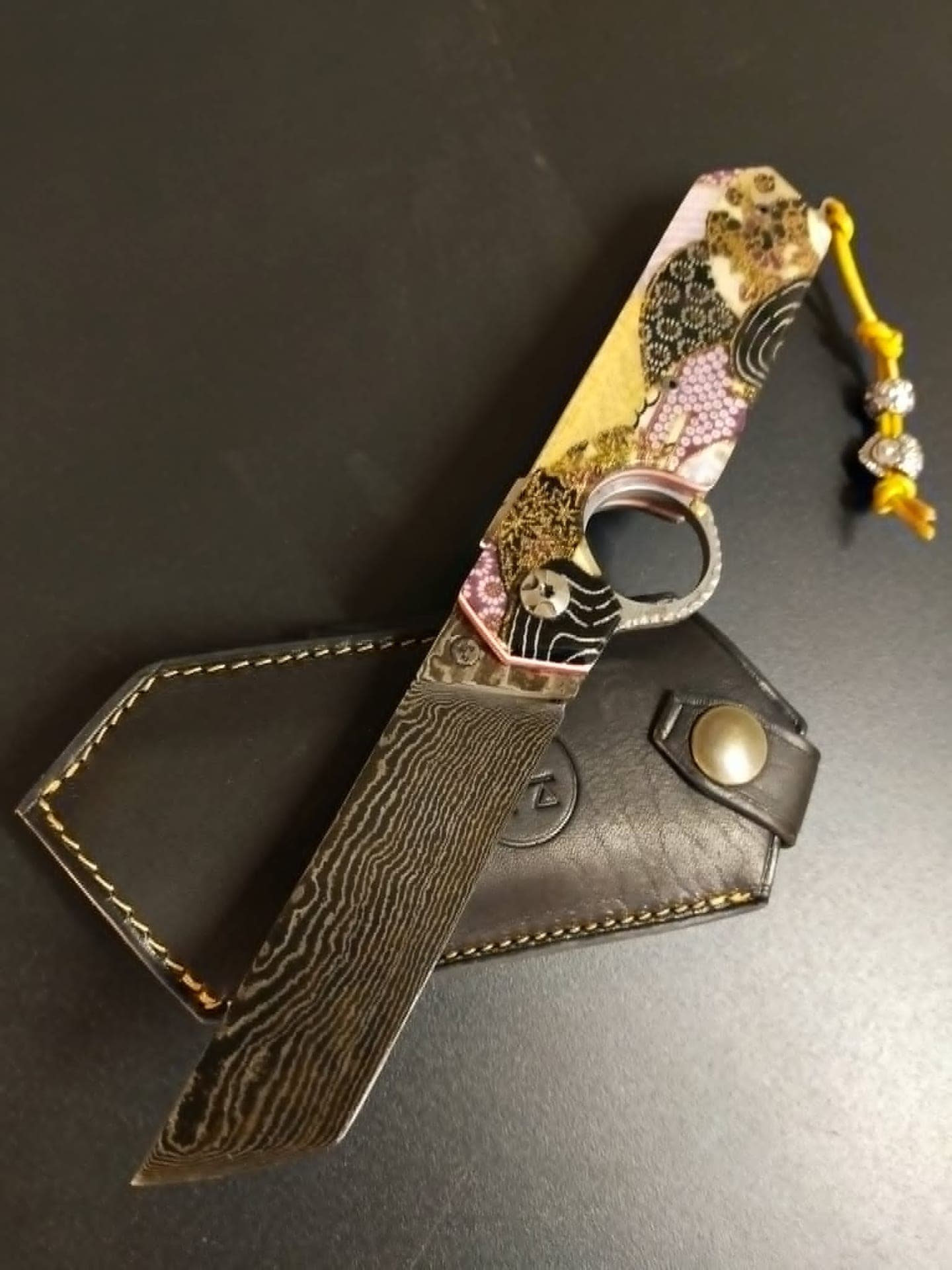
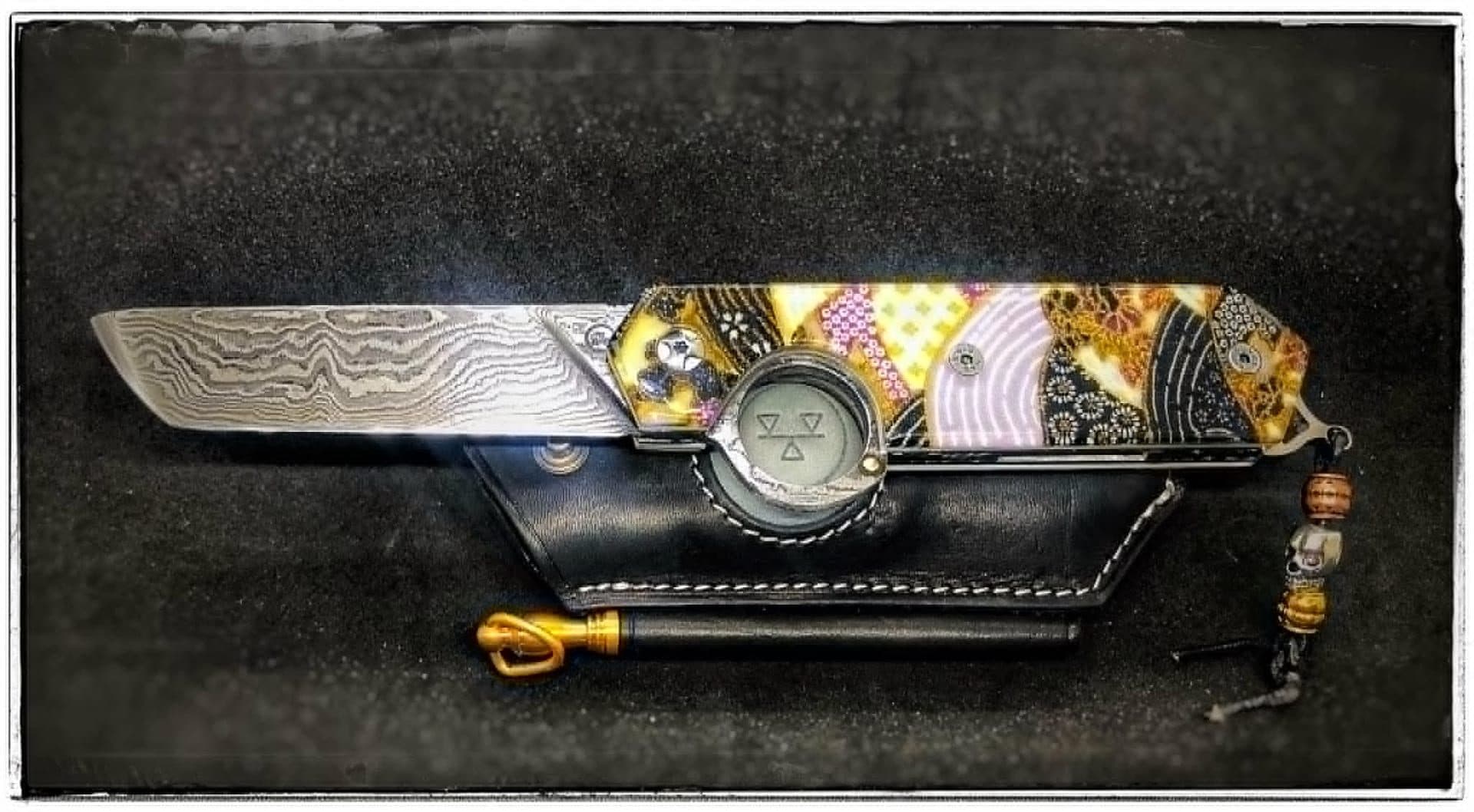
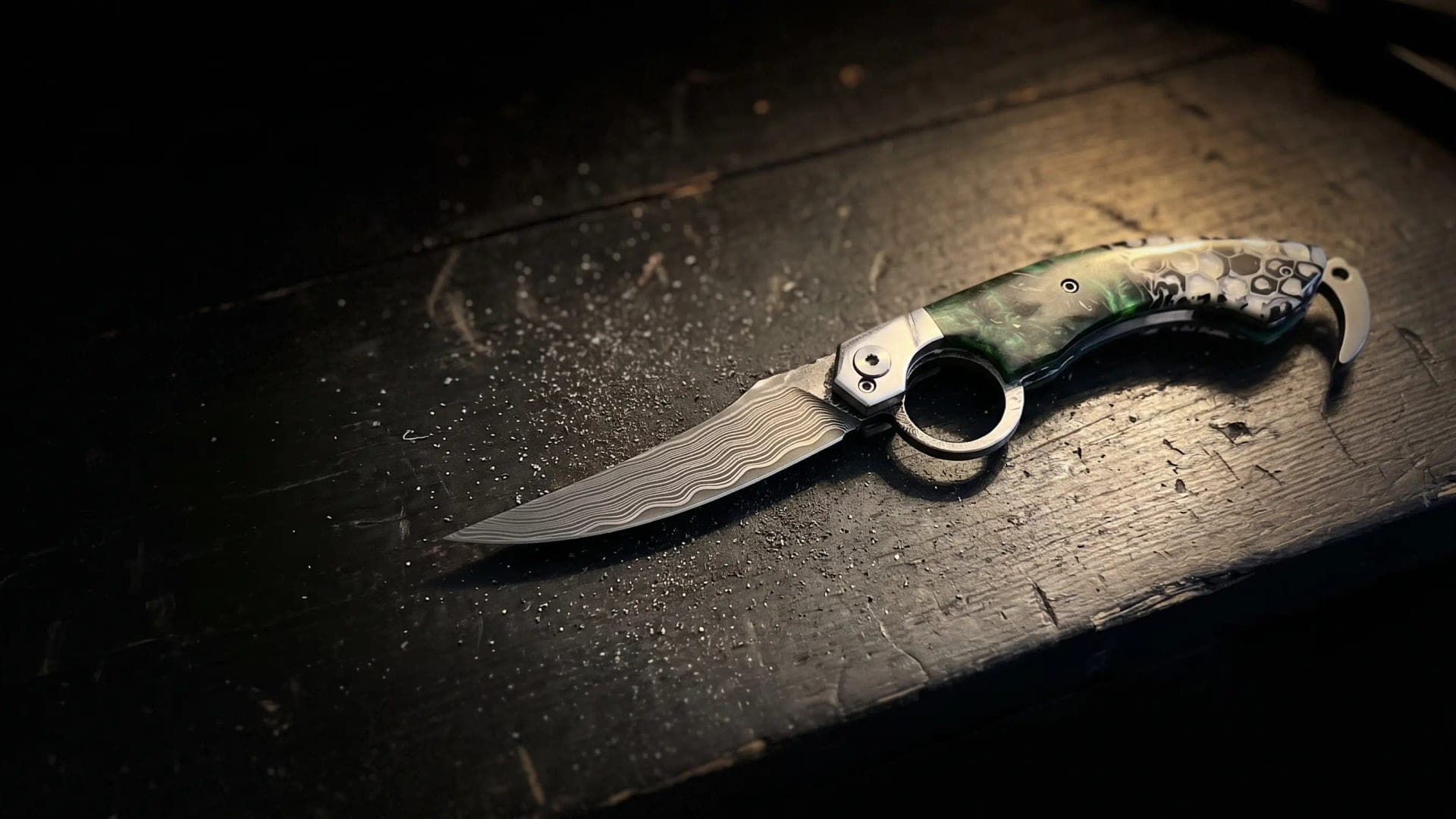
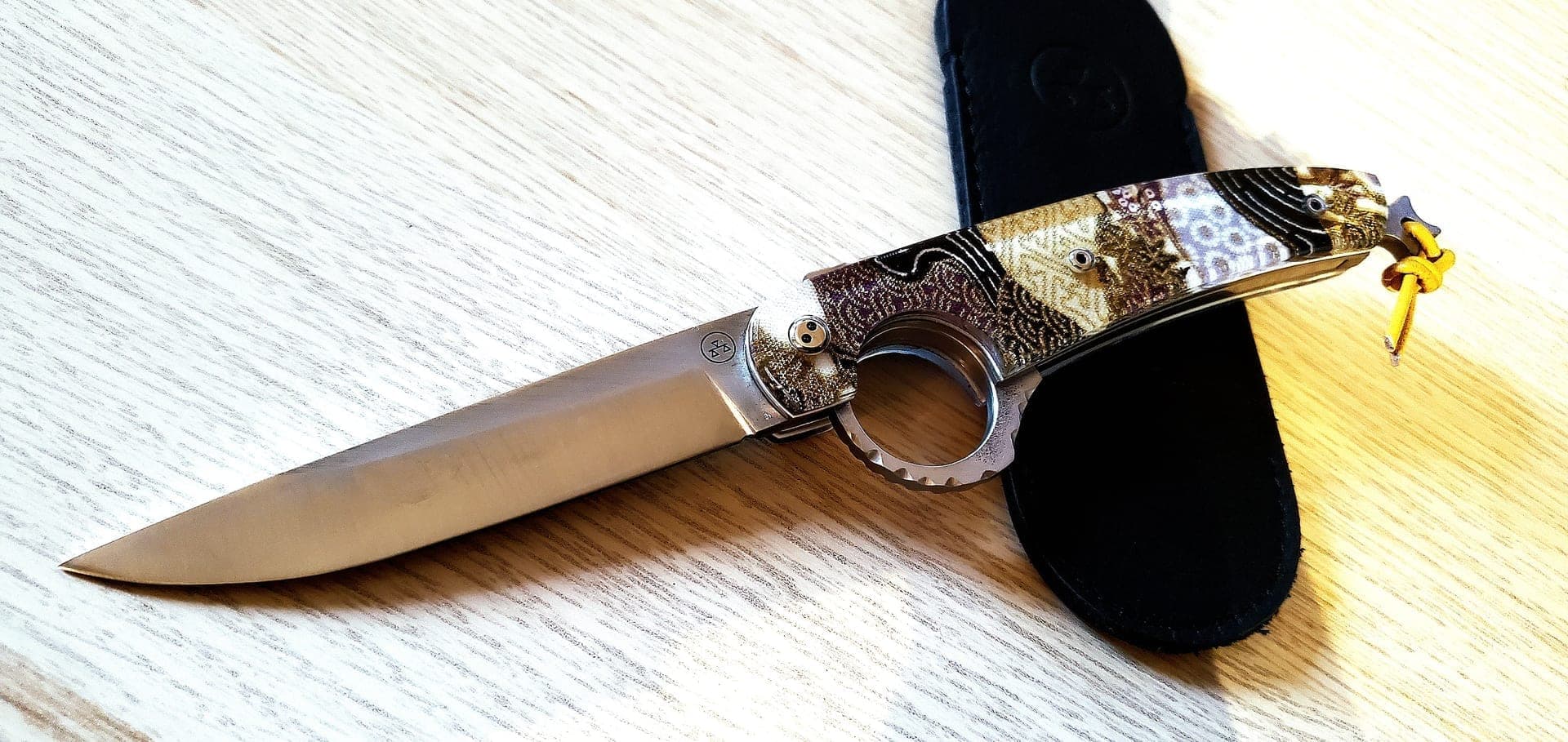
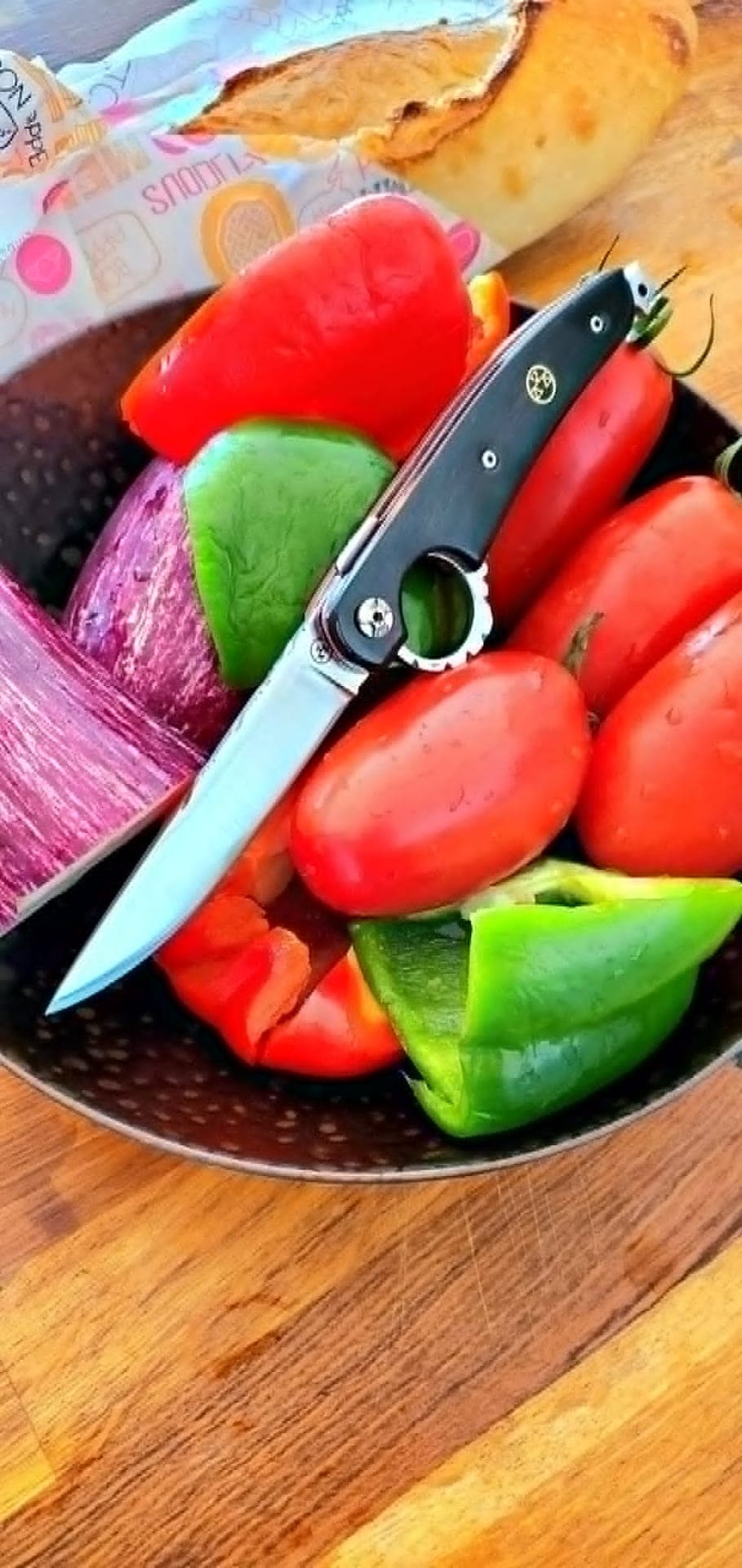
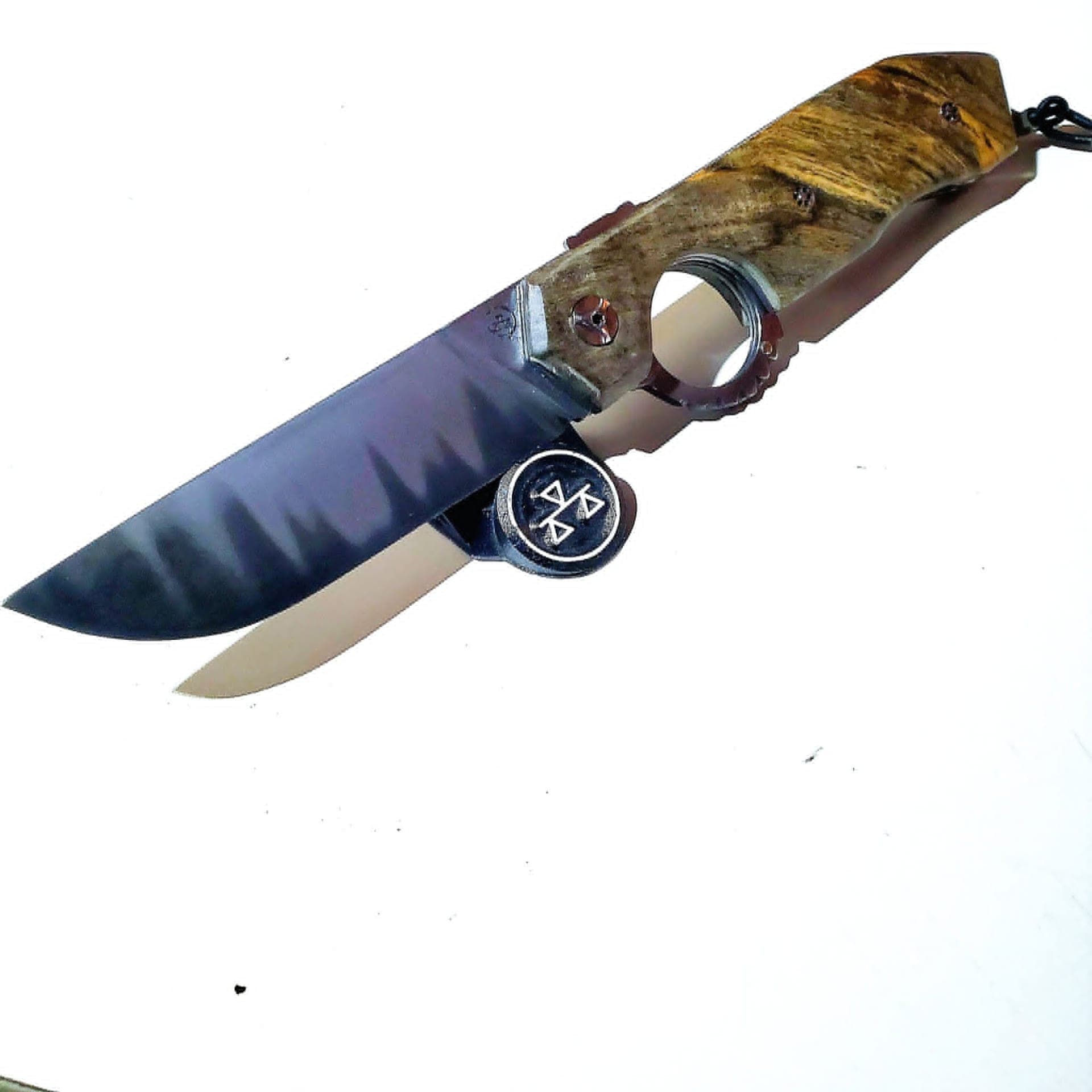
And where does Le Résiliant stand in all this? Our pieces are neither Laguiole nor Le Thiers®: they are author's knives, shaped in Thiers, heirs to seven centuries of local know-how, with a mechanism that belongs only to the workshop, the reverse opening. The best proof that the capital of the knife never stopped inventing.
- Is a Laguiole made in Thiers a genuine Laguiole?
- Historically, yes: between 1950 and 1985 nearly every Laguiole was forged in Thiers, and Thiers cutlers still make them today. Since September 2024, only knives produced in the northern Aveyron zone may bear the geographical indication « Couteau de Laguiole », but the shape itself remains free.
- What is the difference between a Le Thiers knife and a Laguiole?
- The Laguiole is a historic model: a yatagan blade, a fly or bee on the spring, and a name that became almost generic. Le Thiers® is a collective trademark created in 1994: a double-wave design, mandatory manufacture within the Thiers area, and the maker's name with the « T » stamp on the blade.
- How can you tell where a Laguiole knife was made?
- Look for the maker's name engraved on the blade and a clearly stated place of manufacture. Since 2024, the geographical indication « Couteau de Laguiole » guarantees manufacture in 24 communes of northern Aveyron. Without an identifiable maker's name, it is almost always an imported knife.
- Why were most Laguiole knives made in Thiers?
- Because the cutlery trade of the village of Laguiole died out in the middle of the 20th century, while Thiers, France's cutlery capital, had the workshops and the skills to keep the model alive. Manufacture only resumed in the Aubrac at the end of the 1980s.
- Are Le Résiliant knives Laguiole or Le Thiers knives?
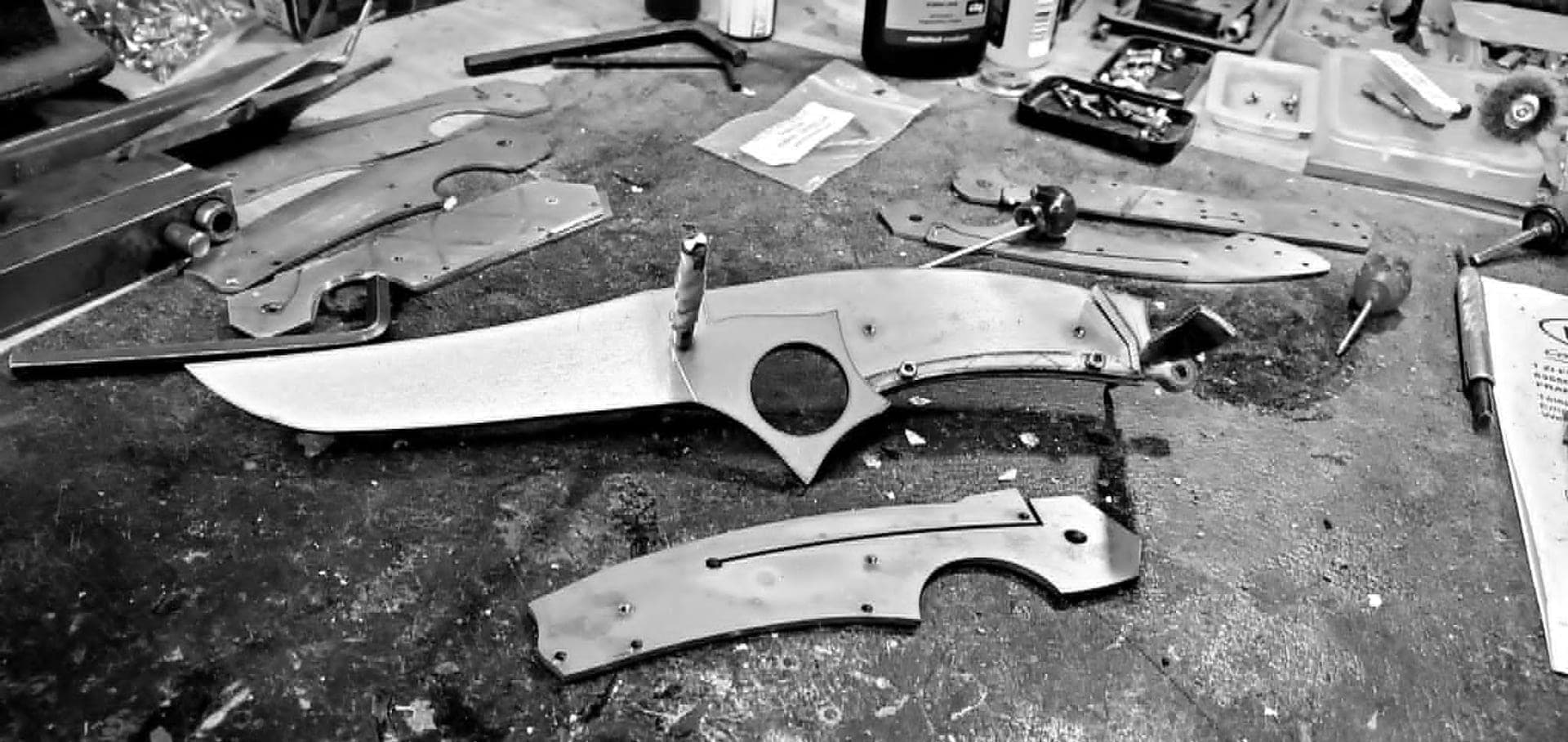
- Neither: they are author's pieces shaped by hand in Thiers, cut from steel plate rather than forged, with a reverse-opening mechanism invented by the artisan. They belong to the Thiers tradition without borrowing any existing traditional design.
Sources
- Wikipédia « Laguiole (couteau) » — Synthèse encyclopédique : Pierre-Jean Calmels, la navaja et le capuchadou, la lame yatagan, la mouche et l'abeille, la production thiernoise.
- INPI, base des indications géographiques « Couteau de Laguiole » — Fiche officielle de l'IG homologuée le 24 septembre 2024 : cahier des charges, organisme de défense et de gestion, zone géographique.
- Millavois.com : l'IG des couteaux de Laguiole limitée au Nord-Aveyron — Presse locale : la zone de l'indication géographique réduite à 24 communes du Haut-Rouergue, après l'annulation de l'IG élargie de 2022.
- Confrérie Le Thiers® — Autorité du label thiernois : marque collective créée en 1994, dessin à double vague, poinçon « T », fabrication dans le bassin de Thiers.
- Wikipédia « Coutellerie de Thiers » — Référence sur le bassin thiernois : sept siècles de coutellerie, part de la production française, lien historique avec le Laguiole.