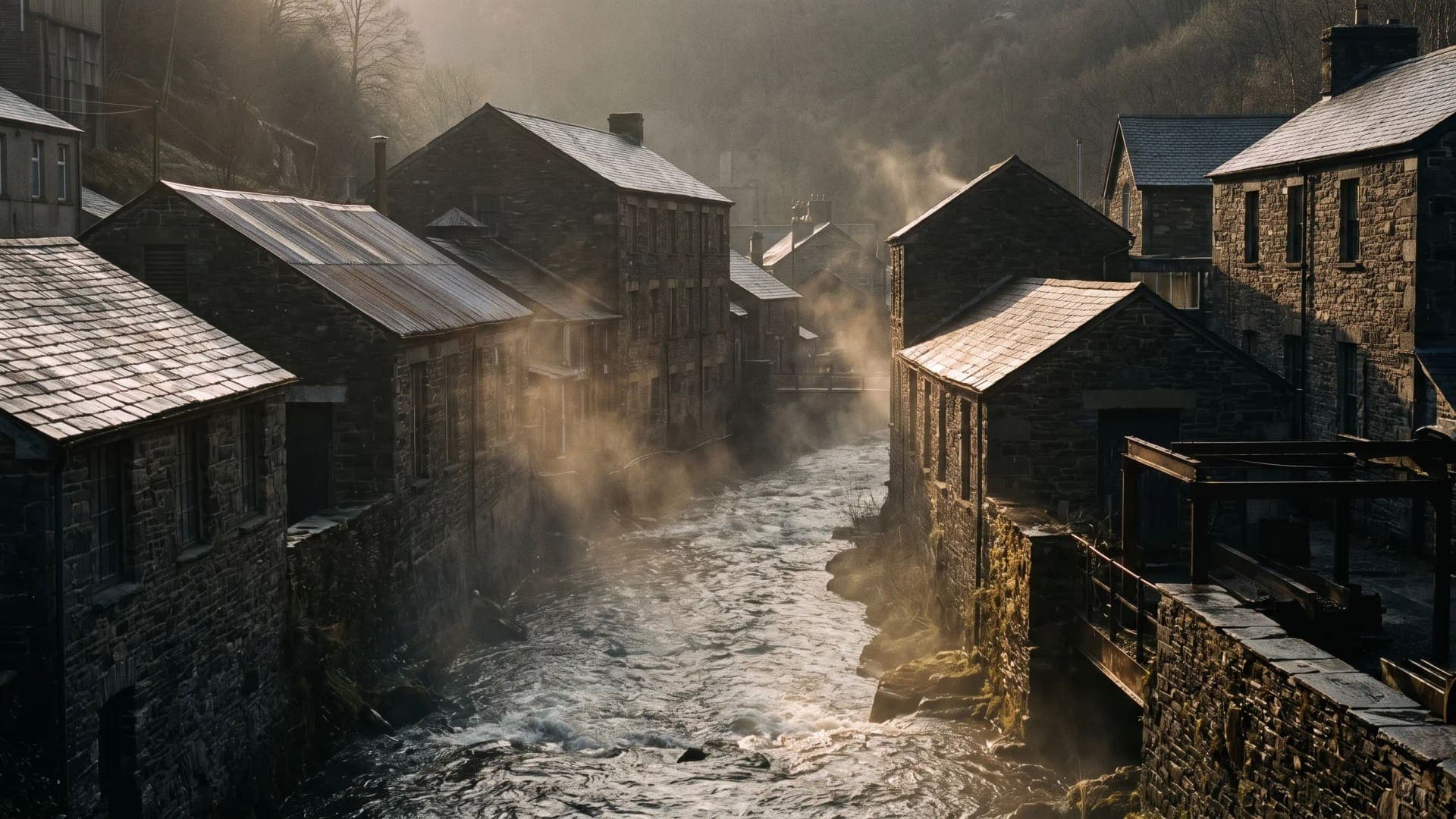
You arrive in the town of Thiers from above. The medieval town clings to the steep slope, its houses crowded together along narrow lanes that step down toward the valley below, and from the town centre you can see nothing at all of the river that nevertheless shaped the whole town. You have to leave the top of the old town to understand that Thiers cannot be told from a single point of view.
Thiers cutlery cannot be visited in a single place either. It is spread across a municipal museum located on two sites in the town centre, a valley of former grinders' workshops that has been open to the public a few kilometres away, and a factory valley that has been turned into a contemporary art venue, further below the town. Three places, but one and the same geography: a river that shaped a craft first, and a heritage afterward.
One point before starting: opening hours, dates and admission prices all change from one season to the next, especially for the Vallée des Rouets, whose guided visits only run during part of the year. This article does not give any of them; they are to be checked directly with the cutlery museum and the Ville de Thiers. Here, instead, is what these places actually show, where each of them is located, and in what order to see them.
Thiers reads from top to bottom
Visiting Thiers means covering three distinct places: the cutlery museum, spread across two sites in the town centre; the Vallée des Rouets, a few kilometres away, where former grinders' workshops once lined the river; and the factory valley, below, now a contemporary art venue. The geography explains this spread: water is what fixed cutlery here.
The relief decided everything. The medieval town occupies the top of the slope. Below runs the Durolle, a short, swift torrent that fixed cutlery here for seven centuries: the Journal tells that story in detail elsewhere; here it is only a matter of knowing what can be seen today, and where.
The visit splits across three places. In town, the cutlery museum occupies two addresses on the Rue de la Coutellerie. Outside the walls, a few kilometres away, the Vallée des Rouets preserves former grinders' workshops driven by the river. Below the town, the factory valley runs along the Durolle and today houses a contemporary art centre set inside former cutlery factories.
This spread is not a lack of organisation: it reflects the way the trade settled, between the craftsmen of the town centre, the grinders who needed the current, and the factories that later came to occupy the lower valley. Visiting Thiers means following that slope, from the top down to the water.
The cutlery museum, two sites on Rue de la Coutellerie
The Thiers cutlery museum, created in 1982, occupies two sites in the town centre, at number 23 and number 58 Rue de la Coutellerie. Its collections bring together 14,000 objects, including 6,000 knives, with about 700 pieces shown in the permanent exhibition, from French and foreign cutlery centres dating from the 16th century to today.
The municipal museum was created in 1982. It took over the collections of the former Musée Barante, open to the public from 1924 and closed in December 1981: nearly a century of continuity in preserving Thiers's cutlery heritage. Since 2020 it has carried the name Musée de la coutellerie Jean-Claude Potte.
Of the collection's 14,000 objects, including 6,000 knives, only about 700 are shown in the permanent exhibition: a selection, not a full inventory. These pieces come from French and foreign cutlery centres, from the 16th century to today: visitors therefore see more than a Thiers panorama alone.
The museum also houses demonstration workshops, where craftsmen work in front of the public: the gesture, rather than the display case alone. Temporary exhibitions are renewed there regularly, announced by the Ville de Thiers.
- Two addresses in the town centre: number 23 and number 58 Rue de la Coutellerie.
- A collection of 14,000 objects, including 6,000 knives, French and foreign, from the 16th century to today.
- About 700 pieces shown in the permanent exhibition.
The Vallée des Rouets, the third site, by the water
The third site of the cutlery museum, the Vallée des Rouets opened to the public in 1998, about 3 km from the town centre, near the place known as Château-Gaillard. The rouets were the grinders' workshops driven by the river, where blades were sharpened by the water. Visits there are guided and seasonal today.
Grinders' workshops could not simply be built anywhere: they needed the steady current of the river to turn their grinding wheel. They therefore gathered outside the town itself, along the course of the Durolle, in the spots where the slope offered enough driving force. This is the very site that the Vallée des Rouets shows today, about 3 km from the town centre, close to the place known as Château-Gaillard.
The Journal covers, elsewhere, the work and the daily life of the grinders who once occupied these places: here, the Vallée des Rouets shows the place itself, the workshops by the water and the river that once turned them.
What the place reveals cannot be read in a display case: the sound of the water, the narrowness of the workshops, the closeness of the river to the workbench. It is a site apart from the museum in town, complementary, to be visited when the season allows.
The factory valley, turned into a place of art
The factory valley stretches along the Durolle, below the town: it was the force of the water that fixed cutlery there. The Creux de l'Enfer, a contemporary art centre created in 1988 inside a former cutlery factory closed in 1956, has been labelled a centre of national interest since 2019 and expanded in 2025 to the Usine du May.
The same water that turned the grinders' wheels also turned larger factories, further down below the town. Part of these buildings ceased all activity: the Creux de l'Enfer today occupies one such former cutlery factory, closed in 1956.
Rather than leave it derelict, the town turned it, in 1988, into a contemporary art centre. It has been labelled centre d'art contemporain d'intérêt national since 2019. Since 2025 it has expanded to the Usine du May, linked by a covered footbridge, bringing the exhibition space to close to 1,000 m².
The choice says something about a town that did not turn its industrial past into a museum piece just to look at it: it put it back to work, in another form. It is the building, and what it once was, that carries the meaning of the place.
Watching a knife take shape, what a display case never shows
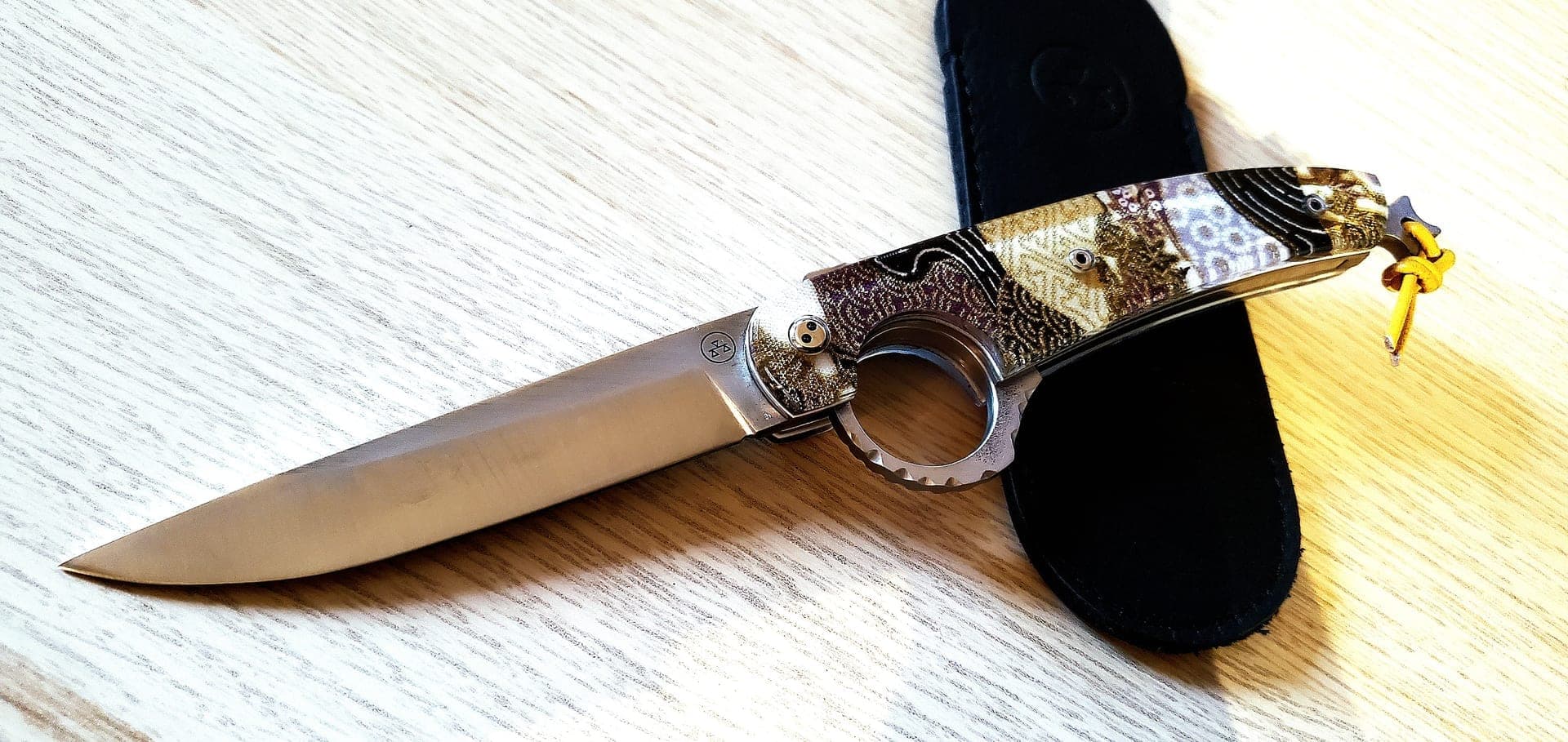
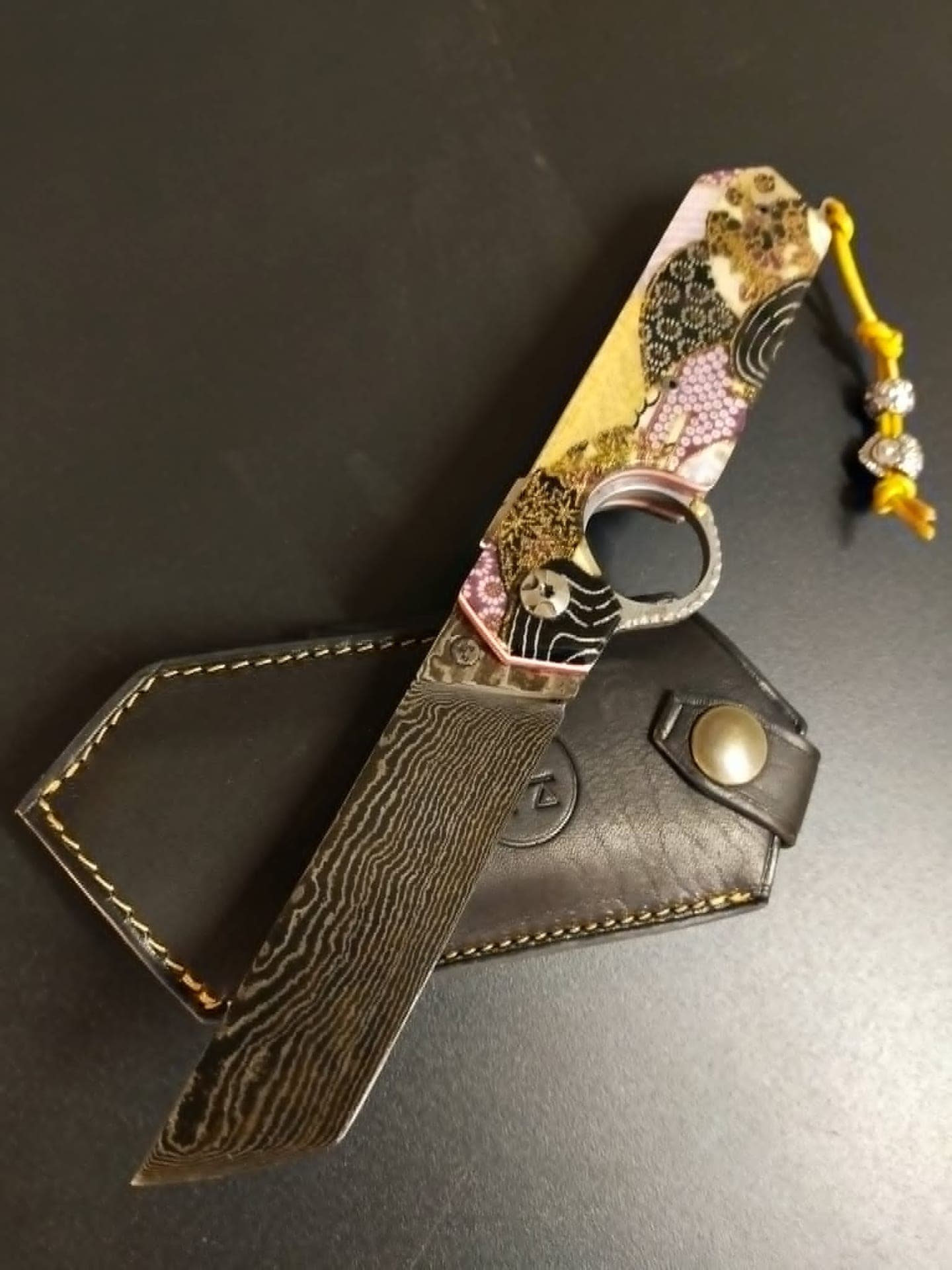
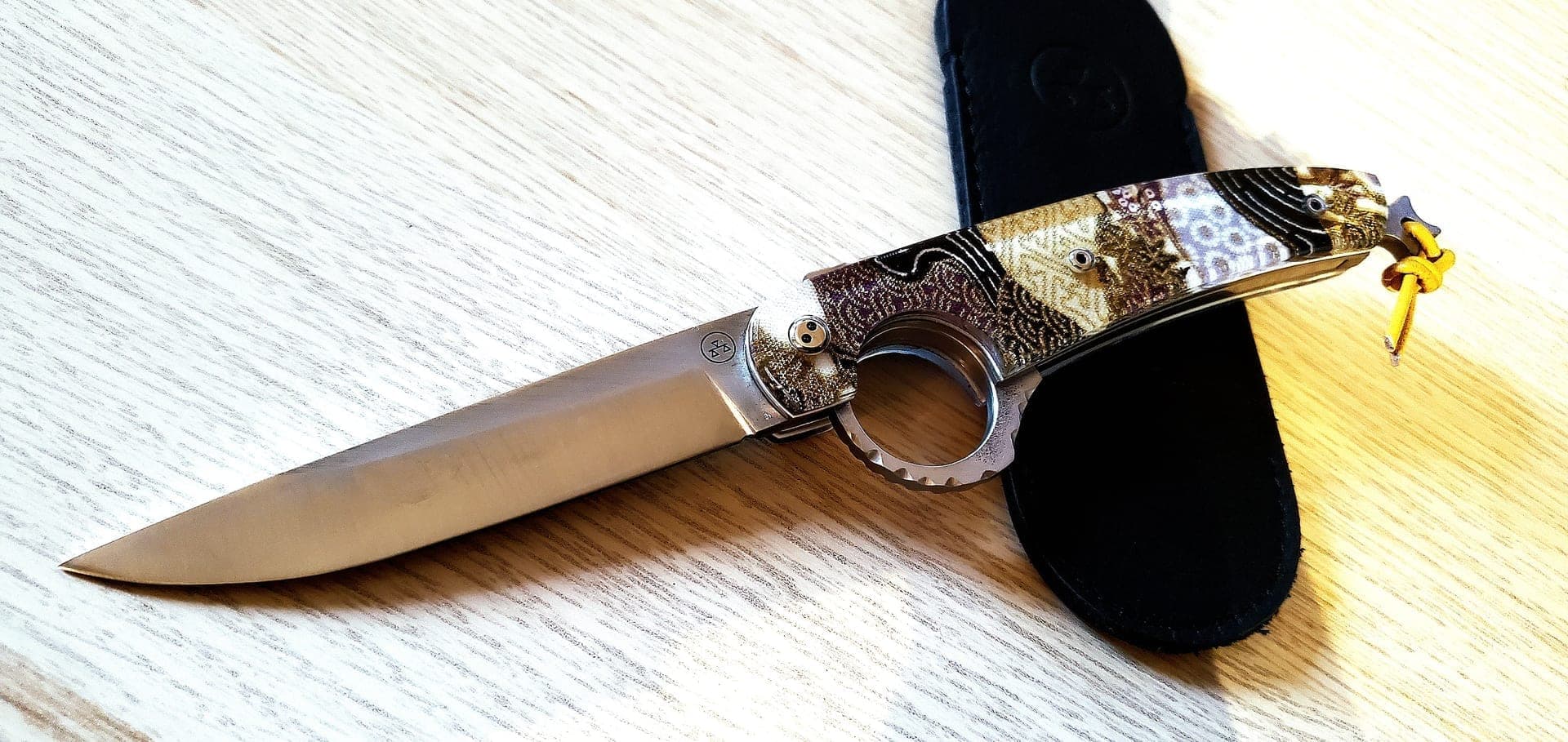
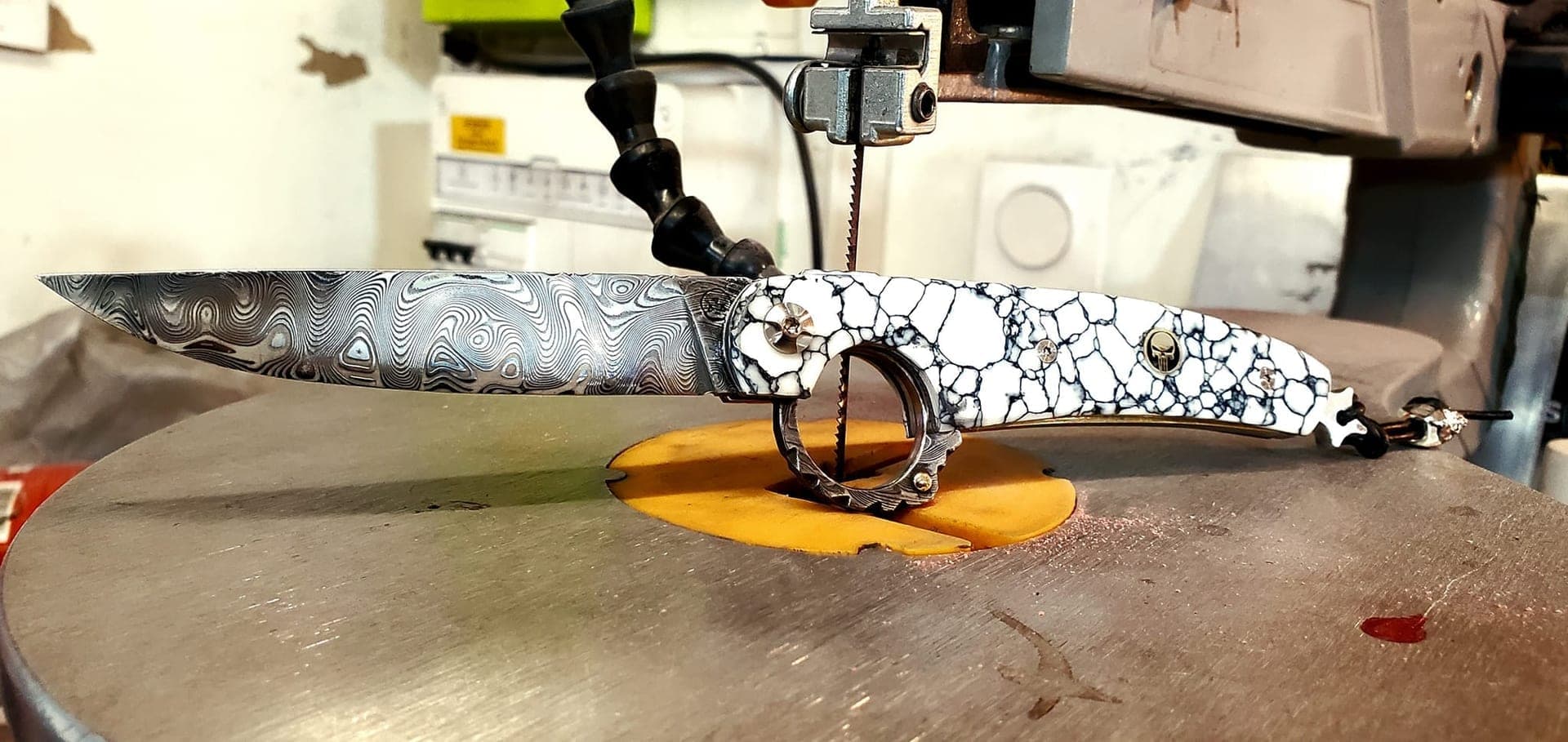
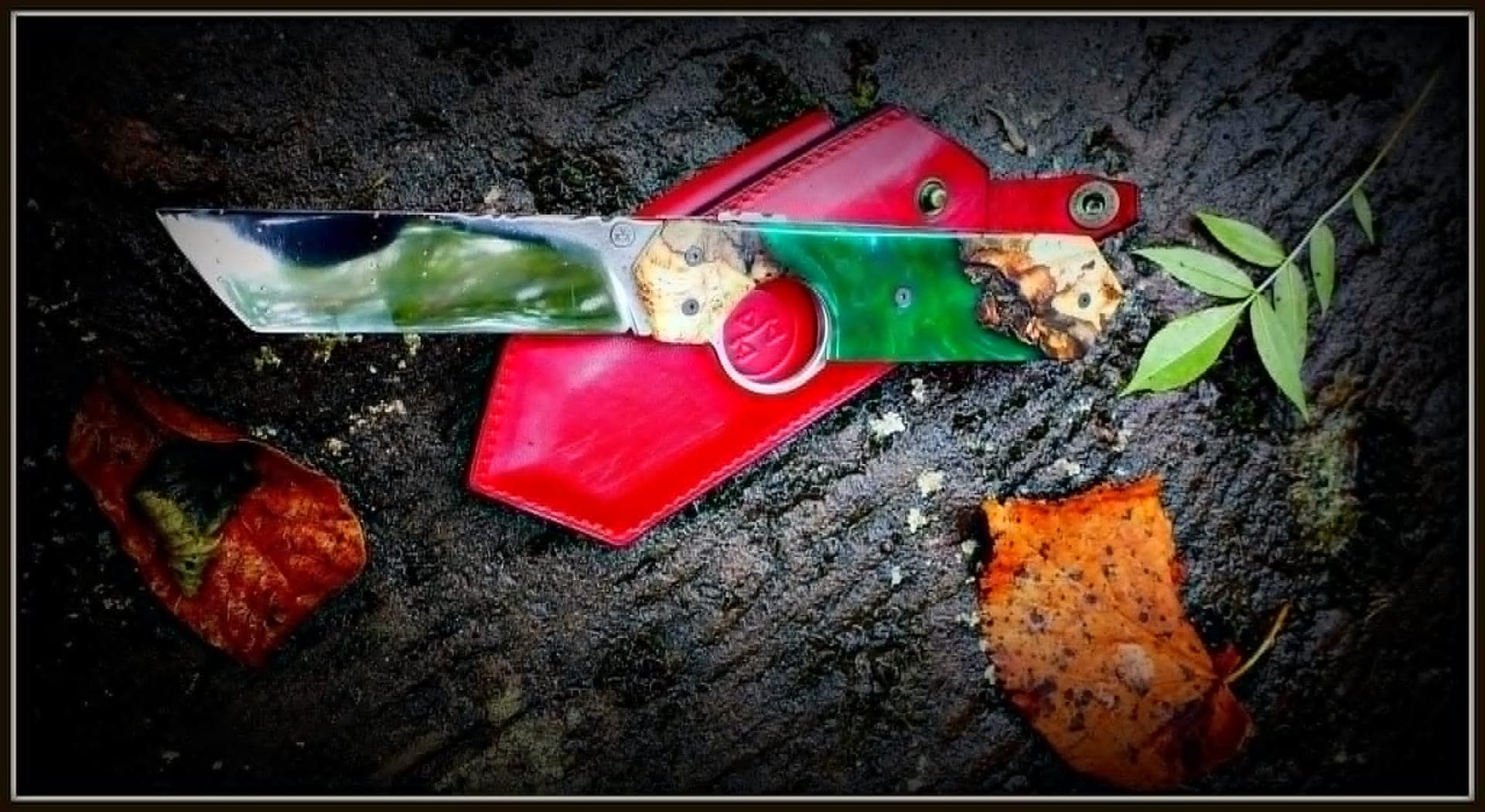
A collection shows finished knives; a workshop shows the gesture that brings them into being: the fitting, the adjusting, the sound of a workbench. In Thiers, the Résiliant workshop, at 15 Rue Alexandre Dumas, is open by appointment: people come there to collect their knife, discuss a custom piece, or simply watch a blade come to life.
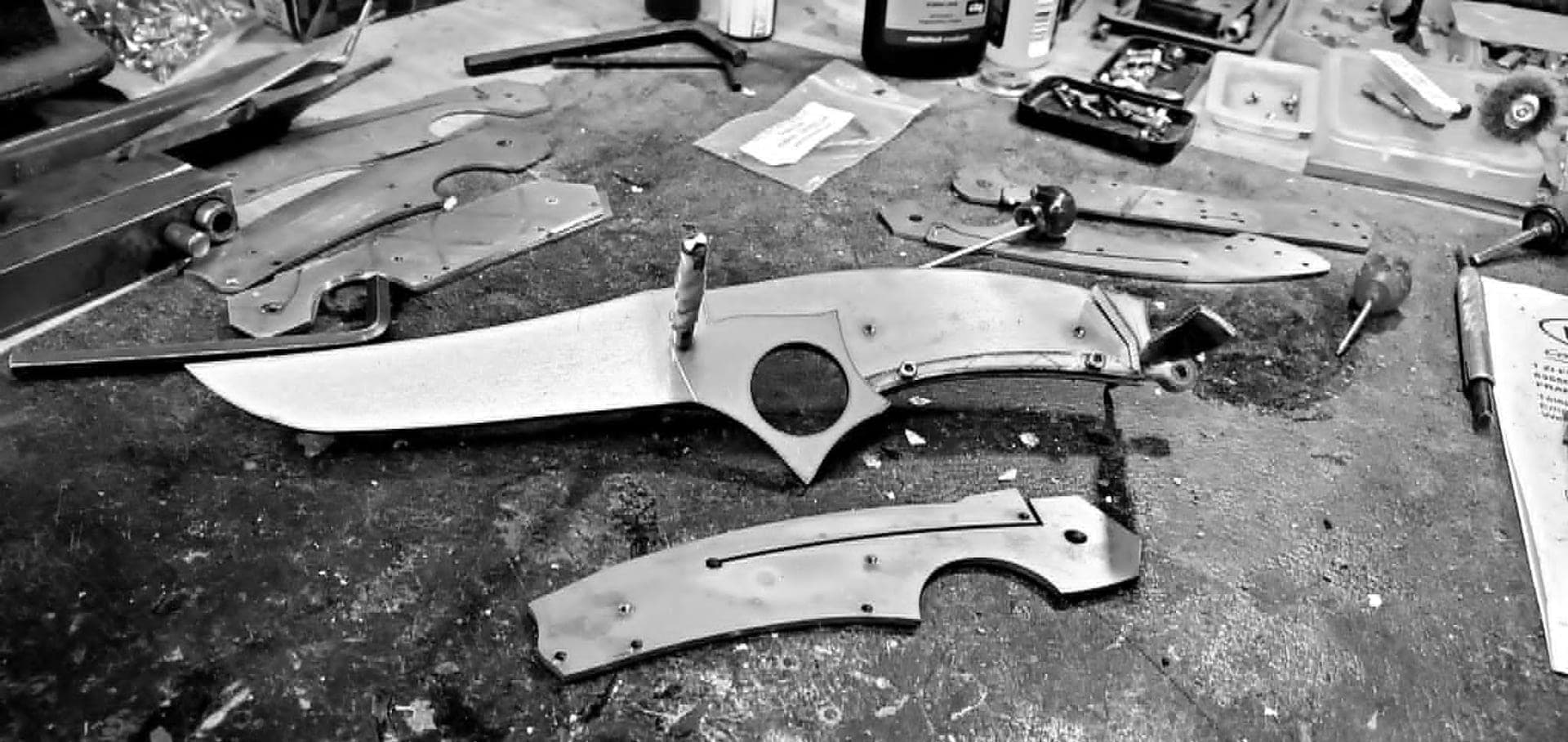
A museum, however rich its collection, only shows finished pieces, frozen in time. A workshop that is still working shows something else entirely: the piece being made, the sound of the workbench, tools set out in an order that makes sense only to whoever actually uses them. This is exactly the difference that the Résiliant workshop, at 15 Rue Alexandre Dumas, opens up by appointment.
People come for three reasons, in the workshop's own words: to collect a finished commission, to discuss a custom piece before ordering it, or simply to watch a blade come to life. There is no fixed schedule, no walk-in visit: every visit is arranged in advance.
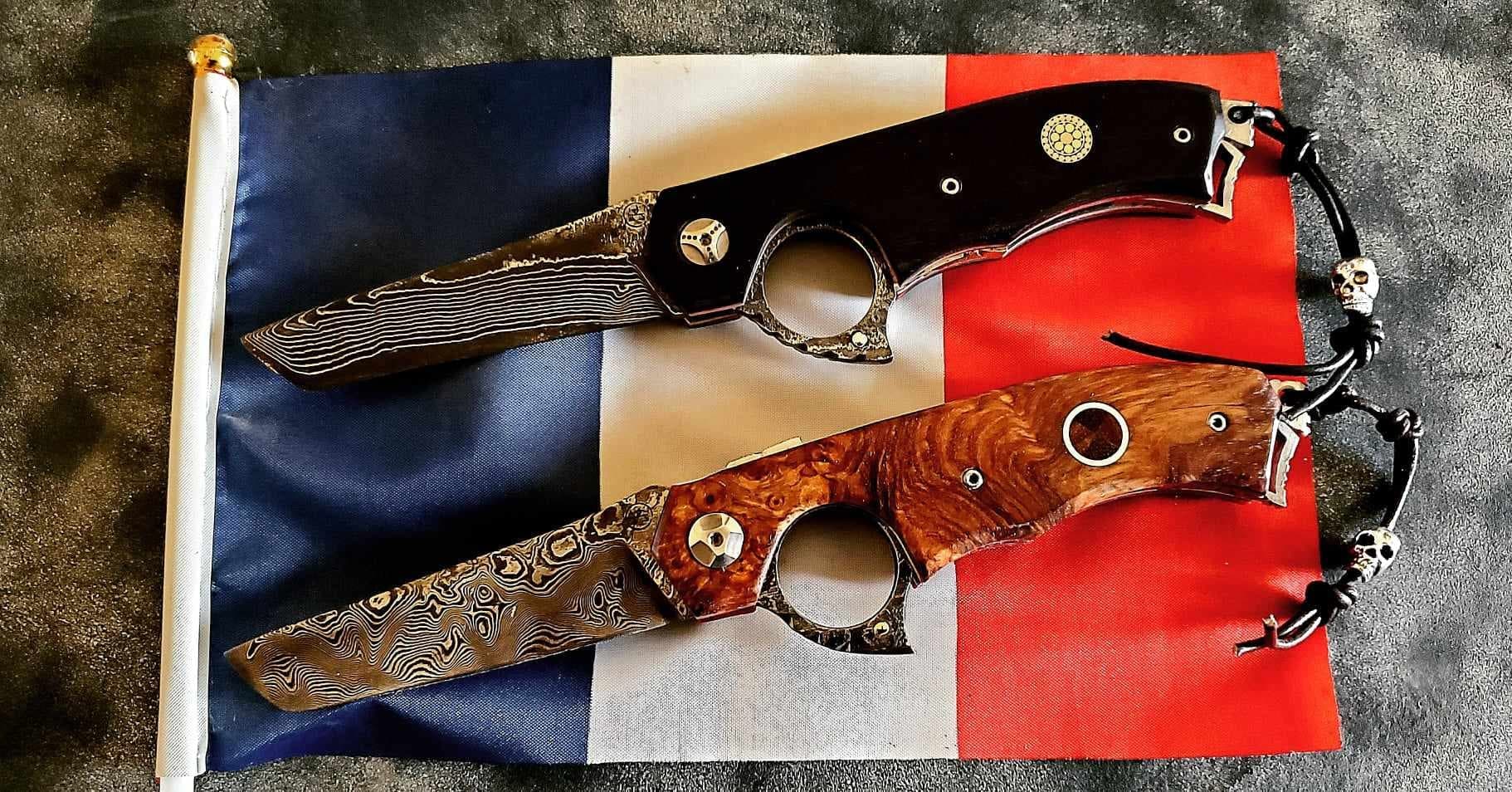
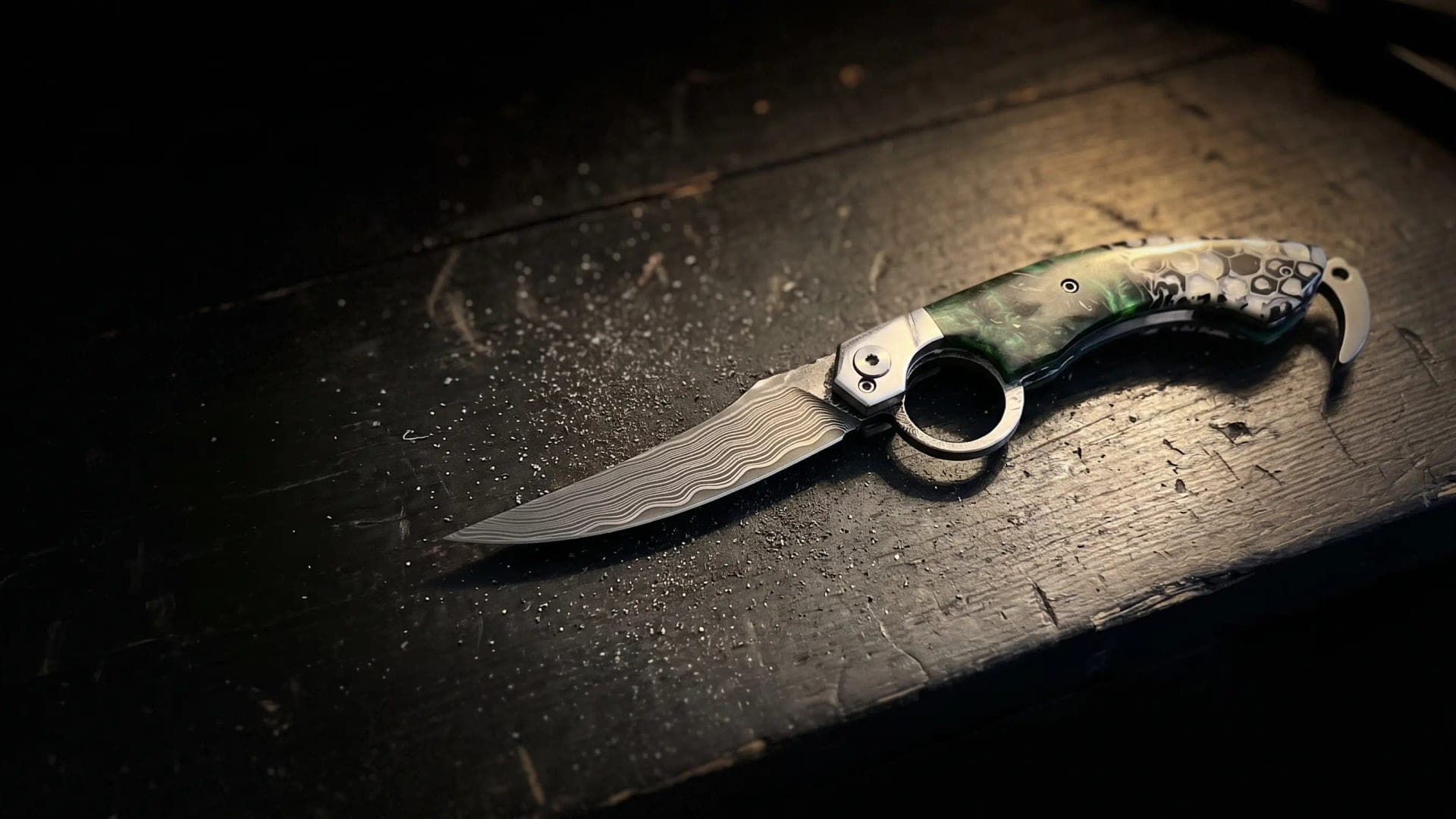
Le Fhiers, one of the models born at this workbench, carries that tribute even in its name: a contraction of "fier" (proud) and "Thiers", a nod to the generations of cutlers who came before this workshop in the same town. The steel is chosen at quotation stage.
Le Résiliant Tanto, the model the workshop began with, is fitted in D2 steel. L'Archétype, the result of five years of fitting, adjusting and tuning, is reserved for damascus pieces. This making process, the Journal covers step by step elsewhere: here, it is only a matter of what a living place shows, and what a display case never does.
A day in Thiers, in order
The order that holds up: the museum's two sites, on foot in the medieval town, then the factory valley and its art centre below, and the Vallée des Rouets, outside the town, when the season allows. The workshop, for its part, is visited by appointment booked ahead, before or after that day.
The museum's two sites, at number 23 and number 58 Rue de la Coutellerie, are visited one after the other, on foot, within the medieval town: it is the logical starting point, the one requiring the least travel.
Next comes the factory valley, below, where the Creux de l'Enfer and the Usine du May meet by a covered footbridge. The Vallée des Rouets, for its part, depends on the season: its guided visits only run part of the year, and it is worth checking with the Ville before travelling there.
The Résiliant workshop rounds off the day for anyone with a commission underway or a project to discuss, but it is booked by appointment, never as a walk-in visit. Dates, hours and prices for the three heritage sites are best checked at the last moment with the cutlery museum and the Ville de Thiers: they change from one season to the next, and this article does not fix them.
- What can you see at the Thiers cutlery museum?
- The museum shows about 700 pieces from a collection of 14,000 objects, including 6,000 knives, from French and foreign cutlery centres dating from the 16th century to today. Demonstration workshops show craftsmen at work, and temporary exhibitions are renewed there regularly.
- Where is the Thiers cutlery museum?
- The museum occupies two sites in the centre of Thiers, at number 23 and number 58 Rue de la Coutellerie. A third site, the Vallée des Rouets, lies outside the town, about 3 km away, near the place known as Château-Gaillard.
- What is the Vallée des Rouets?
- It is the third site of the cutlery museum, opened to the public in 1998, about 3 km from the centre of Thiers. The rouets were the grinders' workshops driven by the river, where blades were sharpened by the water; visits there are guided and seasonal today.
- What can you see in the factory valley today?
- The factory valley runs along the Durolle below the town. The Creux de l'Enfer has occupied a former cutlery factory closed in 1956 since 1988, labelled a contemporary art centre of national interest since 2019 and expanded in 2025 to the Usine du May, linked by a covered footbridge.
- Can you visit a cutler's workshop in Thiers?
- The Résiliant workshop, at 15 Rue Alexandre Dumas, is open by appointment: people come there to collect their knife, discuss a custom piece, or watch a blade come to life. For other cutlery workshops in town, visiting policy should be checked directly with each of them.
- Do you have to come to Thiers to order a knife?
- No: every Résiliant is commissioned to order and shipped, to clients in France, Belgium, Switzerland and the United States. Coming to Thiers lets you see the workshop and discuss a custom piece, but it is not a condition for ordering.
Sources
- Musée de la coutellerie de Thiers — Wikipédia — Encyclopédie : création du musée en 1982, filiation avec l'ancien musée Barante, sites et collections.
- Musée de la coutellerie — Ville de Thiers — Source institutionnelle : les deux sites du musée en centre-ville, ses collections et ses ateliers de démonstration.
- Centre d'art contemporain le Creux de l'Enfer — Ville de Thiers — Source institutionnelle : création du centre d'art en 1988 dans une ancienne usine coutelière, extension à l'usine du May en 2025.
- Creux de l'Enfer — Wikipédia — Encyclopédie : le label centre d'art contemporain d'intérêt national obtenu en 2019.
- Coutellerie de Thiers — Wikipédia — Synthèse encyclopédique : sept siècles de coutellerie thiernoise fixée au fil de la Durolle.