Take any folding knife, from the Spanish navaja to your grandfather's pocket knife: it always opens the same way. The blade pivots out of the handle spine first, and the cutting edge only appears at the very end of the travel. That gesture has barely changed since blades were first folded.
In Thiers, one workshop decided to take it the other way round. On a Résiliant, the blade comes out of the top of the handle, cutting edge first, driven by a ring that takes the index finger. The first time, the hand hesitates. By the tenth, you no longer understand why every other knife does the opposite.
Here is what reverse opening really is: where it comes from, how it works, what it changes once the knife is in your hand, and why it takes hours at the bench to tune a movement that lasts half a second.
What exactly is a reverse-opening knife?
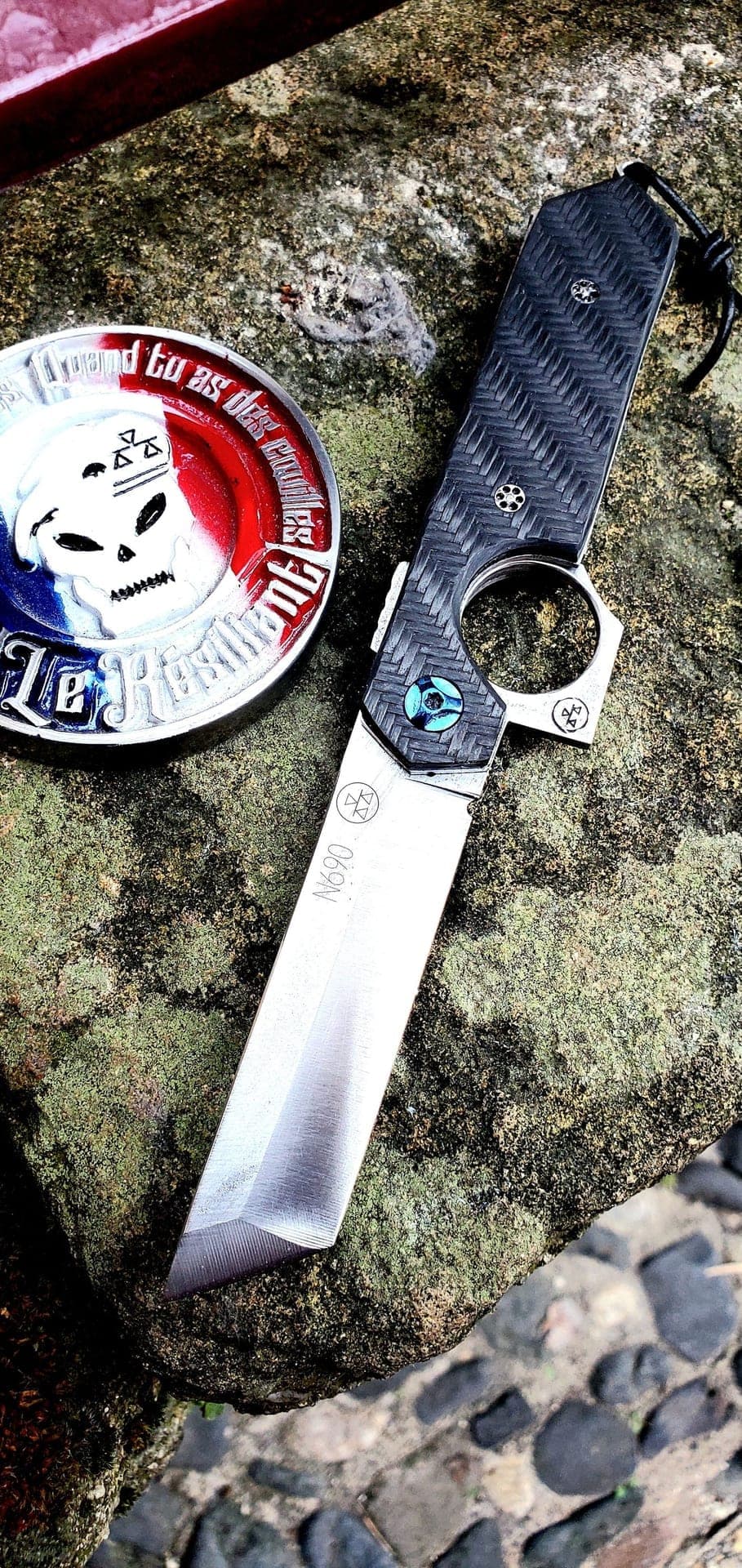
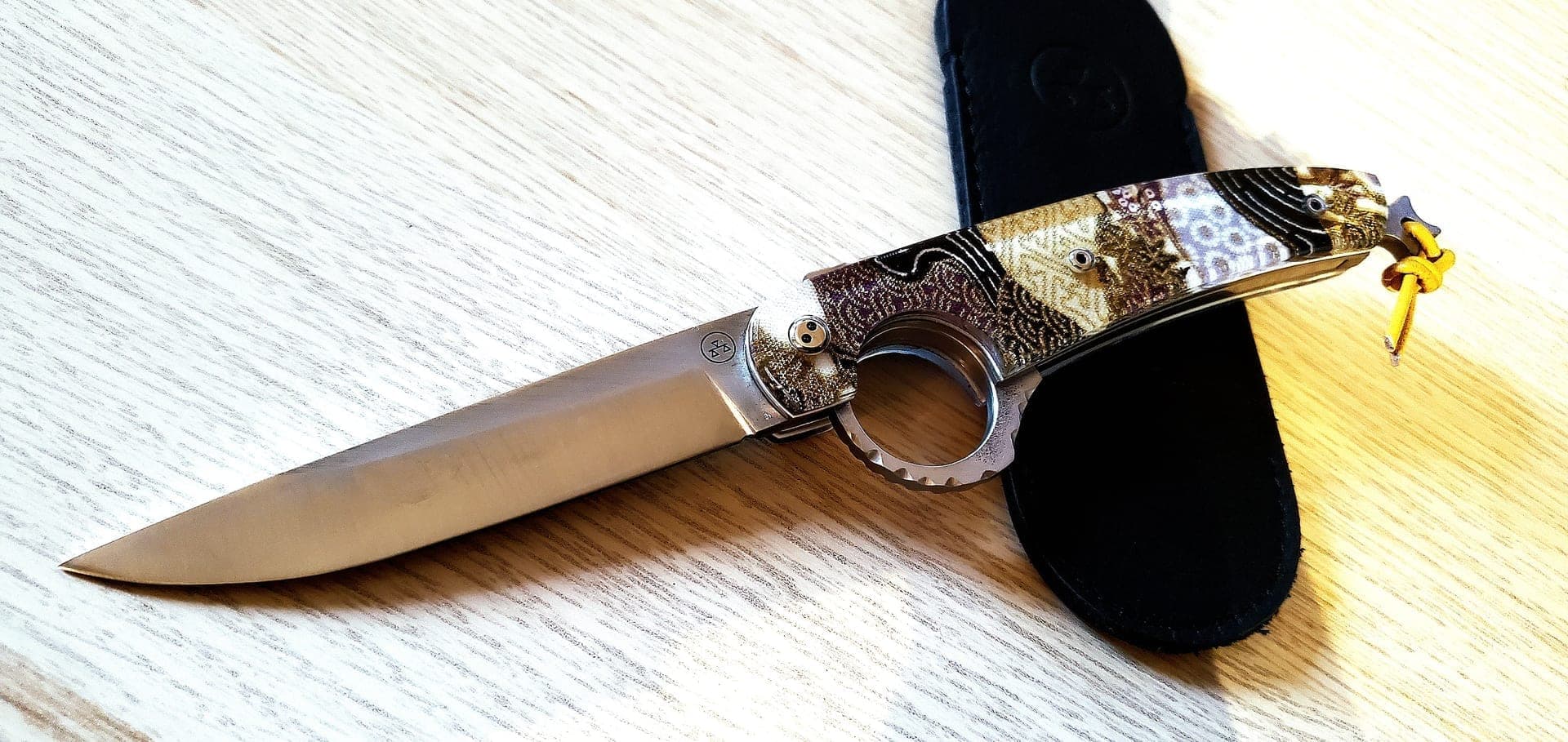
A reverse-opening knife is a folding knife whose blade comes out of the top of the handle, cutting edge first, instead of pivoting spine first like a conventional folder. On Le Résiliant knives, that movement is driven by a ring fixed to the blade, into which the index finger slides.
On a traditional folding knife, the blade sleeps inside the handle, cutting edge turned inwards and protected. To open it, you pivot it around its axis by catching the spine, with a nail nick, a stud or the thumb depending on the model. The edge is only revealed at the very end of the movement.
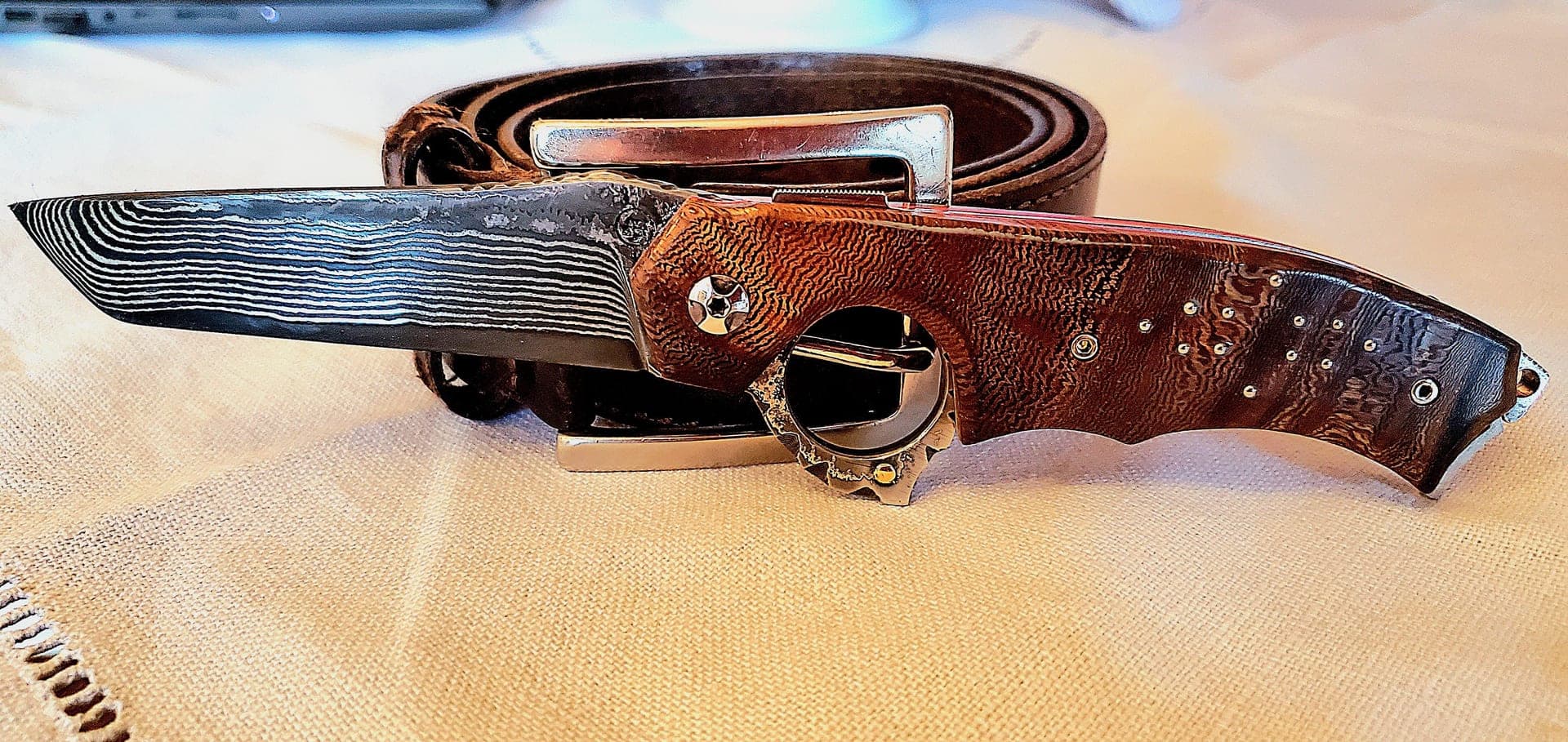
Reverse opening turns that logic around. The blade sits the other way: the cutting edge presents itself first, and it rises out of the top of the handle instead of sweeping forwards. The engine of the gesture is no longer the thumb on the spine, but a metal ring fixed to the blade's heel, set under the junction of handle and blade.
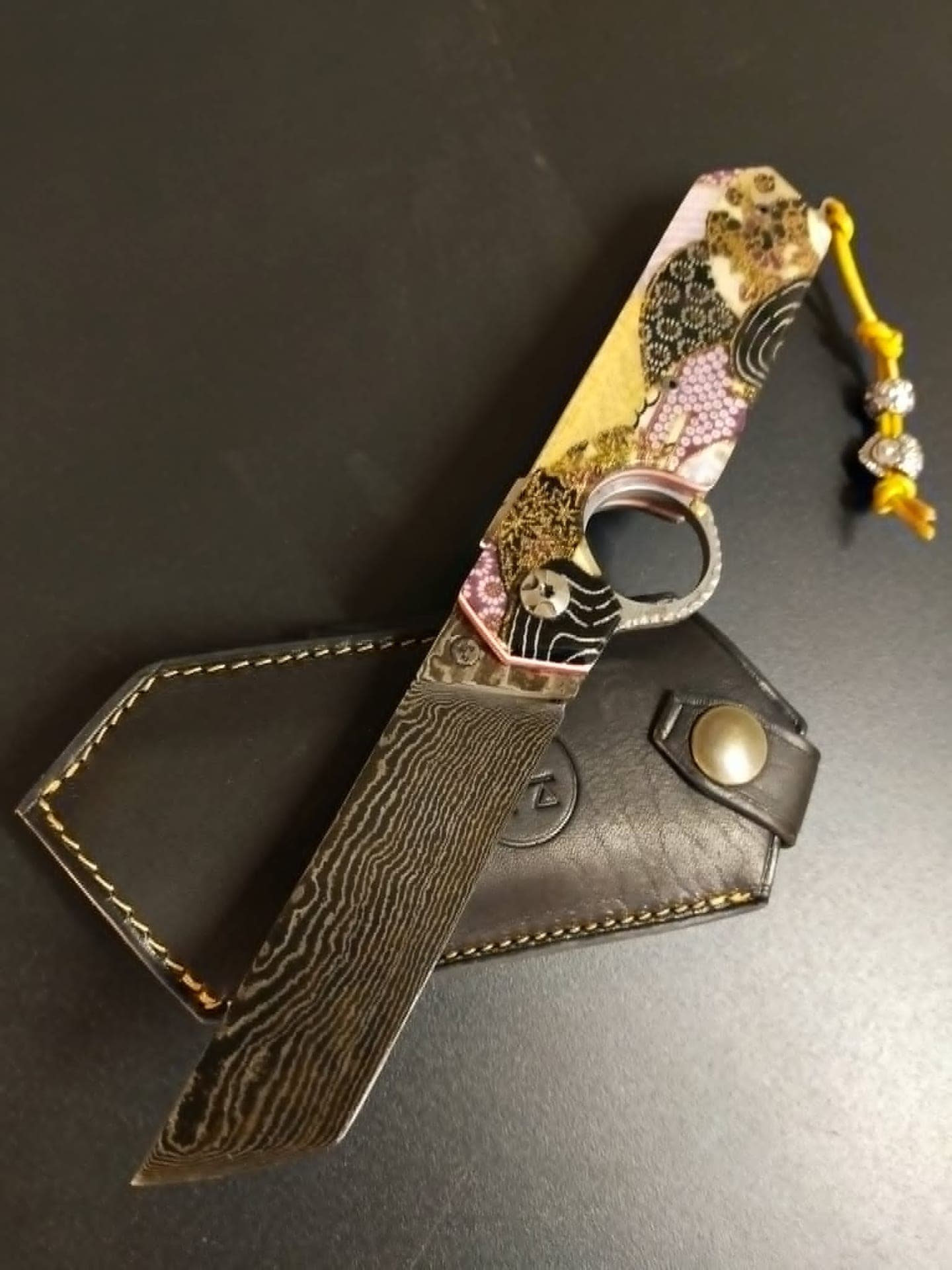
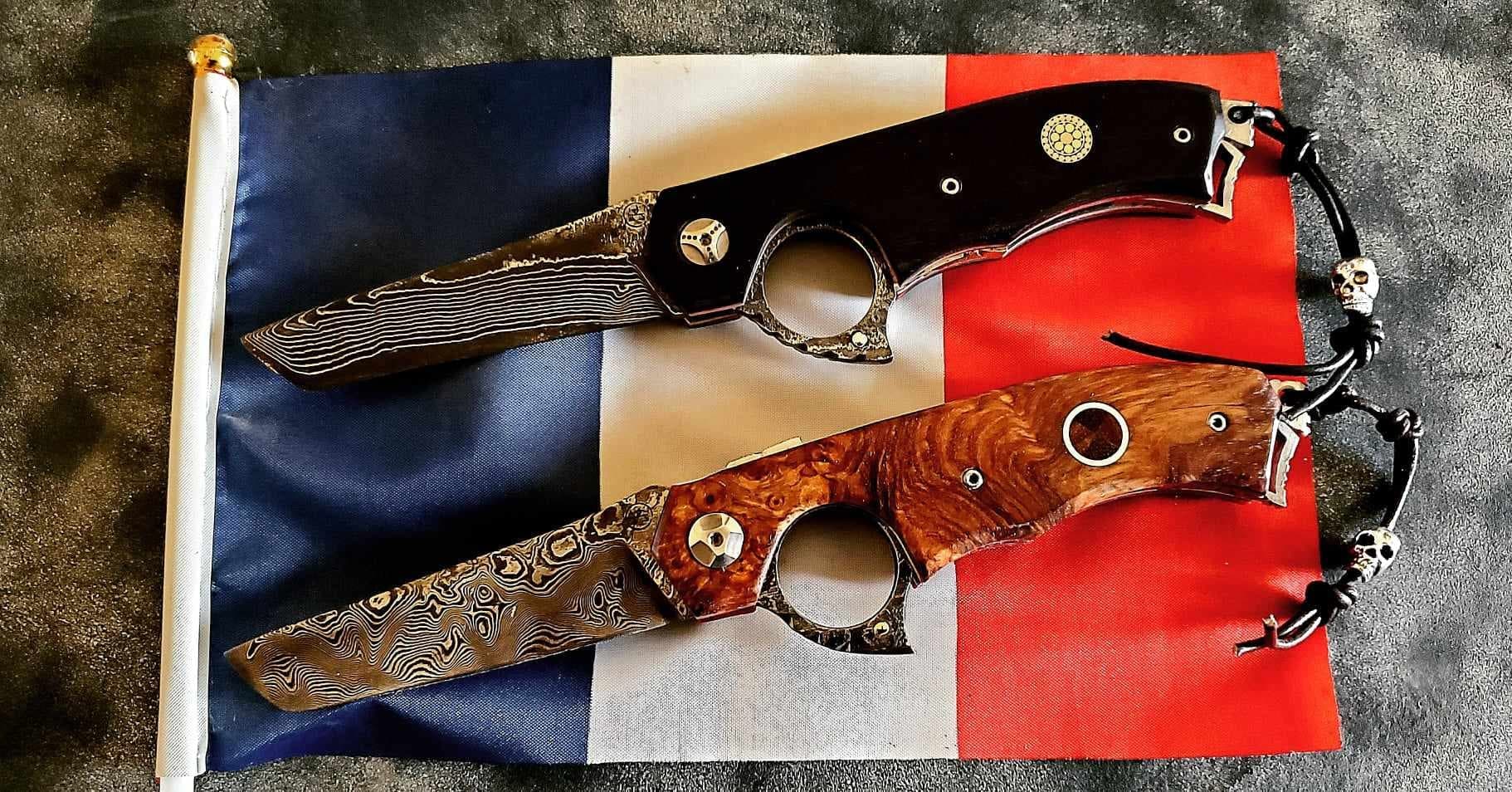
This mechanism is not a variation on an existing system: it was drawn, tested and assembled in Thiers, in Le Résiliant's workshop, and it now equips the entire collection, from the original model to the damascus collector's piece. It is the workshop's signature, the detail that identifies a Résiliant before you have even opened it.
The gesture: a ring, an index finger, a blade that rises
Opening is one-handed. The index finger slides into the ring and pushes: the blade travels its arc, edge forward, and locks open against a liner that catches its heel. To close it, you move that liner aside and guide the blade back into the handle.
The knife is closed, in the palm. The index finger finds the ring, settles into it and gives a short push. The blade rises, turns, presents its edge and stops with a dry click. The movement takes a second to learn and then becomes perfectly natural, as quick as any one-handed folder.
The lock itself stays within the tradition of the modern folding knife: a flexible liner housed between the scales moves behind the heel of the blade and stops it from closing under load. It is a liner lock, the system brought to its modern form by American knifemaker Michael Walker in the 1980s and since adopted as the folding-knife standard. To close the knife, you push that liner aside with the thumb and guide the blade home.
On a Résiliant, that liner lock is turned around as well: the liner works at the top of the handle rather than the bottom, the logical consequence of a blade that rises from above. The principle remains Walker's; only its position follows the direction of opening.
Once the blade is locked, the ring does not disappear: it now sits in front of the handle, exactly where the index finger rests to cut. What served to open becomes a support, and that is where the mechanism stops being a curiosity and becomes a tool.
Why open a knife backwards?
Reverse opening was not born from an industrial brief but from a recovery. After overcoming a long illness, the founder of Le Résiliant wanted to leave a trace of his passage: to create a knife that did not yet exist, by reversing the most ordinary gesture in cutlery.
The idea came before the trade. It came to a man emerging from a long and painful illness, who realised, as he tells it himself, how fragile, short and precious life is. He wanted to leave something behind. Not one more knife: a knife nobody had made.
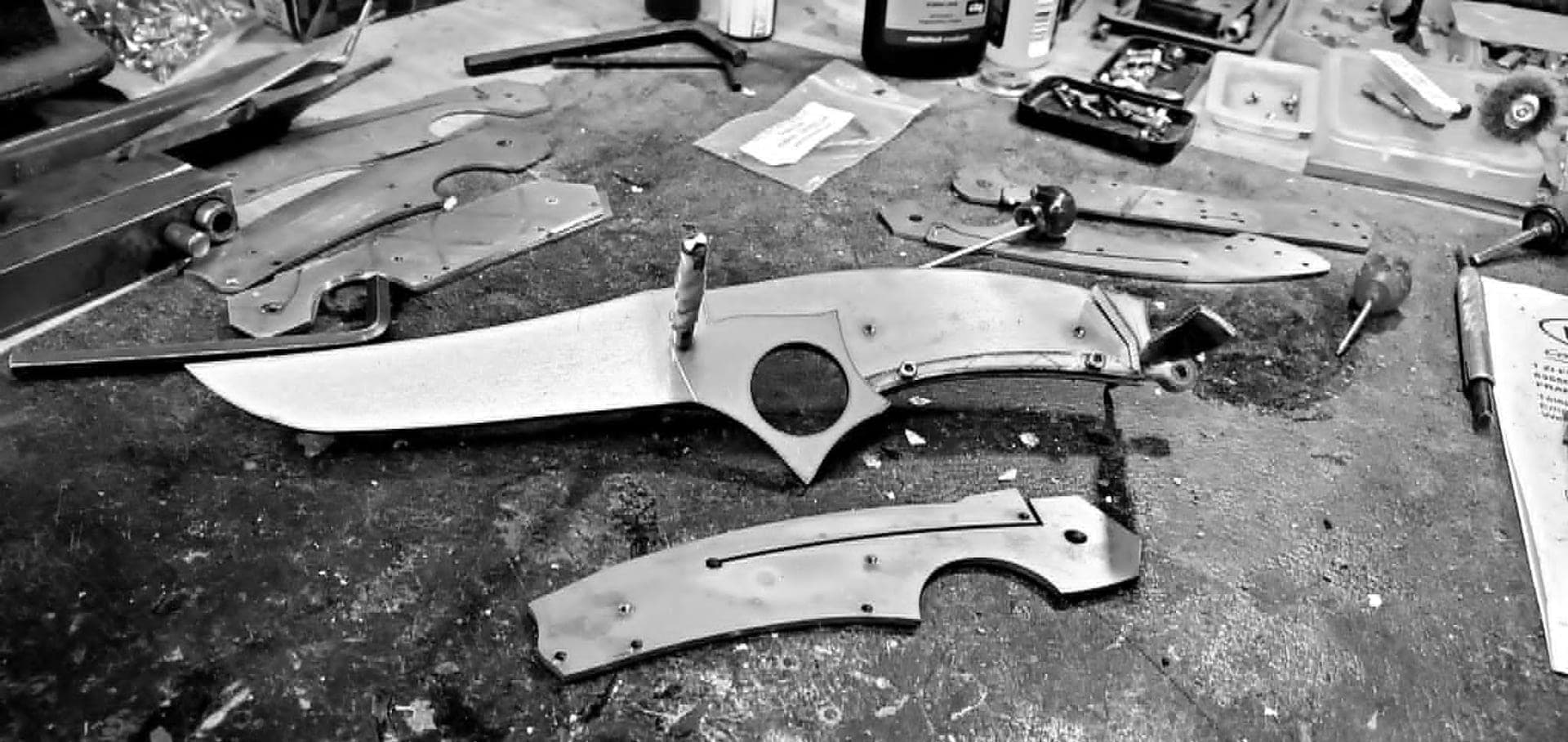
What remained was to learn the craft, with no qualification, in the most demanding town in France for that trade. The cutlers of the Thiers country welcomed him at the bench. From drawings to templates, from cardboard to plastic and then to metal, the mechanism took shape, before the first orders arrived through social media, from Belgium, Switzerland and the United States.
And there remains the question everyone asks when they first hold the piece: why backwards? Because a reversed gesture cannot be made absent-mindedly. You look at your knife, you know you are opening it. And because an object that forces you to relearn a movement centuries old stops being an accessory and becomes a piece you remember.
What reverse opening changes in daily use
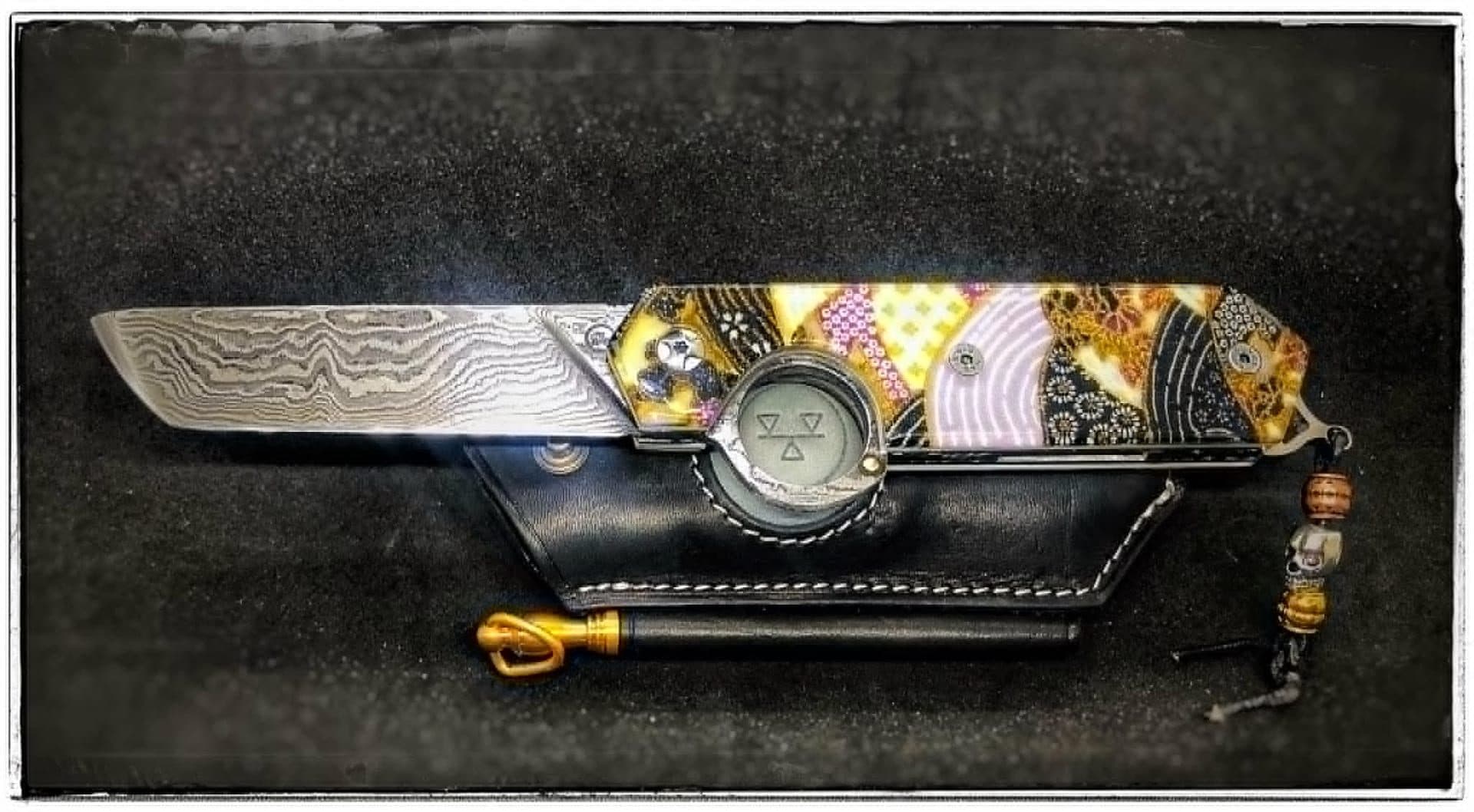
In use, the ring makes all the difference: it opens the blade, then acts as a support for the index finger once the knife is locked, which steadies the grip while cutting. The knife is carried on the belt, in a leather sheath chosen with the piece, rather than at the bottom of a pocket.
Grip is the first benefit. With the index finger set in the ring, the hand cannot slide forwards: the finger works against a firm stop, and cutting gains in confidence, especially on demanding tasks. That is why the original model, the Tanto, became the companion of those who carry it all day, on building sites as much as at the bench.
Carry changes too. A French leather sheath, stitched to measure and chosen with the knife, is worn on the belt, which keeps the knife immediately at hand. You draw, the index finger finds the ring, the blade rises: the gesture is continuous.
Three points are worth making, because they are the questions that come up at the workshop:
- Opening is entirely manual. No spring throws the blade: the index finger does the work, as on any manually opened folding knife.
- The mechanism is tuned, not replaced. Play appearing after years of use is taken up again at the workshop, on the original piece.
- Maintenance is that of any artisan knife: blade wiped and kept dry, a drop of oil on the pivot now and then, and a regular pass on a butcher's steel, medium-cut, to straighten the edge. The stone only comes out once the edge has truly suffered.
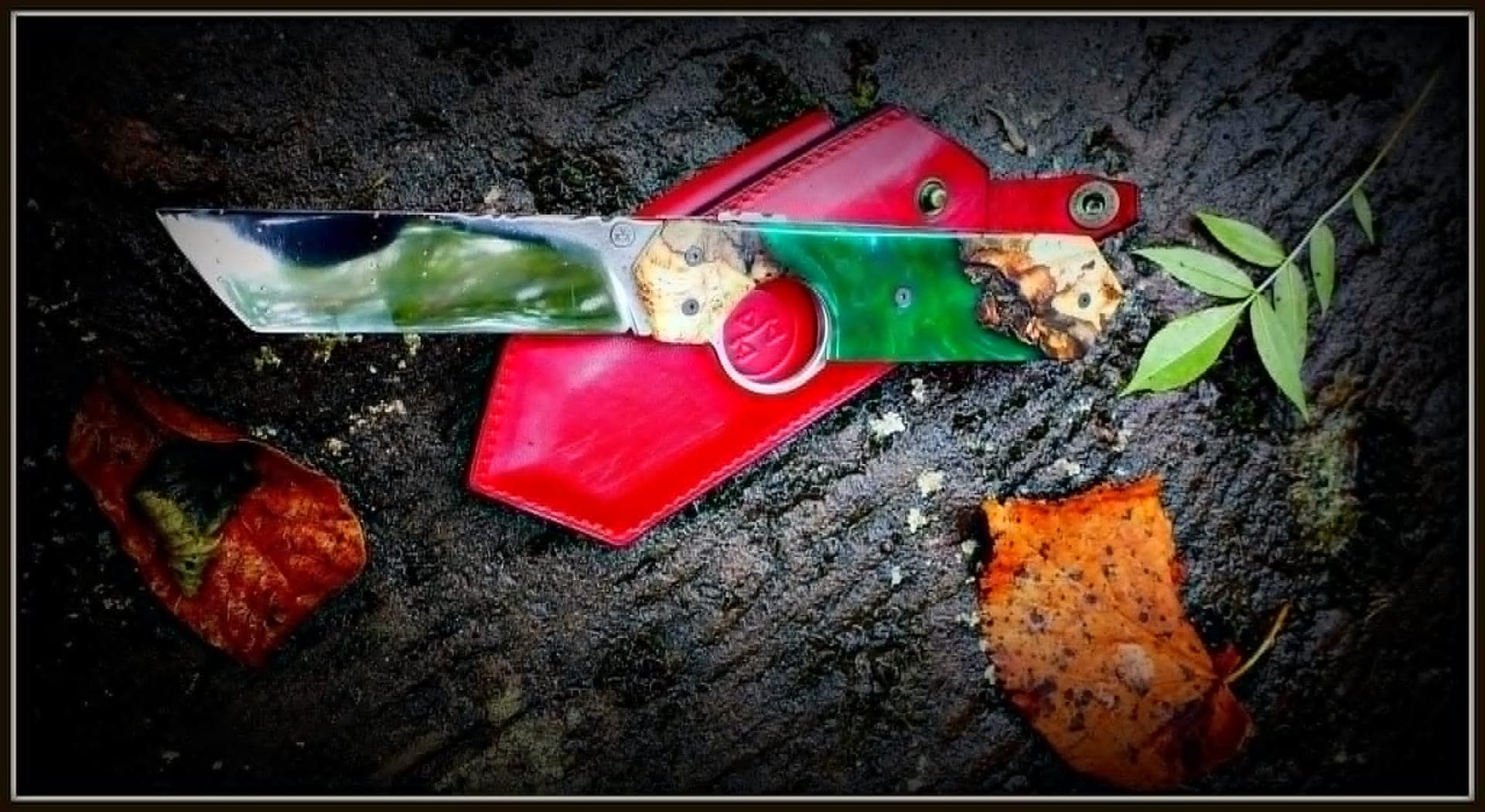
A Thiers invention, tuned by hand
Every mechanism is assembled and tuned by hand in the workshop at 15 rue Alexandre Dumas, in Thiers. The fitting is taken up piece by piece in the vice until the blade shows no play at all. L'Archétype, the workshop's collector's piece, took five years of refinement.
A mechanism that never existed before has no spare parts and no ready-made dimensions. Everything is decided within a tenth of a millimetre: the travel of the blade, the bearing of the liner, the exact position of the ring. That fitting work, in the vice and with the file, takes up most of the assembly time of a Résiliant, long after the blade has been cut and hardened.
Thiers was the only place where such stubbornness stood a chance. The town has forged French knives for seven centuries along the Durolle, and its area now produces the majority of the blades made in France. A dense body of know-how, passed from workshop to workshop, of which reverse opening is one of the most recent inventions.
The mechanism now equips the whole collection: the Tanto, the founding model in D2 steel; the Mini Tanto, the most affordable, which puts reverse opening within everyone's reach; L'Archétype, the outcome of five years of tuning, made in damascus only. The workshop can be visited by appointment: it is still the best way to understand the gesture, by making it yourself.
- What is a reverse-opening knife?
- It is a folding knife whose blade comes out of the top of the handle, cutting edge first, instead of pivoting spine first like a conventional folder. On Le Résiliant knives, the blade is driven by a ring fixed to its heel, into which the index finger slides.
- Who invented the reverse-opening knife?
- Le Résiliant, a cutler based at 15 rue Alexandre Dumas in Thiers, Auvergne. The idea came to him after overcoming a long illness, with the wish to leave a trace behind; he learned the craft alongside the cutlers of Thiers before perfecting the mechanism.
- How do you open a reverse-opening knife?
- With one hand: the index finger slides into the ring set under the junction of handle and blade, then pushes. The blade rises, edge forward, and locks open. To close it, you push the locking liner aside with the thumb and guide the blade back.
- Is a reverse-opening knife an automatic knife?
- No. Opening is entirely manual: no spring throws the blade, the index finger drives it through the ring. Locking is handled by a liner lock, the modern folding-knife standard, fitted the other way up here: the liner works at the top of the handle rather than the bottom.
- Where can you see or order a reverse-opening knife?
- At the workshop in Thiers, 15 rue Alexandre Dumas, which can be visited by appointment: you can handle the models and discuss a bespoke piece. As every Résiliant is made to order, the steel, handle and finish are chosen when the quote is drawn up.
Sources
- Canif — Wikipédia — Référence encyclopédique sur le couteau pliant : cran d'arrêt, virole tournante, cran forcé, et distinction entre ouverture manuelle et mécanismes assistés.
- Le liner lock (cran intérieur) — Homme des bois — Description technique du blocage par platine : le ressort se déplace latéralement pour venir bloquer le talon de la lame en position ouverte.
- Liner lock — Wikipédia (EN) — Histoire du liner lock : un principe attesté dès la fin du XIXe siècle, porté à sa forme moderne par le coutelier américain Michael Walker dans les années 1980 (ouverture à une main, goupille d'arrêt, bille de détente), devenu depuis le standard du couteau pliant.
- Coutellerie de Thiers — Wikipédia — Sept siècles de coutellerie dans le bassin thiernois, qui produit aujourd'hui la majorité des couteaux fabriqués en France.
- Coutellerie Le Résiliant — Ville de Thiers — Fiche officielle de l'atelier dans l'annuaire des commerces de la ville de Thiers, 15 rue Alexandre Dumas.