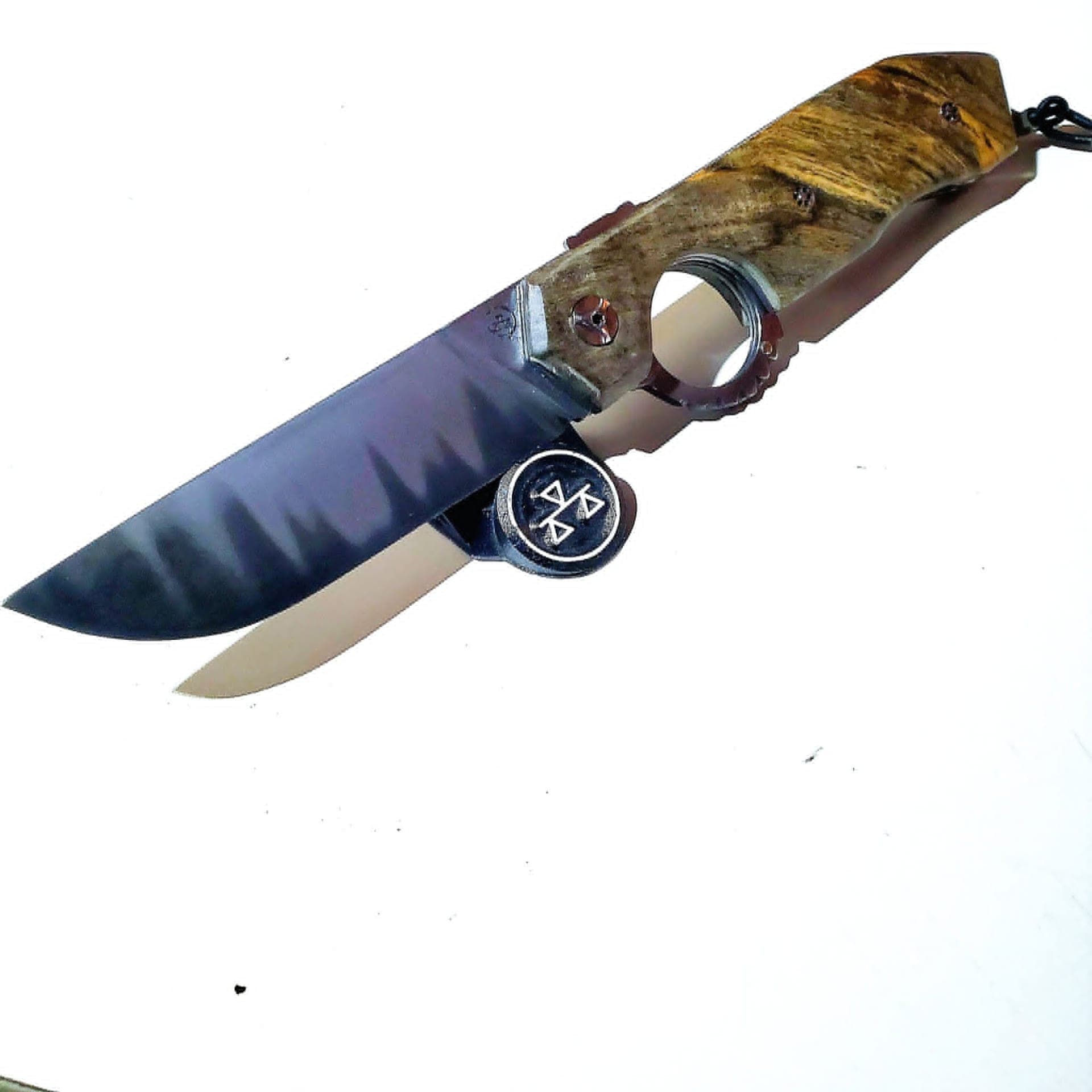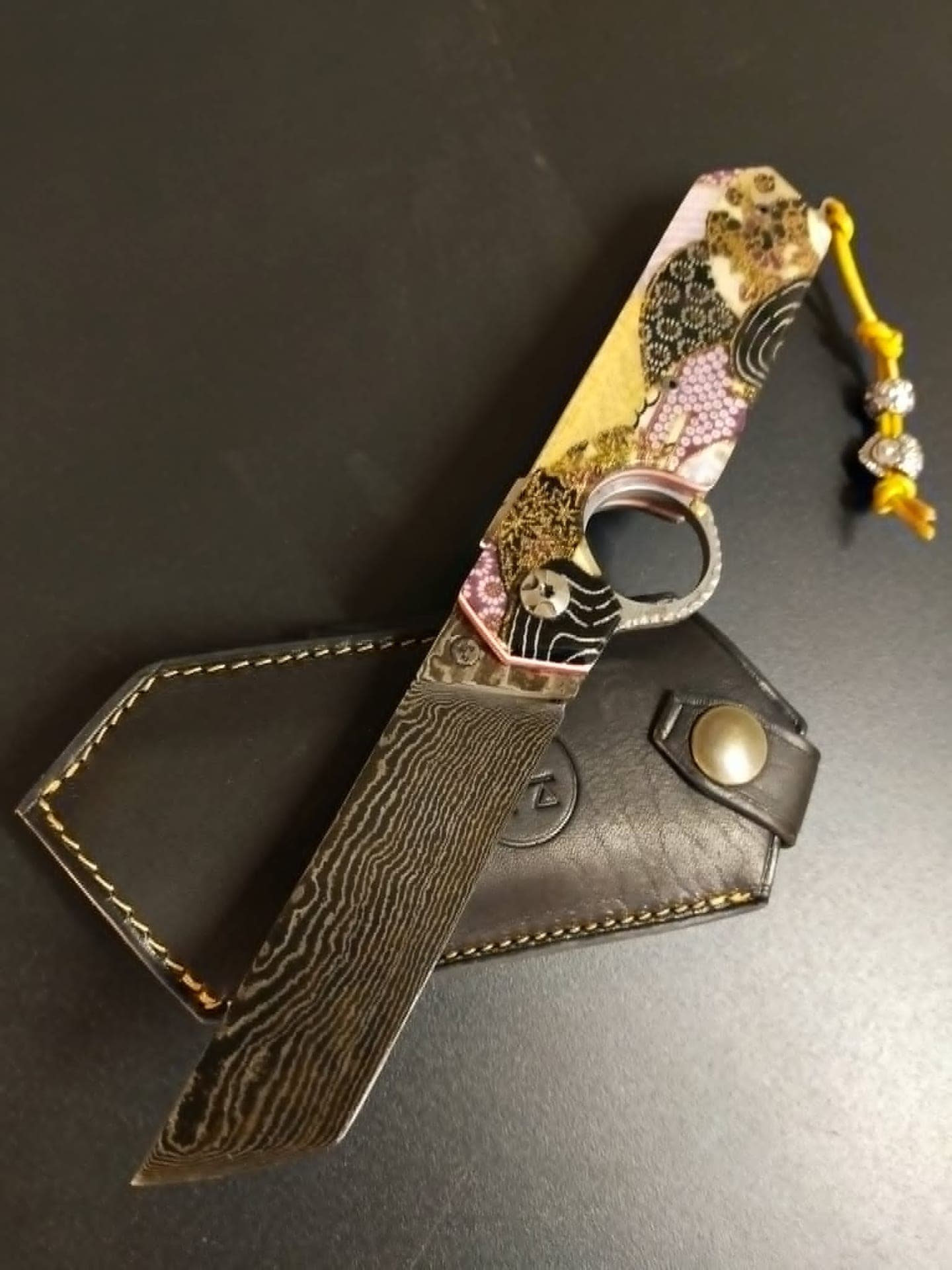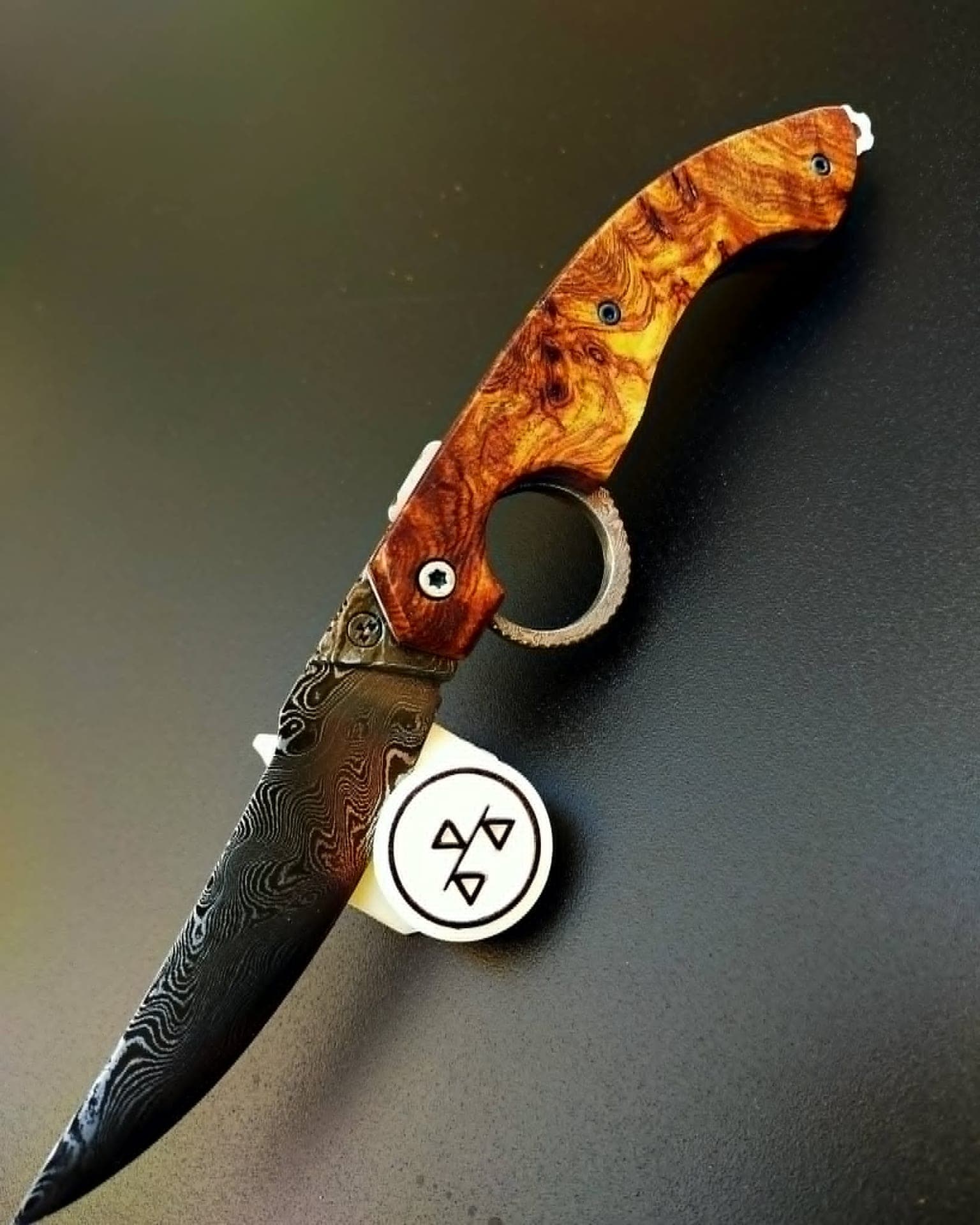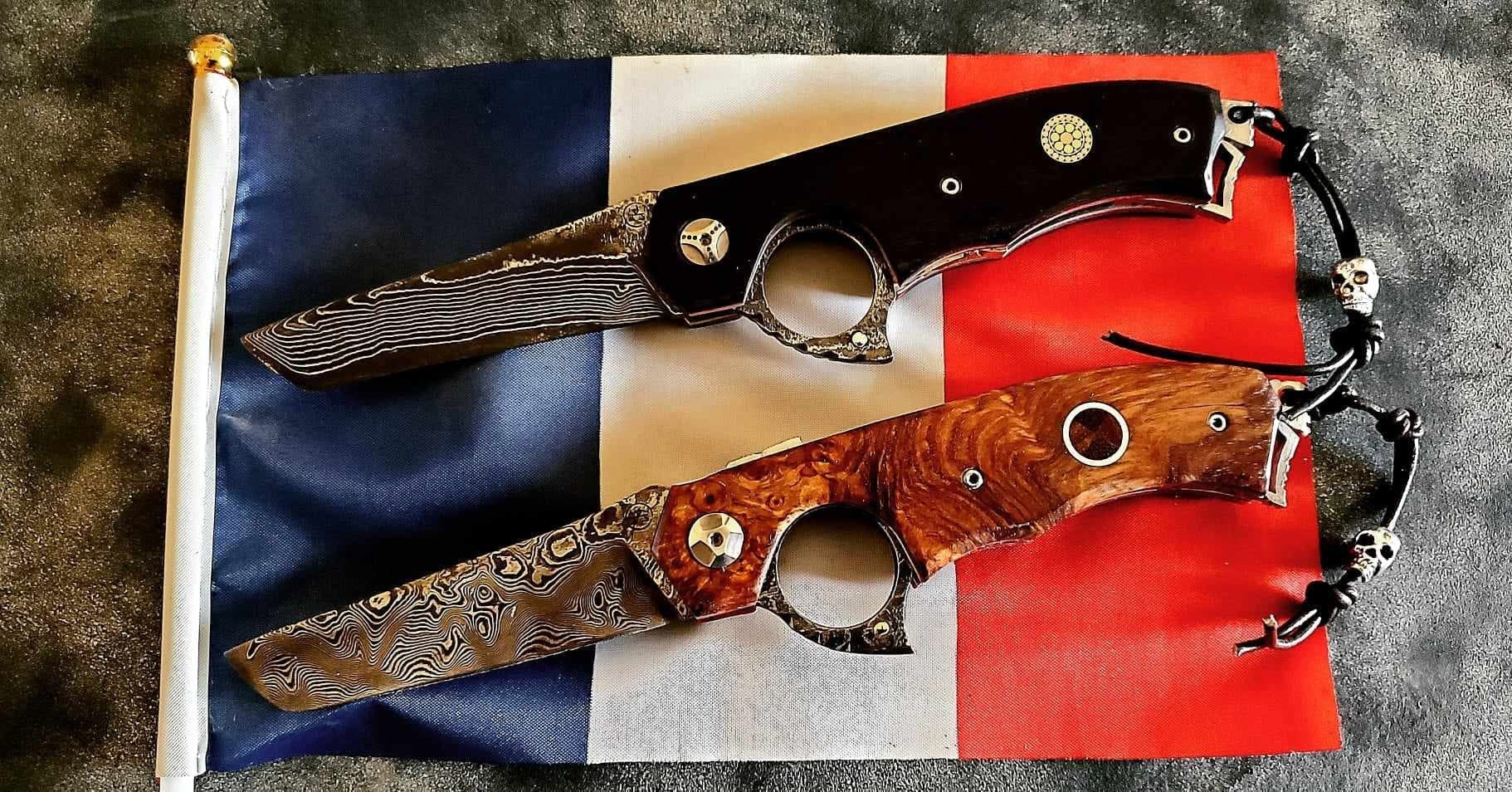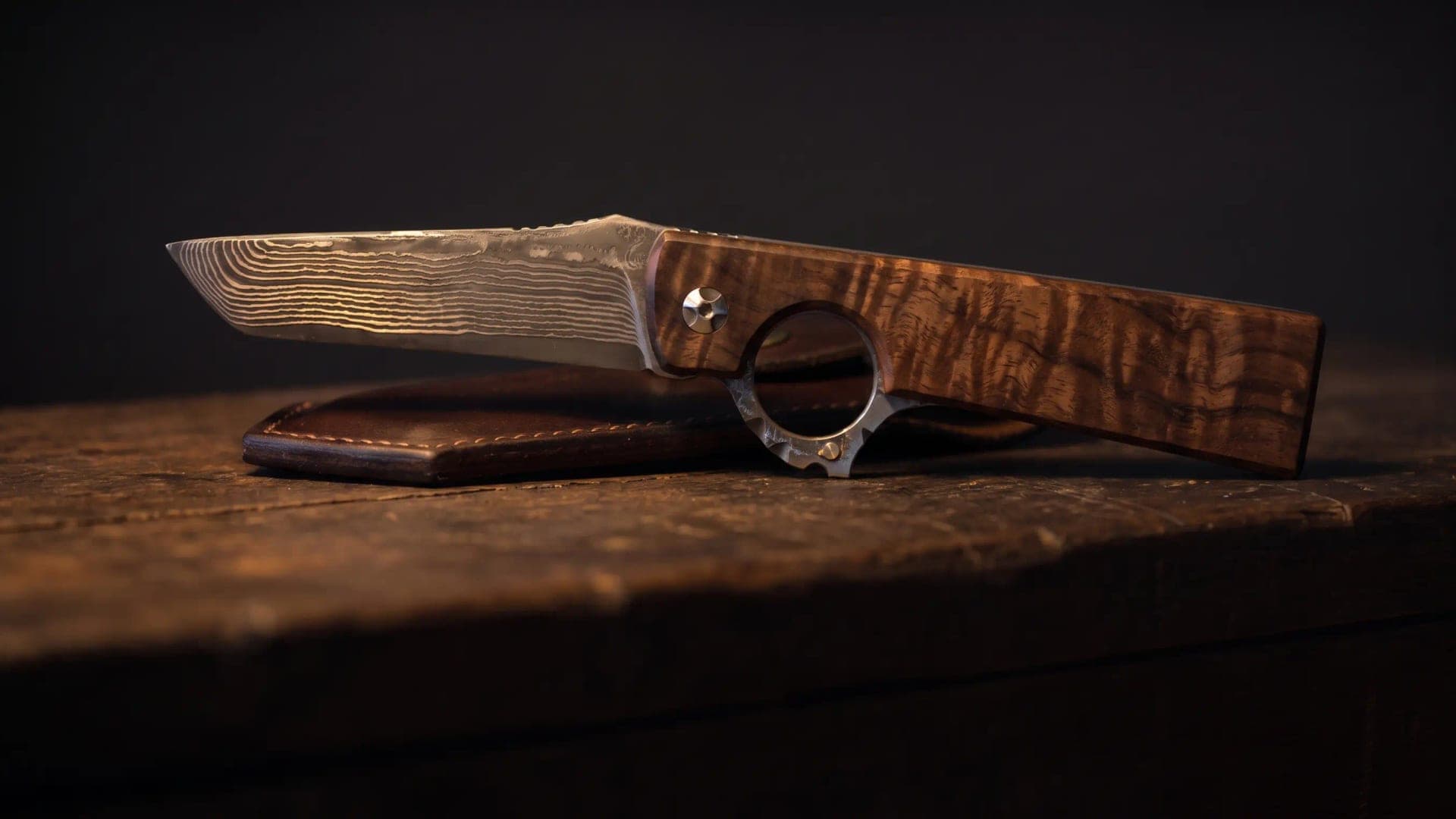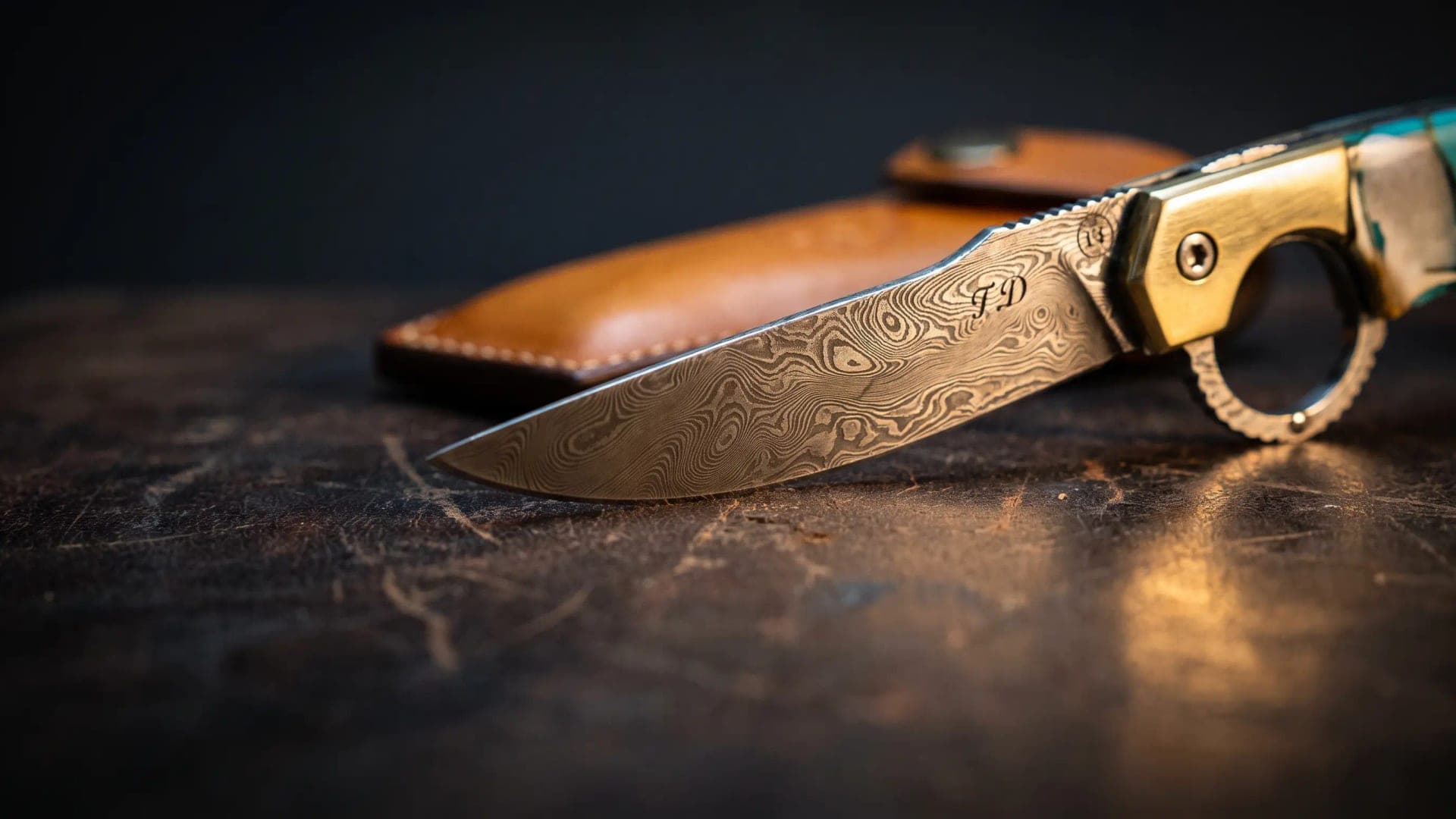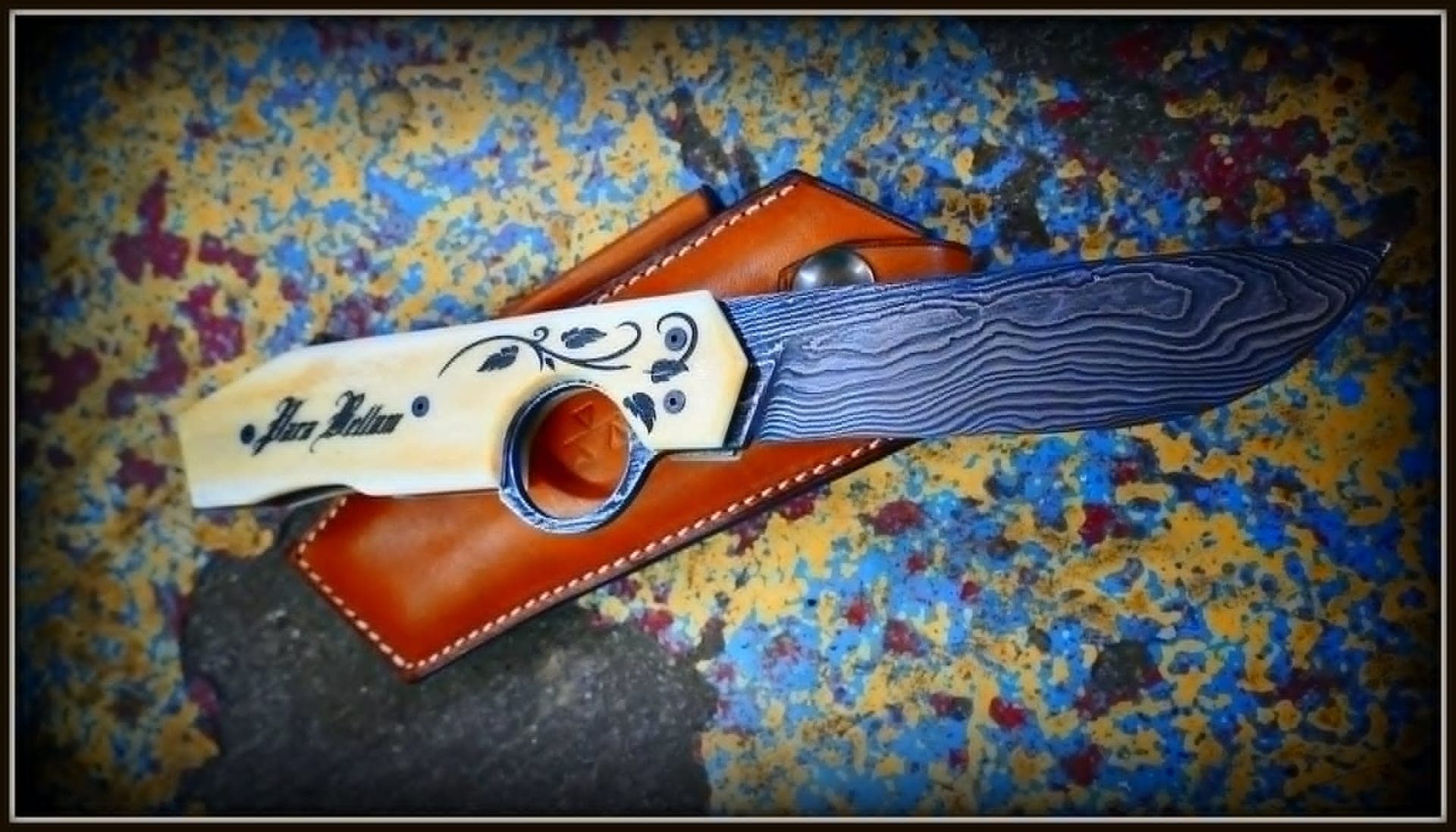
Give someone a knife and watch their hand. Nine times out of ten it digs into a pocket before they have even said thank you, and comes back with a coin. One cent, ten cents, the amount is irrelevant. What matters is that the knife has been paid for.
The saying is known to everyone in France: a knife isn't given, it's sold. It crosses generations without ever being questioned, including by people who believe in no superstition whatsoever and hand over the coin anyway, just in case.
Here is what the custom actually says: where the idea came from that a blade might cut something other than what it is presented with, why it has to be a coin and nothing else, and what the gesture reveals about the object changing hands.
"A knife isn't given"
According to French popular belief, giving a knife cuts friendship or love. The superstition does not single out knives but covers every sharp or pointed object: scissors, needles, pins. What separates matter is supposed to separate the people exchanging it too.
The rule is simple and admits no nuance: an object that cuts is not given. Éloïse Mozzani's Livre des superstitions, the reference work on French beliefs, files the knife alongside scissors, the needle and the pin. Anything that cuts or pricks threatens the bond between giver and receiver.
The logic is that of sympathetic magic, the oldest there is: the object does to the relationship what it does to matter. A blade separates, therefore it will separate. There is no reasoning behind the belief, only an image, and that is precisely why it has crossed the centuries without wearing out.
What is striking is how alive it remains. It is still observed today by people who find it absurd, in families where nobody could say why any more. The coin is handed over with a laugh, but it is handed over.
The coin, or how to undo the spell
There is only one remedy: the recipient hands back a coin. The knife stops being a gift and becomes a purchase, and the superstition no longer applies. Value plays no part, one cent is enough; what counts is the act of paying, not the sum.
The gesture changes the nature of the exchange. A gift creates a moral debt between two people, and that is the bond the blade is said to cut. A sale settles itself immediately: each party has had their due, there is nothing left to sever. The coin does not pay for the knife, it closes the transaction.
A second, prettier meaning is attached to it. A coin is round, whole, without beginning or end, and above all indivisible: you cannot cut it in two. It stands for exactly what the blade threatened, a bond no separation can touch. The remedy is of the same nature as the danger.
As for the coin itself, tradition does not treat it as ordinary money. The reference service of the Lyon municipal library records that it is held to bring luck to whoever receives it, especially when it comes from an old knife or one that has seen long use. Some had it pierced to wear as a pendant, in the belief that it would attract money.
Where the belief comes from
No single origin is established. The best-documented thread makes the knife a sacred object as much as a practical one: the instrument of sacrifice in biblical texts, from Abraham's knife to the sword of Revelation. Such an object is not handed over for nothing; it calls for something in return.
The honest answer is that the superstition cannot be dated. It belongs to that body of domestic beliefs passed on by word of mouth, with no founding text and no author, which folklorists only began collecting in the nineteenth century, by which time they were already old.
The best-documented thread is religious. The Guichet du Savoir points out that the knife runs through biblical texts as an instrument of sacrifice, from Abraham's hand to the sword of Revelation. An object charged with that function is no ordinary utensil: handing it over without compensation would mean parting with it lightly, hence the symbolic payment.
One plain fact should be added, which the superstition dresses up: for centuries a good knife represented a considerable sum for a household. It was a working tool, sometimes the only personal object a man truly owned and kept for life. Objects of that value are sold, bequeathed or handed down; they are not given away lightly. The belief may above all have put an image on what everyone already knew.
What the custom says about knives
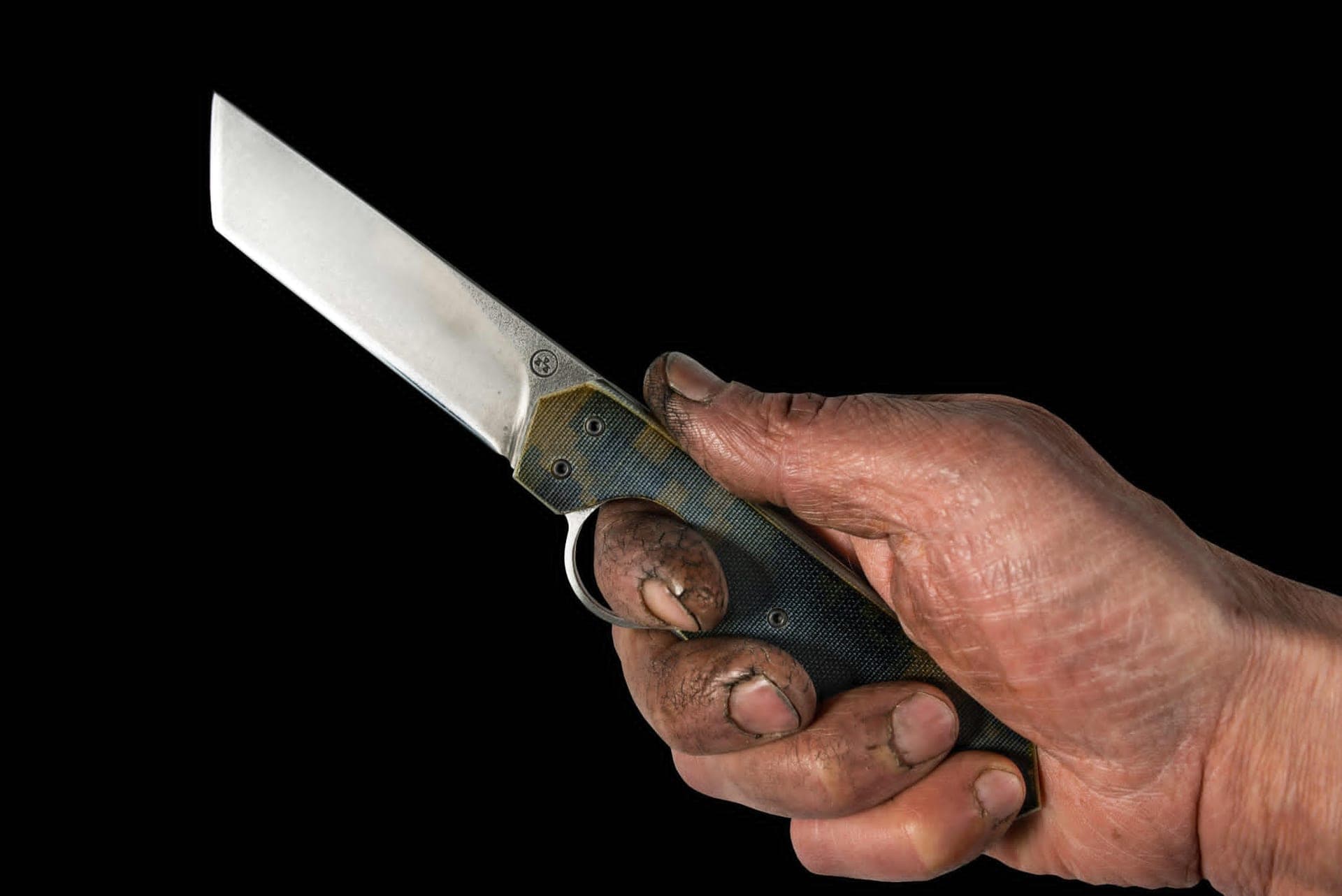
The superstition survives not through fear of bad luck but because it matches the nature of the object. A knife is not a gift to be consumed: it is maintained, sharpened, handed down. Paying for it symbolically acknowledges that what you are receiving is a tool, not a present.
No other gift comes with a ritual. Nobody exchanges a coin for a watch, a book or a bottle. A knife does, and that says something about the place it occupies: an object kept for decades, sharpened, repaired, which ends up carrying the marks of its owner.
At the Thiers workshop, the share of gifts can actually be measured: around a third of orders leave to be given away, a birthday, a wife ordering for her husband. The other two thirds are people treating themselves, which says the same thing differently: this kind of knife is never bought out of mere necessity.
The coin also sets up a different relationship between the two people. It makes the recipient a full owner rather than someone indebted to the giver. For an object meant to stay with them for years, that is not trivial: it has to be entirely theirs.
That is also why the custom survives being laughed at. Those who hand over the coin with a smile know exactly what they are doing: they are marking the fact that they have just received something other than an ordinary object.
Giving a knife well, in practice
Nothing complicated: offer the coin along with the knife, or let the recipient give it to you. The custom applies only to gifts; a knife someone buys for themselves is not concerned by any of it. And if the coin was forgotten, it can still be handed over afterwards.
One workshop clarification first, since the question does get asked: Le Résiliant does not slip a coin into the sheath when an order leaves to be given as a gift. The custom belongs to the giver and the receiver; the cutler, for his part, has already been paid, and the spell does not concern him.
Three situations then come up, and each is settled in a sentence:
- You are giving the knife: slip a coin into the sheath or the wrapping and let the recipient hand it back to you. The gesture becomes a shared joke rather than a precaution.
- You are receiving the knife: produce a coin, any coin. Nobody has ever argued about the amount, and the tradition sets no price.
- Nobody thought of it at the time: the coin can be given later, with no difficulty at all. The custom has no deadline, only a memory.
An object that outlasts the gesture
The custom assumes a knife worth handing down. Every Résiliant is assembled and tuned by hand in Thiers, to order, with a made-to-measure hand-stitched leather sheath offered as an option: plain leather or leather with a tab matching the handle. Any play appearing after years of use is taken up again at the workshop, on the original piece.
The coin only means something if the object deserves it. A knife due to be replaced in two years raises no question of transmission; one that will be sharpened for thirty years does. That is the whole difference between something off a shelf and a piece that came off a bench.
In Thiers, where French blades have been forged for seven centuries, an artisan knife is never quite finished on the day it is delivered. It is sharpened, it patinates, it takes on the habits of the hand carrying it. And when it tires, it goes back to the workshop where it was built rather than into a bin.
The cutler gets regular proof of it, in his own way: crossing paths, in a supermarket or a petrol station around Thiers, with a stranger wearing a Résiliant on his belt. The face sometimes means nothing to him, a birthday present given years earlier, but the knife he recognises anywhere, since he is the one who built it. And every time, he goes over for a chat.
That is probably the best reason to keep handing over the coin: it acknowledges that the object changing hands is not disposable. The rest, the fear of bad luck and the severed friendship, is by now just a good story to tell as you hold out the knife.
- Why should you never give a knife as a gift?
- According to French superstition, a sharp or pointed object given as a present cuts friendship or love. The belief covers knives as much as scissors, needles or pins: what separates matter is supposed to separate the people exchanging it too.
- How do you stop a gifted knife from cutting a friendship?
- The recipient hands back a coin. The knife stops being a gift and becomes a purchase, so the superstition no longer applies. The coin can be given at the moment of the gift or later on; the custom sets no deadline.
- Which coin should be given, and how much?
- Any coin: one cent is enough. The tradition sets no price, it is the act of paying that matters rather than the sum. The coin is even held to bring luck to whoever receives it, especially when it comes from an old knife or one that has seen long use.
- Why a coin rather than something else?
- Because it settles the exchange: unlike a gift, a sale leaves no debt between two people. A symbolic meaning is attached to it as well, that of a round and indivisible object, the exact image of the bond the blade was supposed to cut.
- Does the rule apply to a knife you buy for yourself?
- No. The custom only concerns a knife given by one person to another. A knife bought for your own use, or commissioned directly from a cutler, calls for no coin and no precaution at all.
Sources
- Éloïse Mozzani, Le Livre des superstitions — Robert Laffont, Bouquins — Ouvrage de référence sur les superstitions françaises (1999, environ 1800 pages), par une historienne également autrice de « Magie et superstitions en France de la fin de l'Ancien Régime à la Restauration » : offrir un couteau, comme tout objet tranchant ou pointu, coupe l'amitié ou l'amour à moins d'une pièce donnée en retour.
- Offrir un couteau et la pièce de monnaie — Le Guichet du Savoir — Réponse documentée du service de questions-réponses de la Bibliothèque municipale de Lyon : la coutume de l'échange contre une pièce, la lecture du couteau comme objet sacrificiel dans les textes bibliques, et les croyances associées à la pièce reçue.
- Coutellerie de Thiers — Wikipédia — Sept siècles de coutellerie dans le bassin thiernois, qui produit aujourd'hui la majorité des couteaux fabriqués en France.