The Higonokami is a Japanese folding pocket knife, born in Miki, in Hyōgo Prefecture, in 1896. It has no locking system: its blade stays open through the friction of the pivot or the pressure of the thumb on a lever, the chikiri, and its handle is a sheet of folded metal.
In Thiers, one model from the Résiliant workshop, Le Shotokan, claims it as a source: it acknowledges the Higonokami's inspiration, taking from it the taut line and the restraint. Its template was cut from the outline of a Douk-Douk, a folding knife made in Thiers, which the cutler traced.
This article describes the Higonokami as the sources document it, its origin, its mechanism, its former use, then what Le Shotokan owes to each of these two knives, what reverse opening changes in the gesture, the model's three steels and the way it is assembled in Thiers.
The Higonokami, a folding knife born in Miki in 1896
The Higonokami is a Japanese folding pocket knife that appeared in 1896 in Miki, in Hyōgo Prefecture. Its blade pivots in a handle made from a folded sheet of metal, with no spring and no lock. Like the kiridashi, it was used to sharpen pencils, before pencil sharpeners became widespread.
The Higonokami comes down to a few elements: a blade, a pivot, a lever called the chikiri and a handle made from a folded sheet of metal. It was born in Miki, in Hyōgo Prefecture, in the late nineteenth century: 1896 is the year given by its entry in the English-language Wikipedia, cited as a source.
This folded-metal handle sets it apart at first glance from folders with fitted scales, such as those of the Résiliant workshop, where the scales are screwed onto stainless steel liners, never glued. The Higonokami owes its restraint to being built from so few parts.
Its use links it to the kiridashi, another Japanese knife: according to the French-language Wikipedia, the Higonokami, like the kiridashi, was used to sharpen pencils before pencil sharpeners became widespread. Many stories circulate about this knife; this article keeps only what the encyclopedias cited as sources document.
A blade with no lock, held by the thumb on the chikiri
The Higonokami has no locking system. It is a friction knife, known in English as a friction folder: the friction of the pivot, or the pressure of the thumb on its lever, the chikiri, keeps the blade from closing during use. No spring, no lock: holding the blade open depends on the hand gripping it.
Nothing in this construction locks the blade. What holds it, according to the source, is the friction of the pivot, or the pressure the thumb applies to the chikiri during use. Holding the blade therefore relies on the hand and on the fit of the pivot, not on a locking part.
This is neither a flaw nor a virtue in itself: it is a design choice, that of a knife made from few parts. The lever, the chikiri, is where the hand acts to hold the blade.
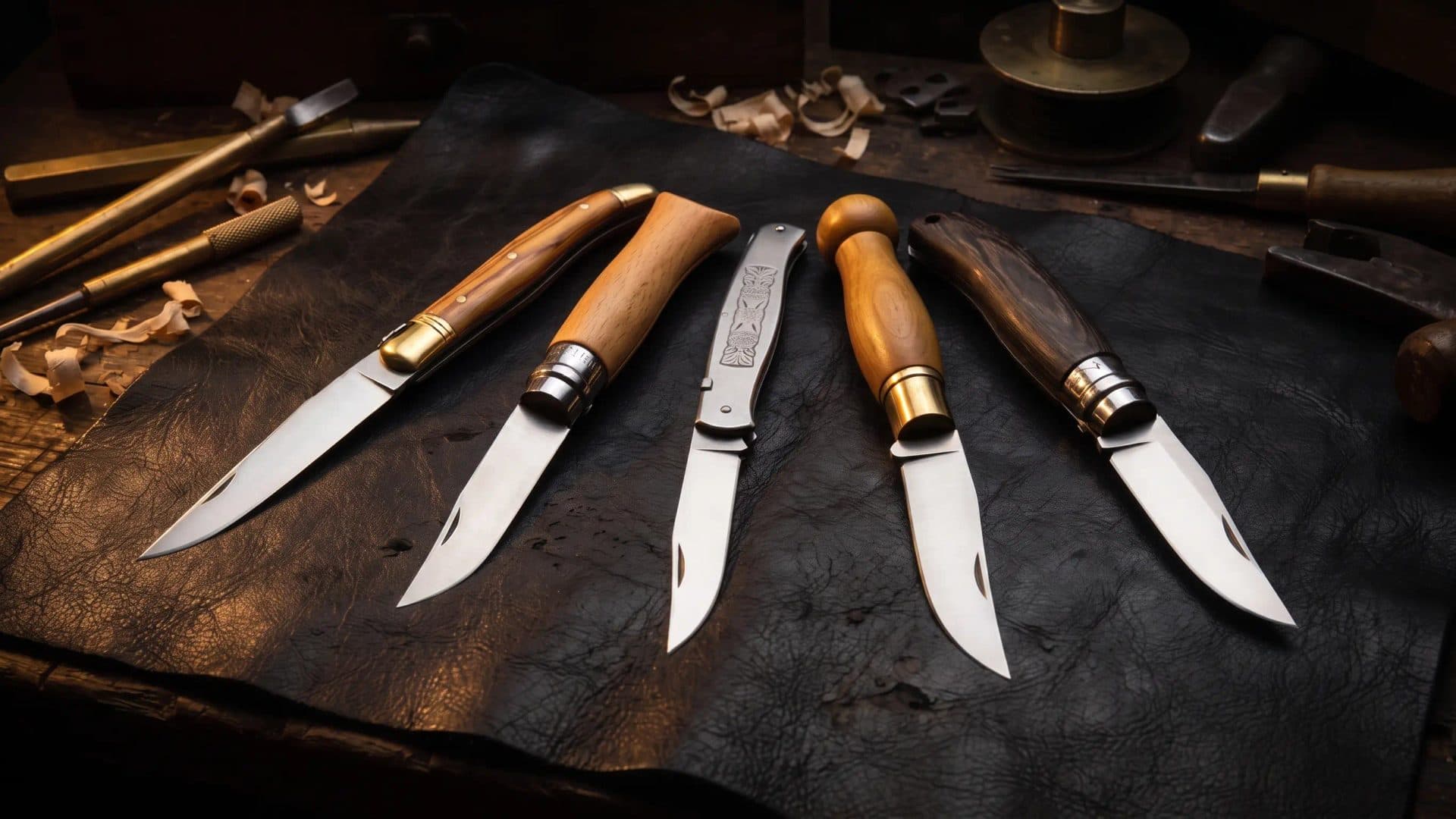
Other folding knives have answered the same question, staying open long enough to cut, in other ways: slip joint, back lock, liner lock, ring lock. These systems are presented in the guide to French pocket knives; they are not detailed again here.
What Le Shotokan owes to the Higonokami
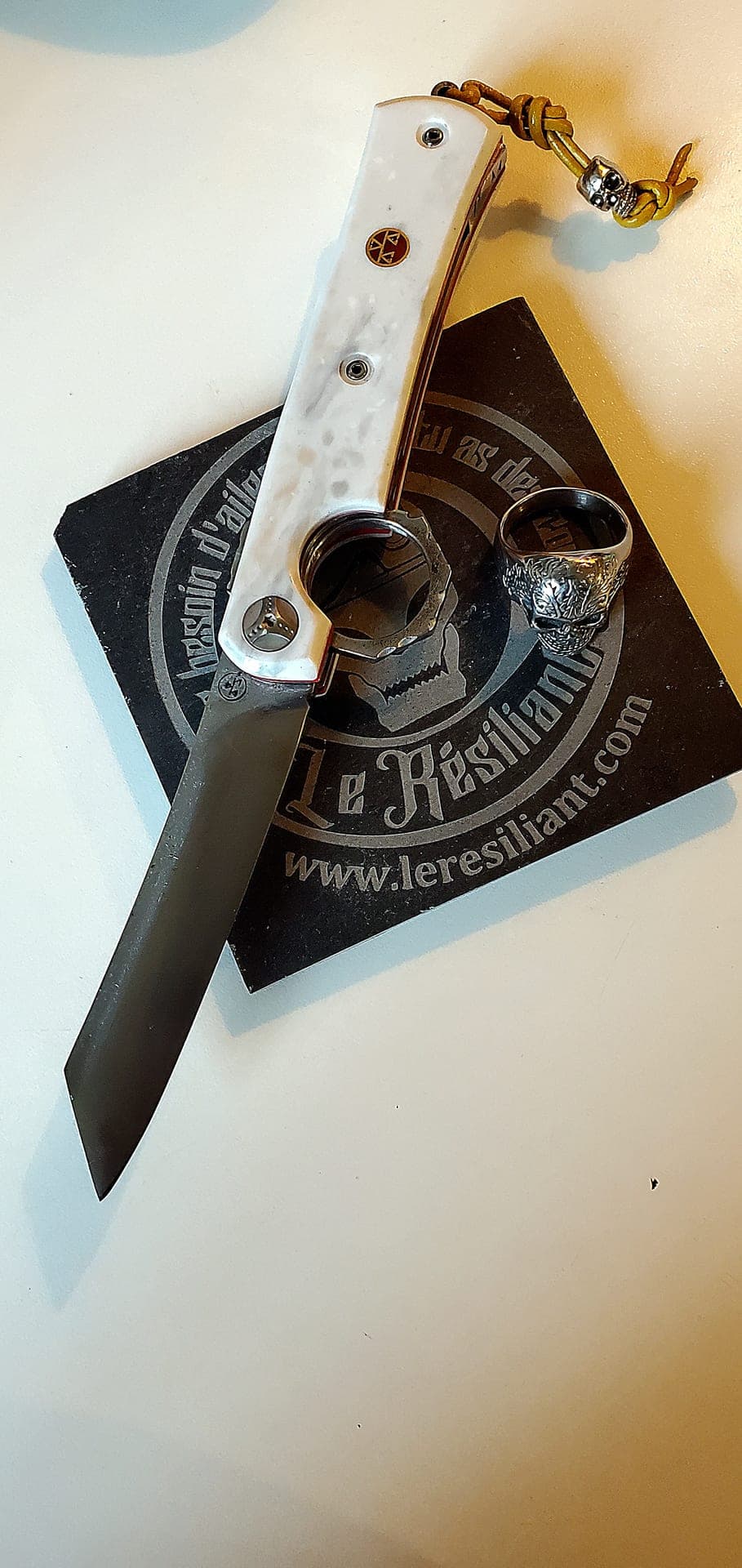
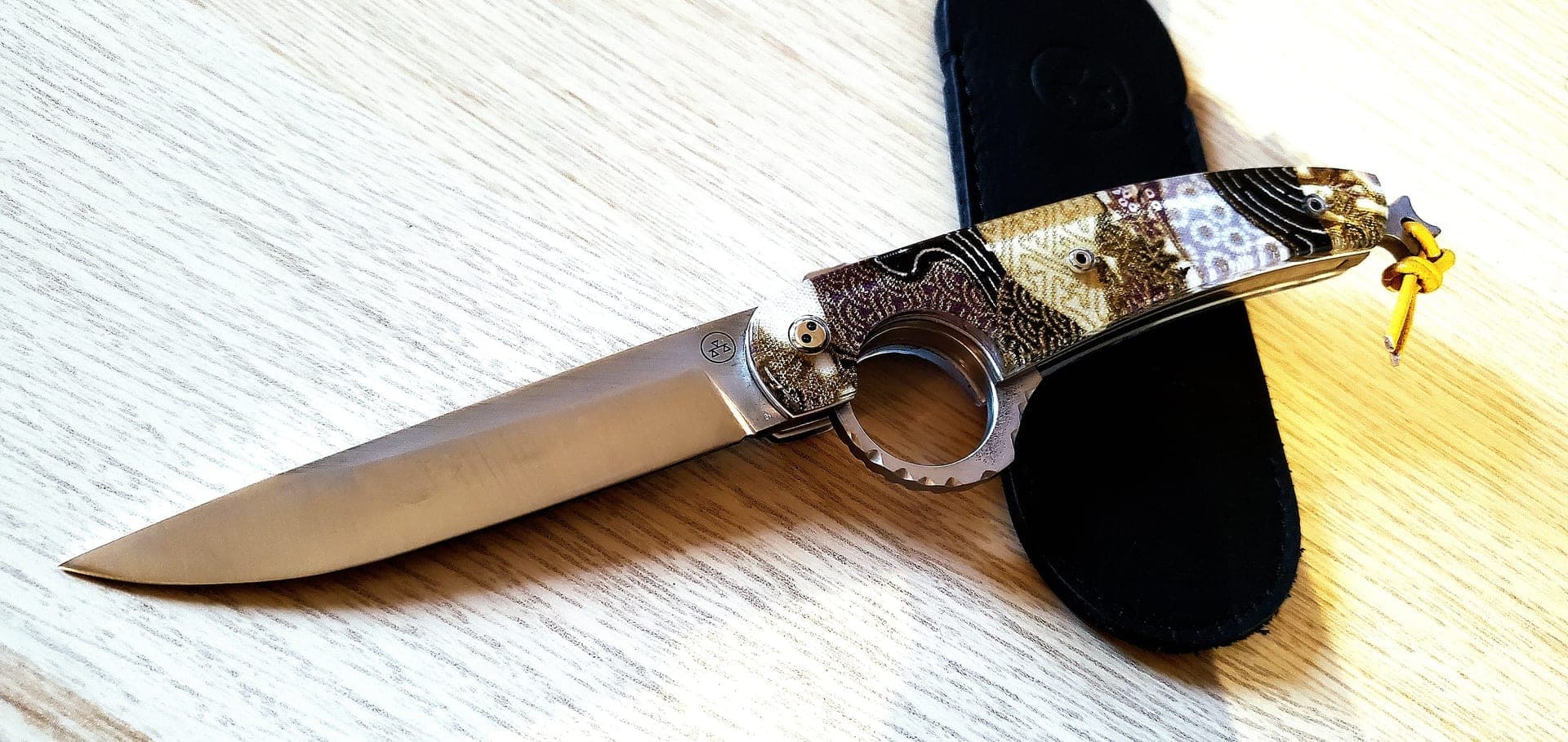
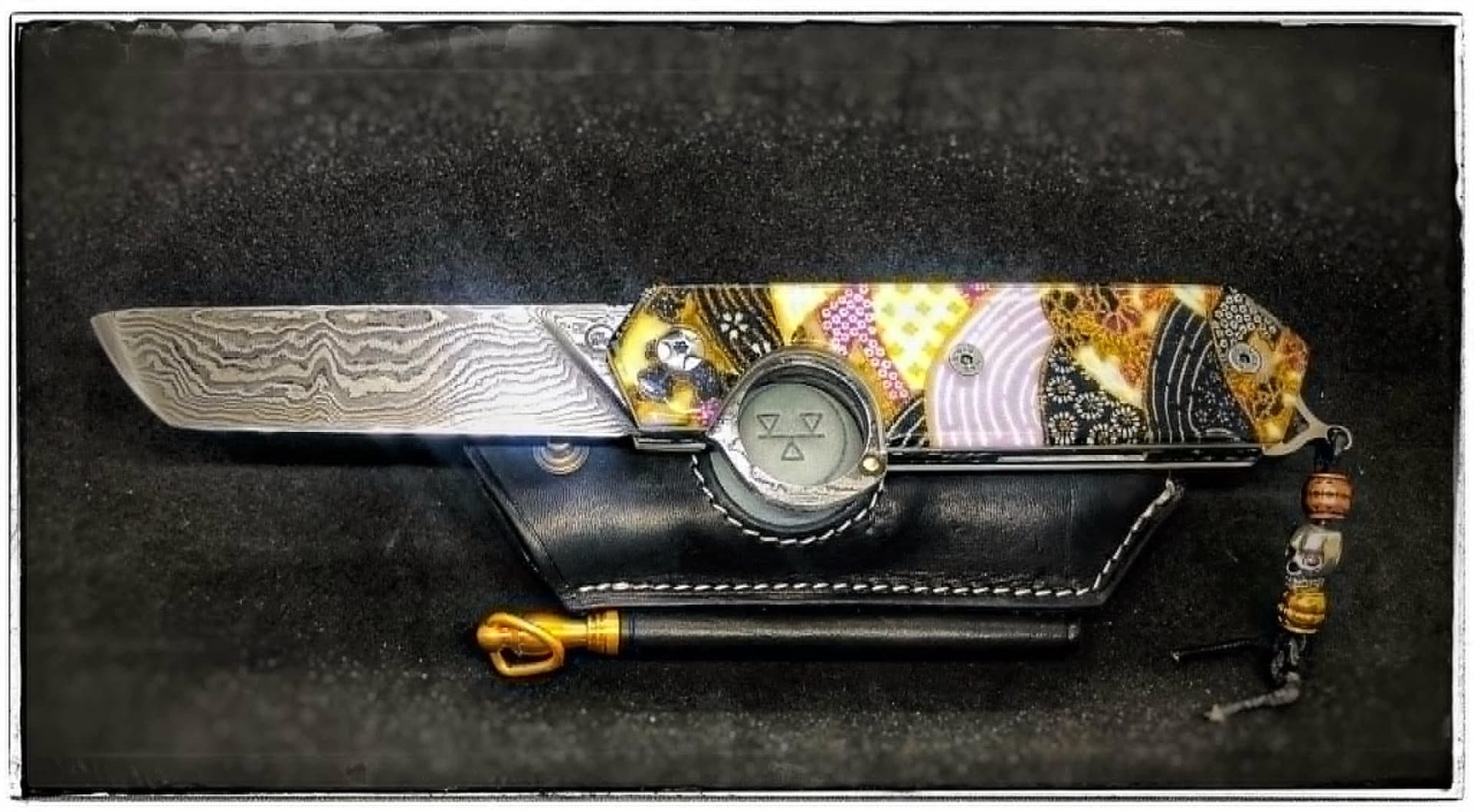
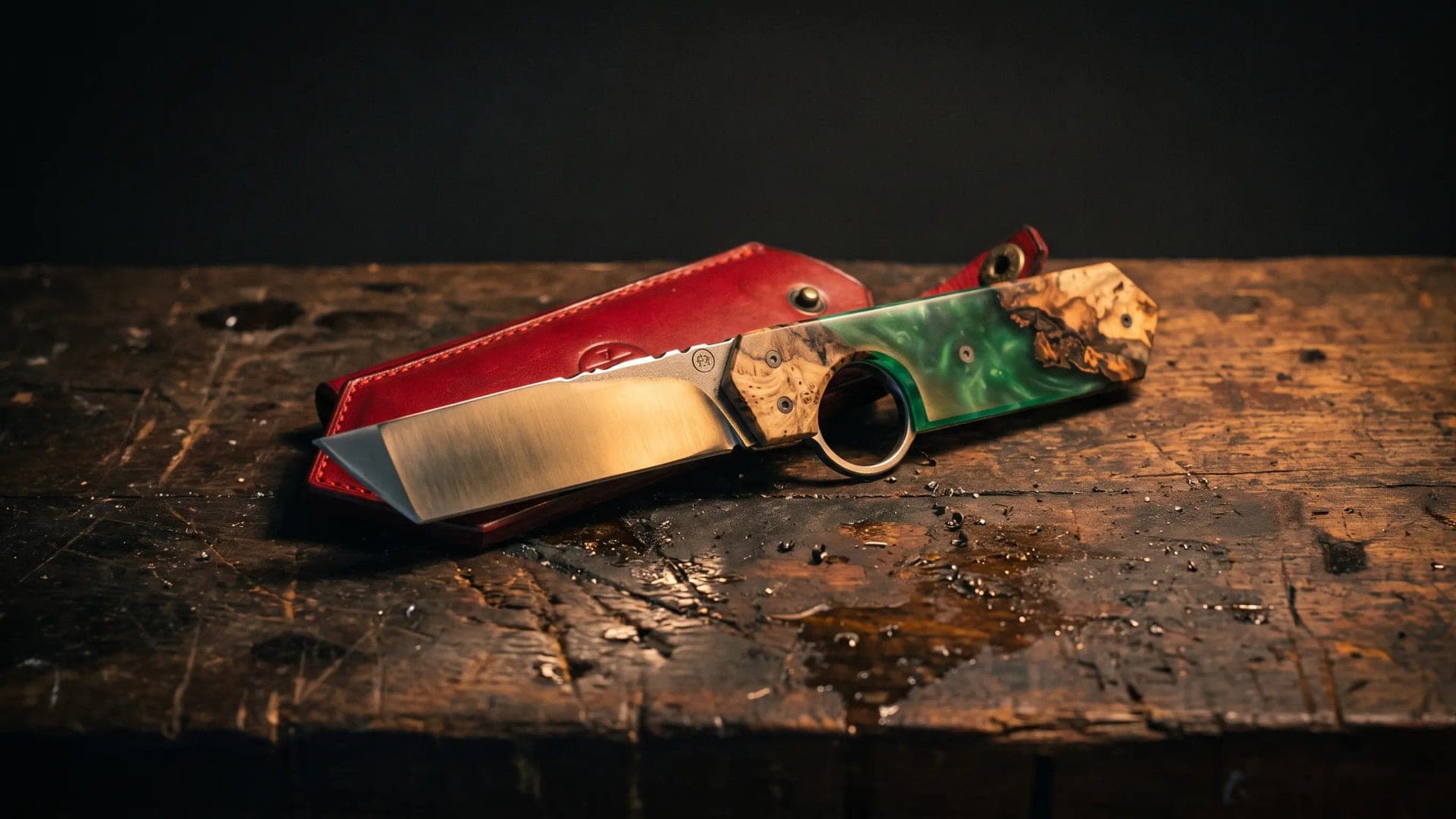
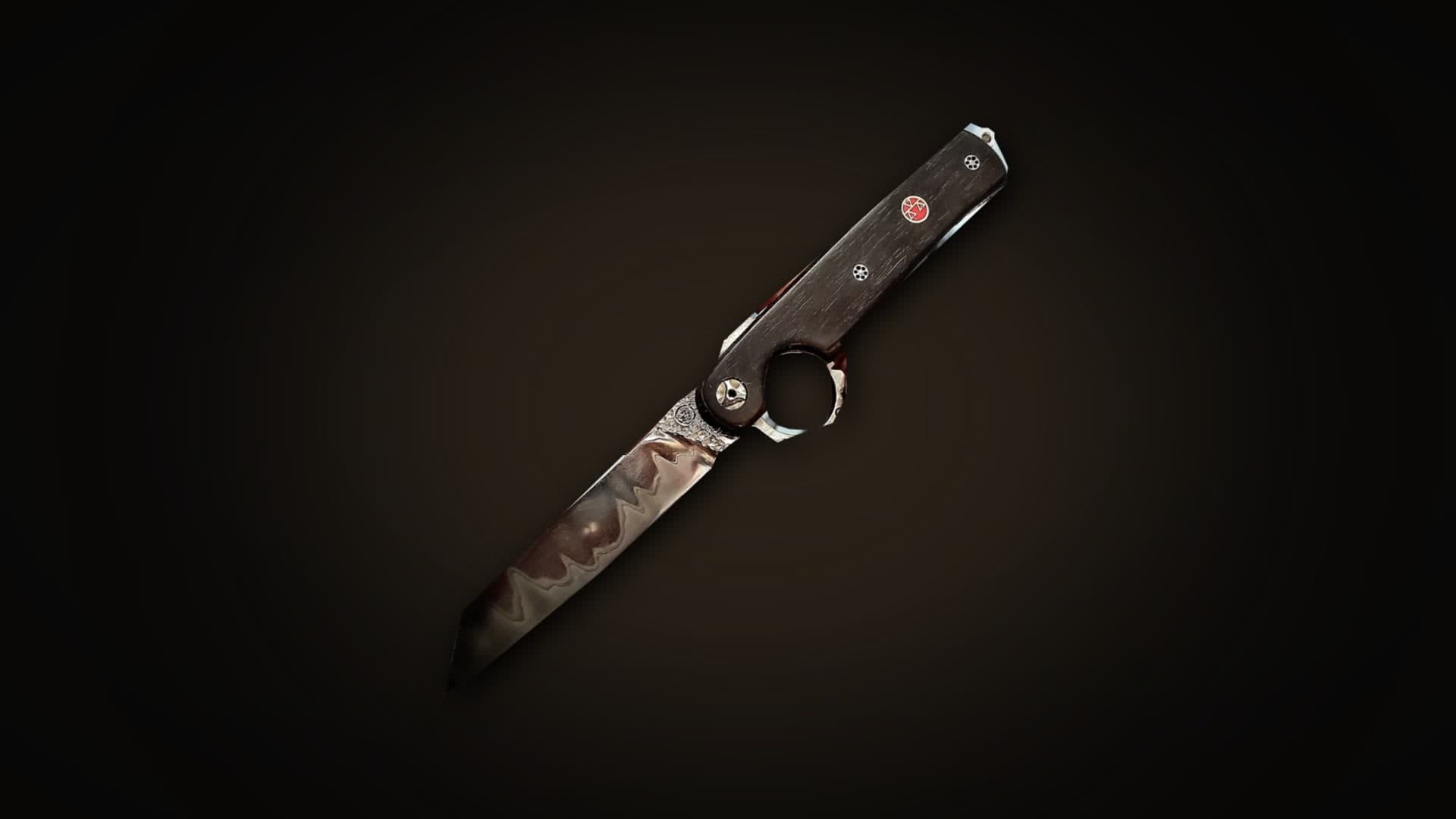
Le Shotokan, a model from the Résiliant workshop in Thiers, acknowledges the inspiration of the Higonokami. It takes from it the spirit, the taut line and the restraint, the clean silhouette of the Japanese knife. It grafts onto it the workshop's signature: reverse opening, adjusted by hand in Thiers.
The word inspiration is the workshop's own. The Shotokan's product page carries the line "Higonokami inspiration. Elegant and refined." and states that the model takes from the Japanese knife its spirit, its taut line and its restraint. What passes from one to the other is a line, not a construction.
Le Shotokan takes neither the folded-metal handle nor the chikiri. Its blade is driven by a ring and locks in the open position; its scales are screwed onto stainless steel liners, as on every Résiliant. The tribute concerns the silhouette, the mechanism is the workshop's own.
It is not the collection's only Japanese borrowing: Le Résiliant Tanto, the workshop's first model, has a point of Japanese origin, the subject of the article devoted to the tanto knife. In both cases, what is borrowed is a shape.
What Le Shotokan owes to a Douk-Douk
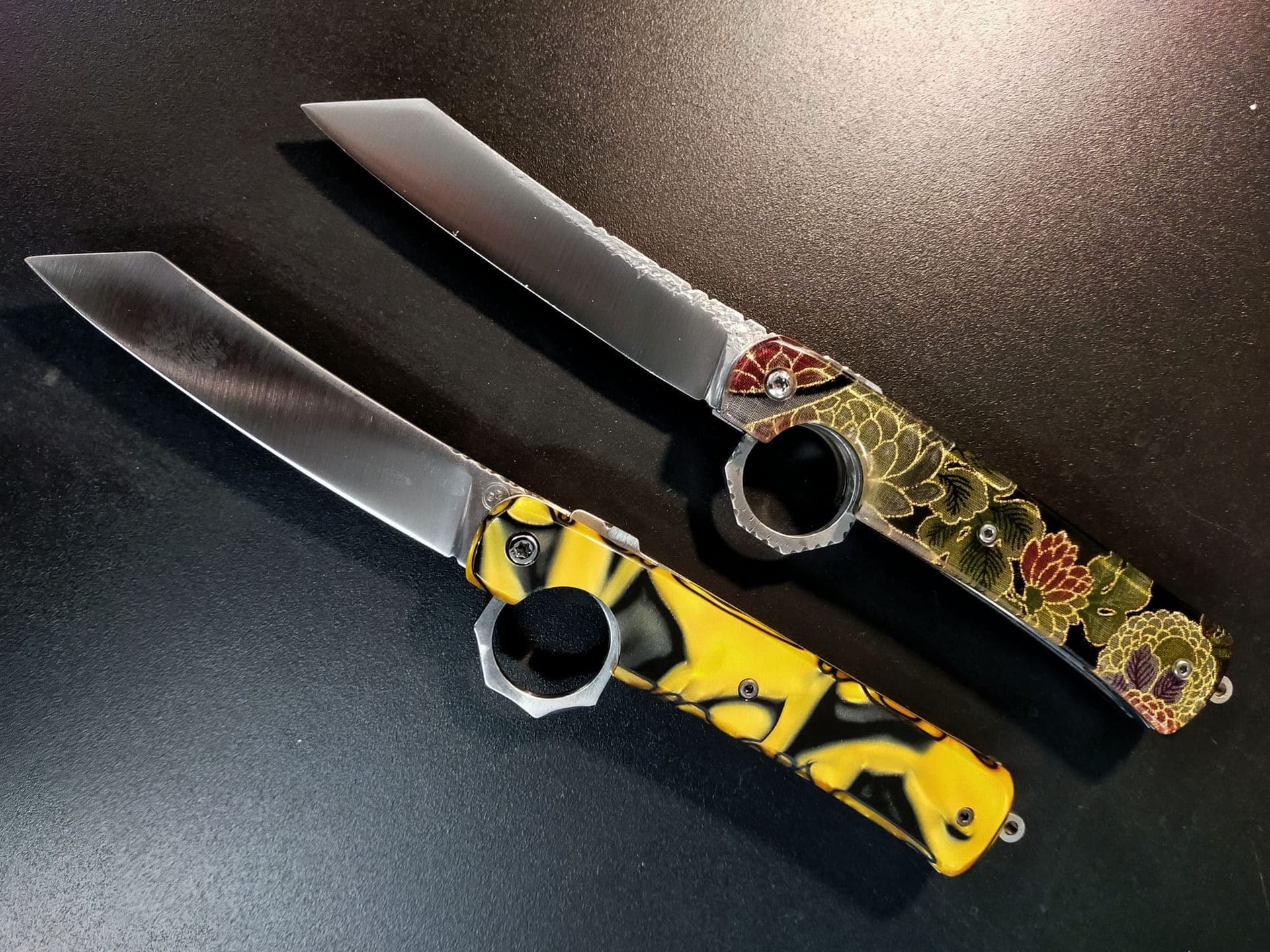
The Shotokan's template was cut from the outline of a Douk-Douk, which the cutler traced. The Douk-Douk is a folding pocket knife made in Thiers by the Cognet cutlery house since 1929. Le Shotokan thus owes part of its shape to a Thiers knife, born in the same town as itself.
A template is the reference shape of a model. At the Résiliant workshop, it moves from drawing to cardboard, then to plastic, then to metal. For the Shotokan's template, the cutler traced the outline of a Douk-Douk. The fact is reported here as the workshop gave it, with no date and no specific model.
The Douk-Douk needs no new introduction: it is one of the five families described in the guide to French pocket knives, which recalls its production in Thiers by the Cognet cutlery house since 1929. For Le Shotokan, it served as a shape: it is its outline that was traced.
Once settled, a Résiliant's template is no longer open to negotiation. Each model represents weeks and months of development: open and closed proportions, thickness of the liners and of the blade. The client chooses among eight predefined models, then the steel and the handle; the shape itself stays that of the template.
The two statements read separately: Le Shotokan acknowledges the inspiration of the Higonokami, and its template was cut from the outline of a Douk-Douk. The workshop says no more about it, and neither does this article.
From chikiri to ring: what reverse opening changes
The Higonokami has no lock: its blade is held open by the friction of the pivot or by the pressure of the thumb on the chikiri. Le Shotokan opens by a ring through which the index finger passes: the blade rises from the top of the handle, edge first, and locks with a reversed liner lock.
On a Résiliant, the ring is fixed to the heel of the blade. The index finger slips into it and drives the blade, which rises from the top of the handle, edge first. Opening is entirely manual, with no spring, and each mechanism is adjusted in the vice, piece by piece. All eight models share this principle.
Locking uses a liner lock, reversed like the opening: the liner works at the top of the handle. This system was brought to its modern form by American Michael Walker in the 1980s. The gesture is explained in detail in the article on the reverse-opening knife.
Between the two knives, the difference lies in the role of the hand. On the Higonokami, nothing locks the blade: the friction of the pivot, or the thumb resting on the chikiri, holds it. On Le Shotokan, the index finger opens the blade through the ring and the liner lock holds it in the open position. Two different answers, described here without ranking.
Three steels for one silhouette
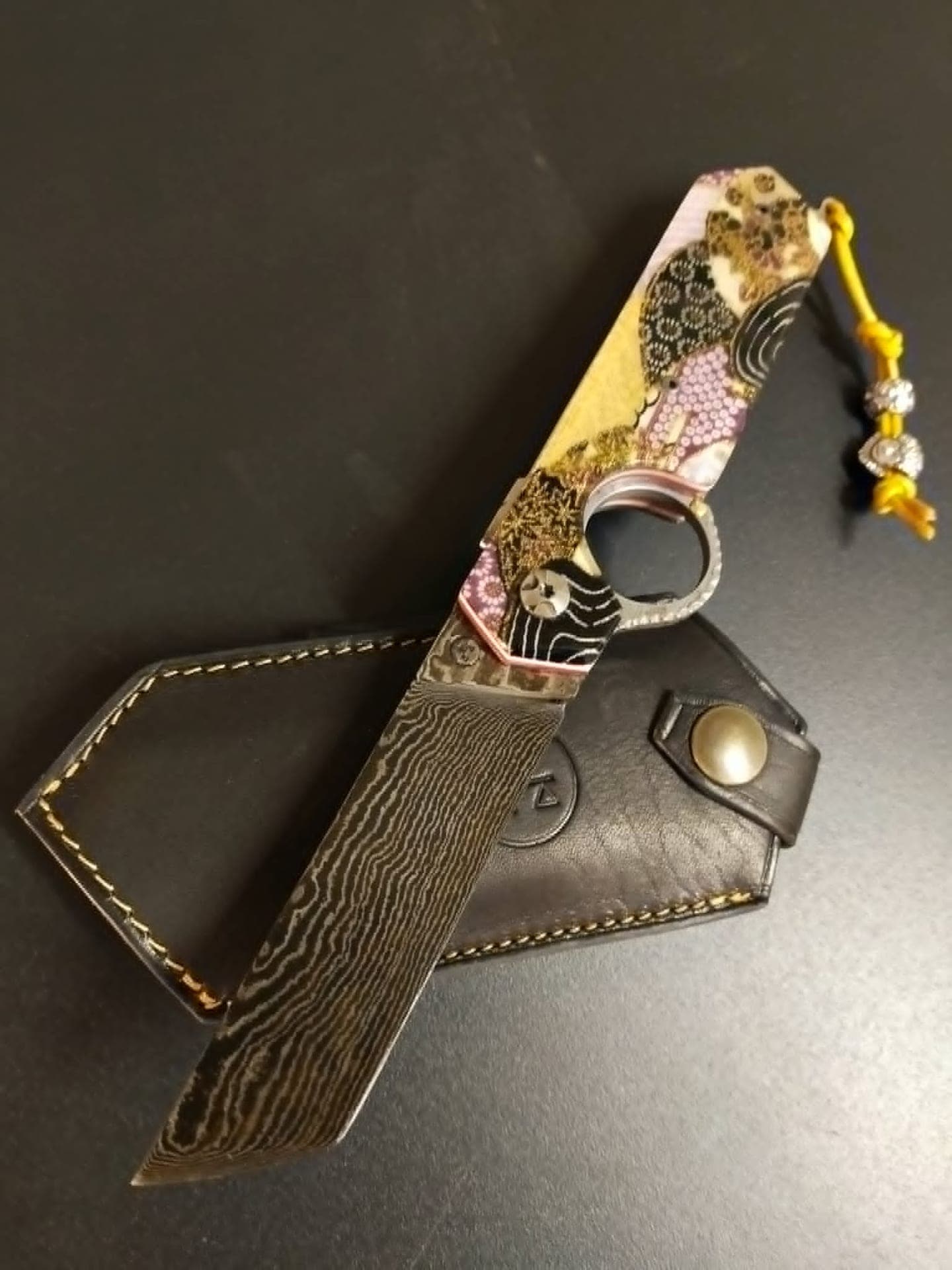
Le Shotokan is the most versatile and the most varied of the Résiliants. Its blade can be ordered in 90MCV8, a carbon steel that patinates, in semi-stainless Z160, or in artisan carbon damascus (Suminagashi), with patterns revealed by acid. The choice is made at the quote stage, according to use.
The model's page assigns the three blades by use: 90MCV8 carbon for patina purists, semi-stainless Z160 for everyday peace of mind, artisan carbon damascus for collectors. Three characters for one silhouette: the template does not change, the blade changes material.
Z160 is the French name for D2, a tool steel rich in carbon and chromium. 90MCV8, for its part, takes on a blue-grey patina with use, which is not rust. The differences between these steel families are developed in the article on carbon or stainless steel.
Nothing is written here about the steel of Higonokami knives: the information circulating on the subject comes from retail sites, not from the sources cited. The comparison stops at line and mechanism; the material of the Shotokan's blade is decided with the cutler.
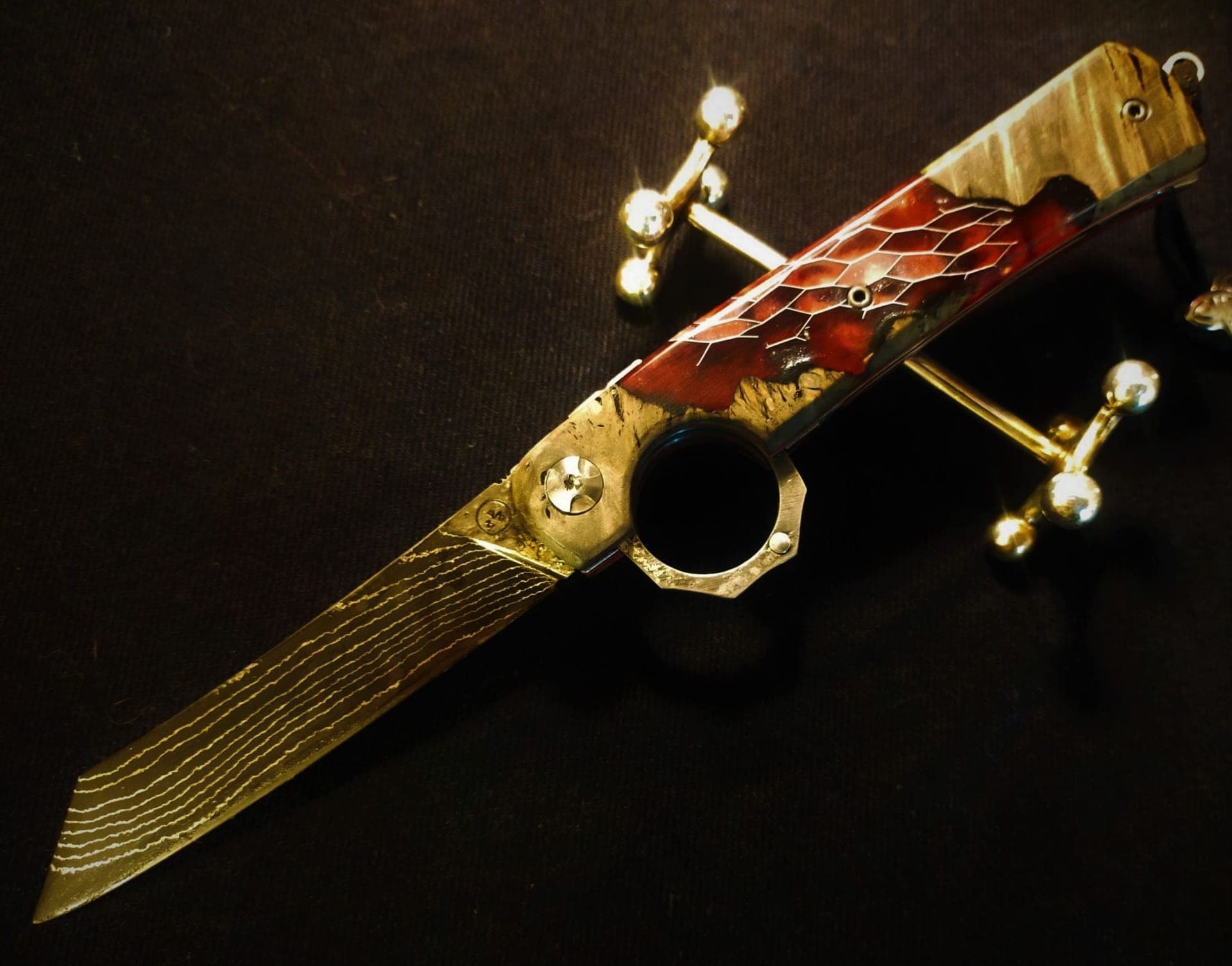
A Japanese tribute assembled in Thiers
Le Shotokan is hardened, ground, polished, assembled and adjusted at the Résiliant workshop in Thiers, which does not forge its blades. With Le Fhiers, whose name blends "fier" (proud) and "Thiers" as a tribute to the town's cutlers, it forms the collection's two tributes: one Japanese, the other from Thiers.
Damascus is bought in plates and each blade is cut from it by hand; the Z160 series are cut in a factory. Hardening then takes place at the workshop, in an electric furnace, followed by grinding the bevels, polishing, assembly and adjustment in the vice, piece by piece.
Le Fhiers honours the generations of Thiers cutlers who passed on their craft; Le Shotokan looks towards Japan. The two models share the same mechanism and the same workshop, on rue Alexandre Dumas, in Thiers.
Le Shotokan is ordered to a quote, like every Résiliant: the model being fixed, you choose the steel, the handle material and, as an option, the leather sheath. Lead time and price are given in the quote. Requests go through the quote form, with Le Shotokan preselected.
- How does a Higonokami blade stay open?
- The Higonokami has no locking system. Its blade stays open thanks to the friction of the pivot, or the pressure of the thumb on its lever, the chikiri, during use. It has no spring and no lock: it is known as a friction knife, or friction folder.
- Where does the Higonokami knife come from?
- The Higonokami was born in Miki, a town in Hyōgo Prefecture, Japan, in 1896. It is a folding pocket knife whose handle is made from a folded sheet of metal. Le Shotokan, assembled in Thiers, acknowledges its inspiration without taking up its construction.
- What is the difference between a Higonokami and Le Shotokan?
- The Higonokami has no lock: pivot friction, or thumb pressure on the chikiri, holds the blade. Le Shotokan, assembled in Thiers, draws on it for its line, but opens by a ring through which the index finger passes, the blade rising from the top of the handle, and locks with a reversed liner lock.
- What is the link between Le Shotokan and the Douk-Douk?
- The Shotokan's template was cut from the outline of a Douk-Douk, which the cutler traced. The Douk-Douk is a folding pocket knife made in Thiers by the Cognet cutlery house since 1929. Le Shotokan also acknowledges the inspiration of the Japanese Higonokami for its line.
- Does Le Shotokan lock in the open position?
- Yes. Like every Résiliant, Le Shotokan locks with a reversed liner lock: the liner works at the top of the handle. Opening stays entirely manual, with no spring, through the ring the index finger slips into, and each mechanism is adjusted in the vice, piece by piece, at the Thiers workshop.
- Can Le Shotokan be ordered in damascus?
- Yes. Le Shotokan can be ordered in artisan carbon damascus (Suminagashi), with patterns revealed by acid, in 90MCV8 carbon, or in semi-stainless Z160. Damascus is bought in plates and each blade is cut from it by hand at the workshop. The choice of steel and the price are set in the quote.
Sources
- Wikipédia EN « Higonokami » — Établit la naissance du Higonokami à Miki, préfecture de Hyōgo, en 1896, son absence de système de blocage (friction folder), le maintien de la lame par la friction de l'axe ou la pression du pouce sur le levier chikiri, et son manche en tôle de métal repliée.
- Wikipédia FR « Kiridashi » — Rapproche le kiridashi et le Higonokami, tous deux employés pour tailler les crayons avant la diffusion des taille-crayons.
- Wikipédia EN « Douk-Douk » — Établit la production du Douk-Douk à Thiers par la coutellerie Cognet depuis 1929.
- Wikipédia EN « Liner lock » — Établit le principe du liner lock et son passage à la forme moderne par l'Américain Michael Walker dans les années 1980.