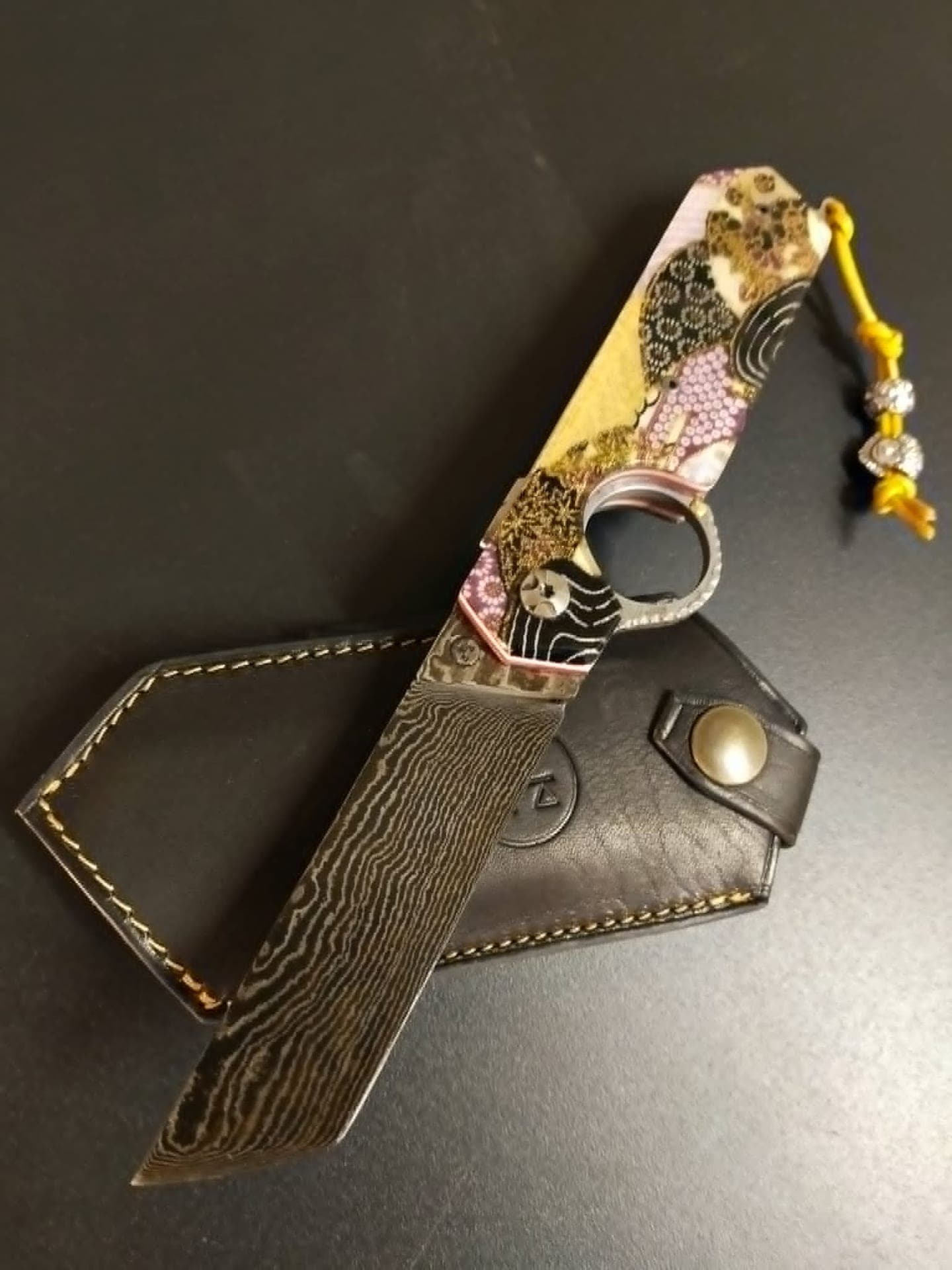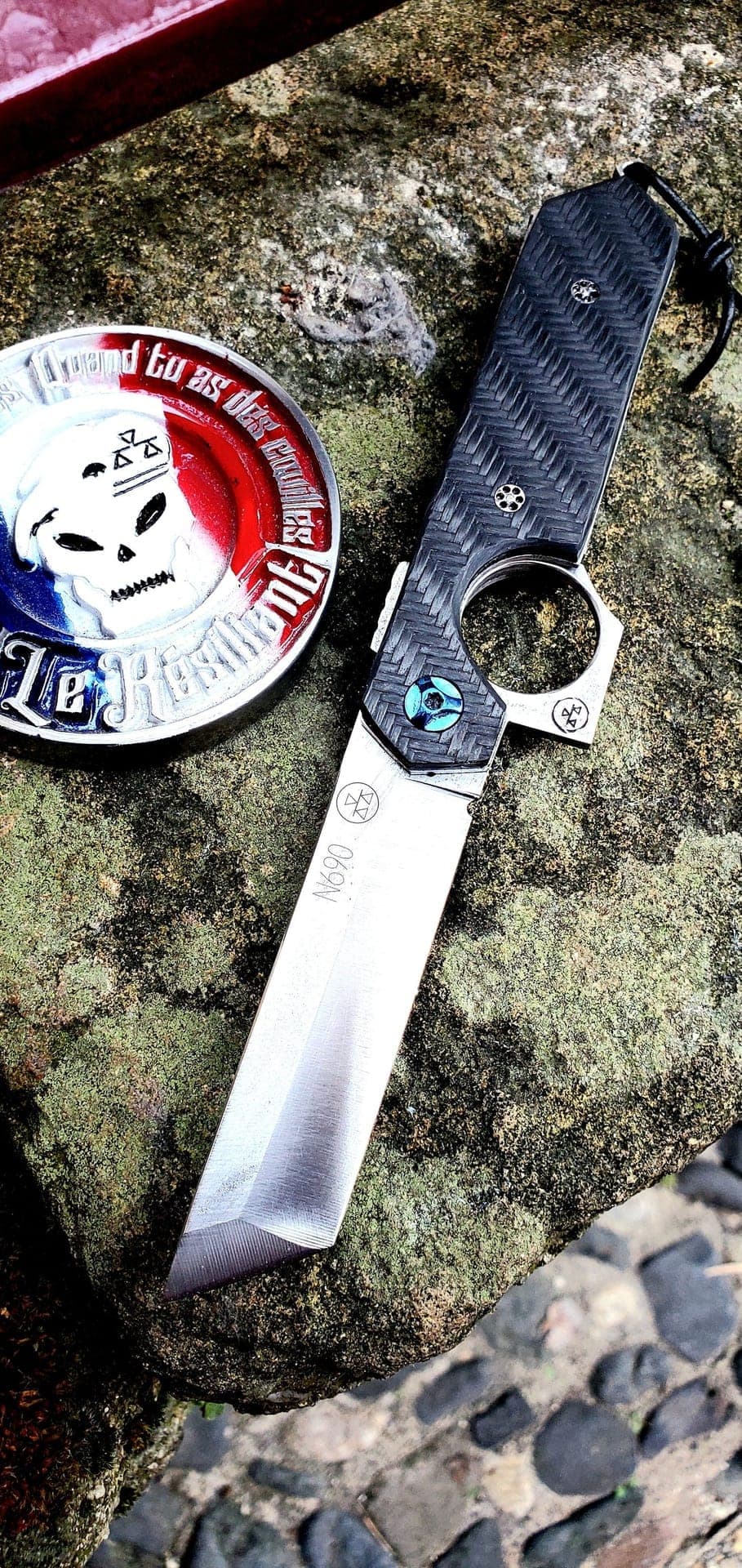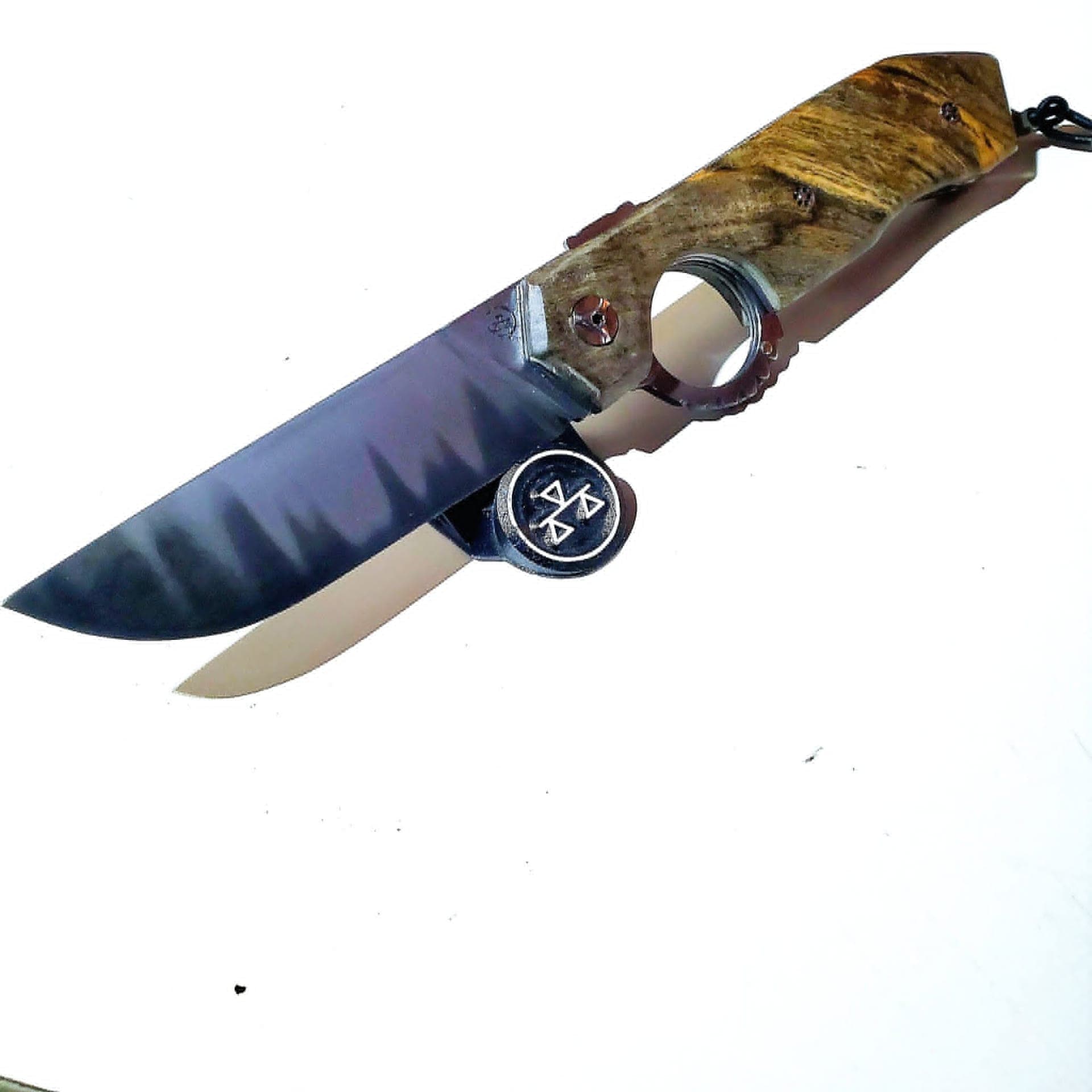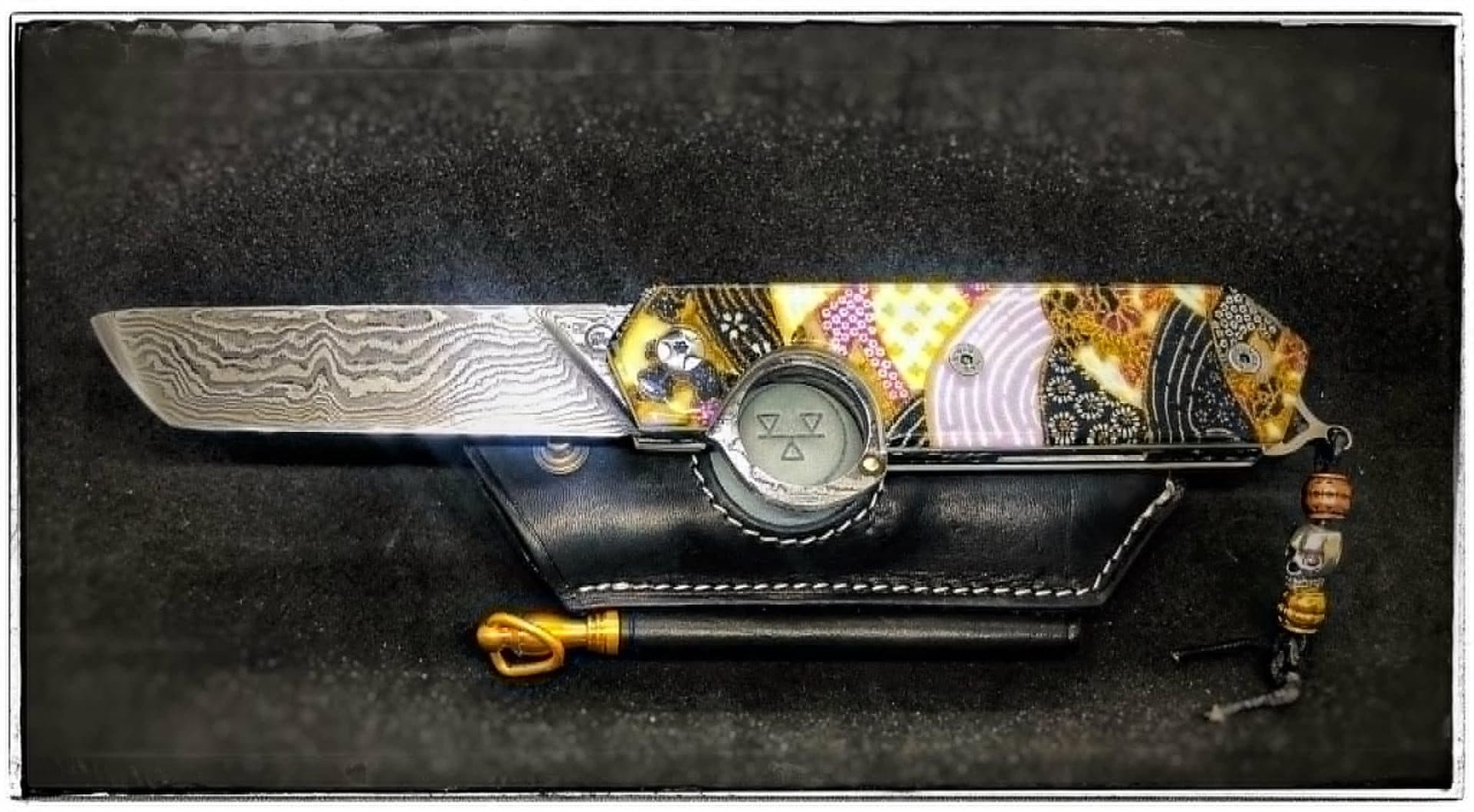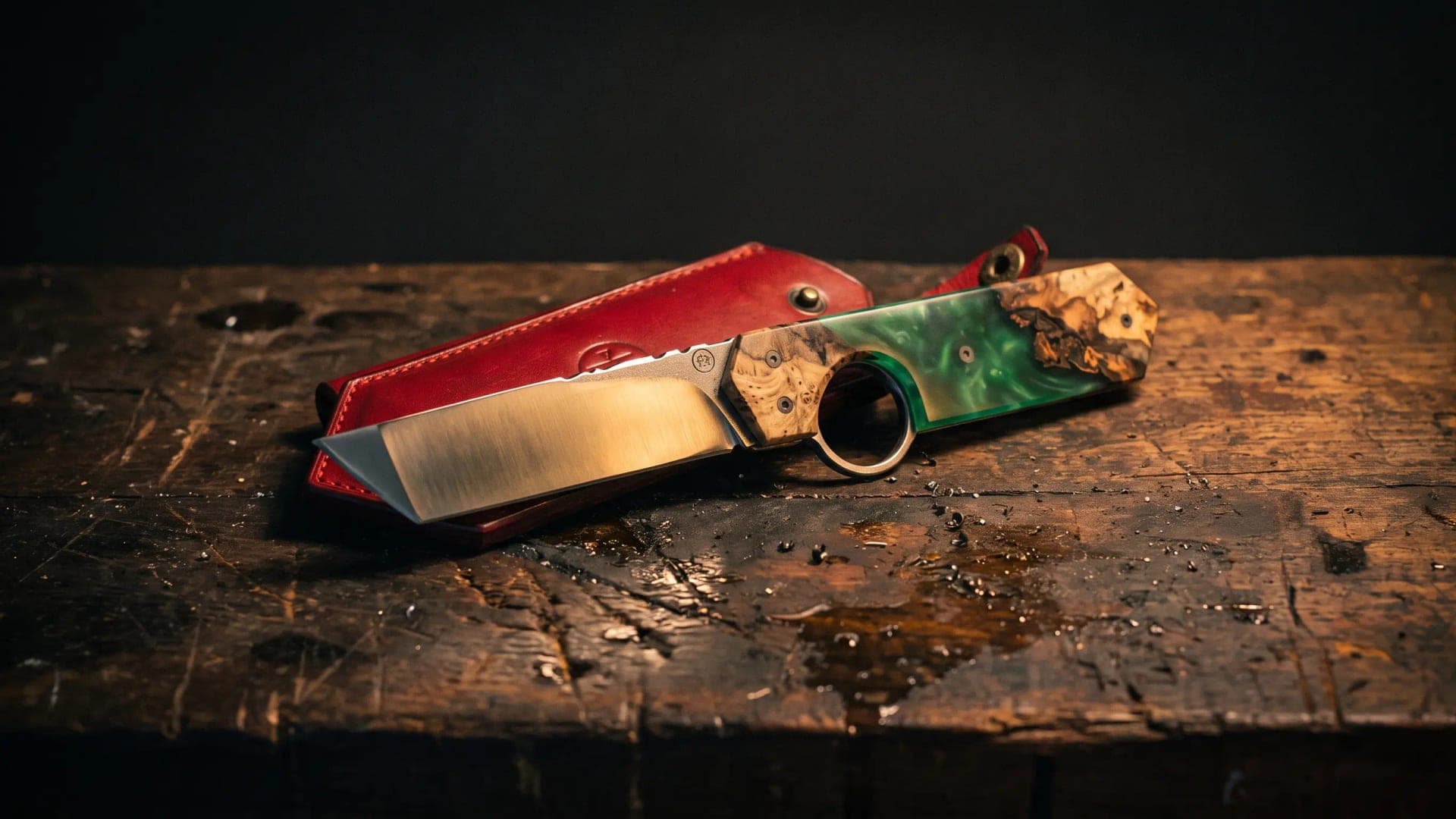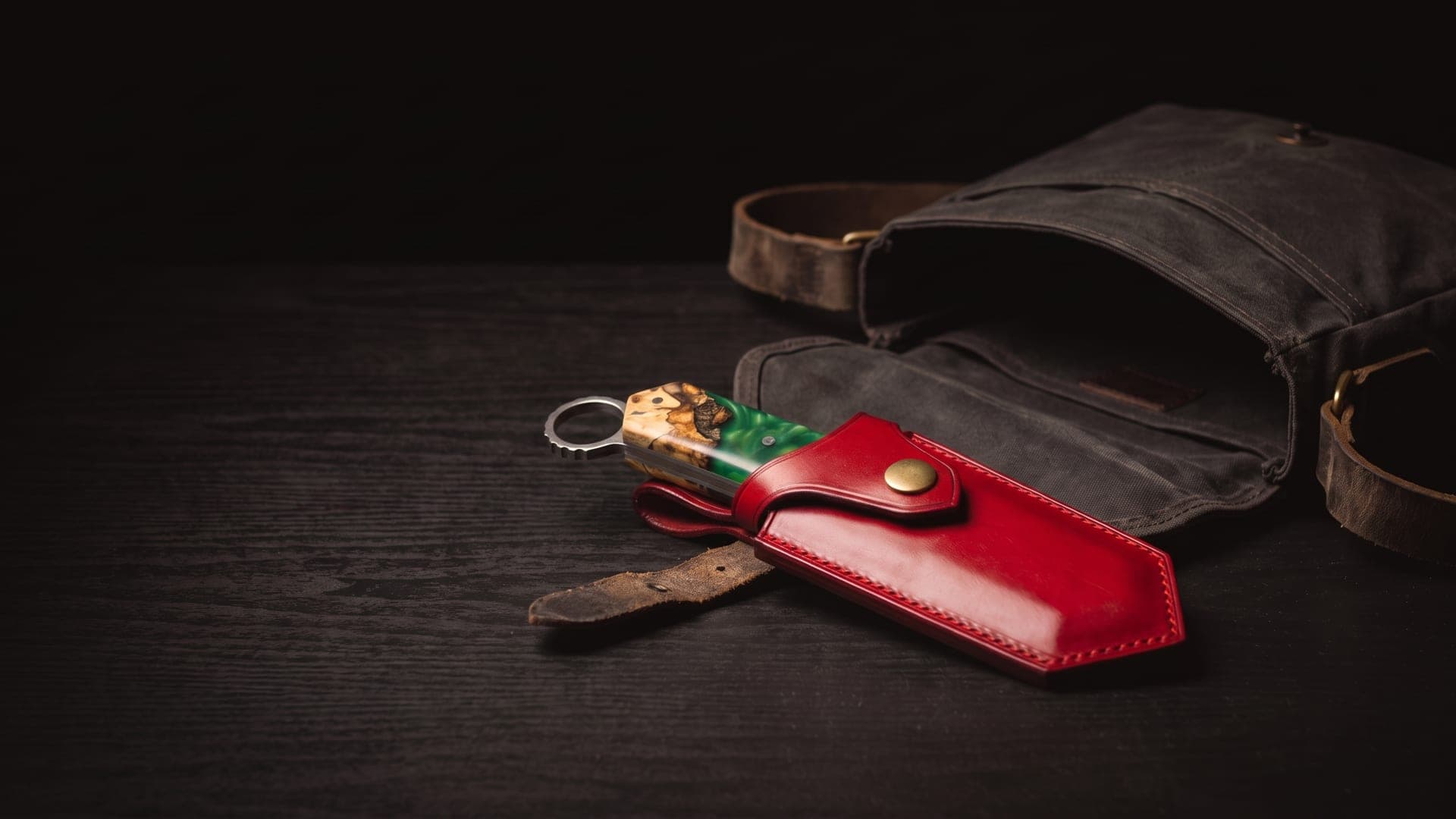
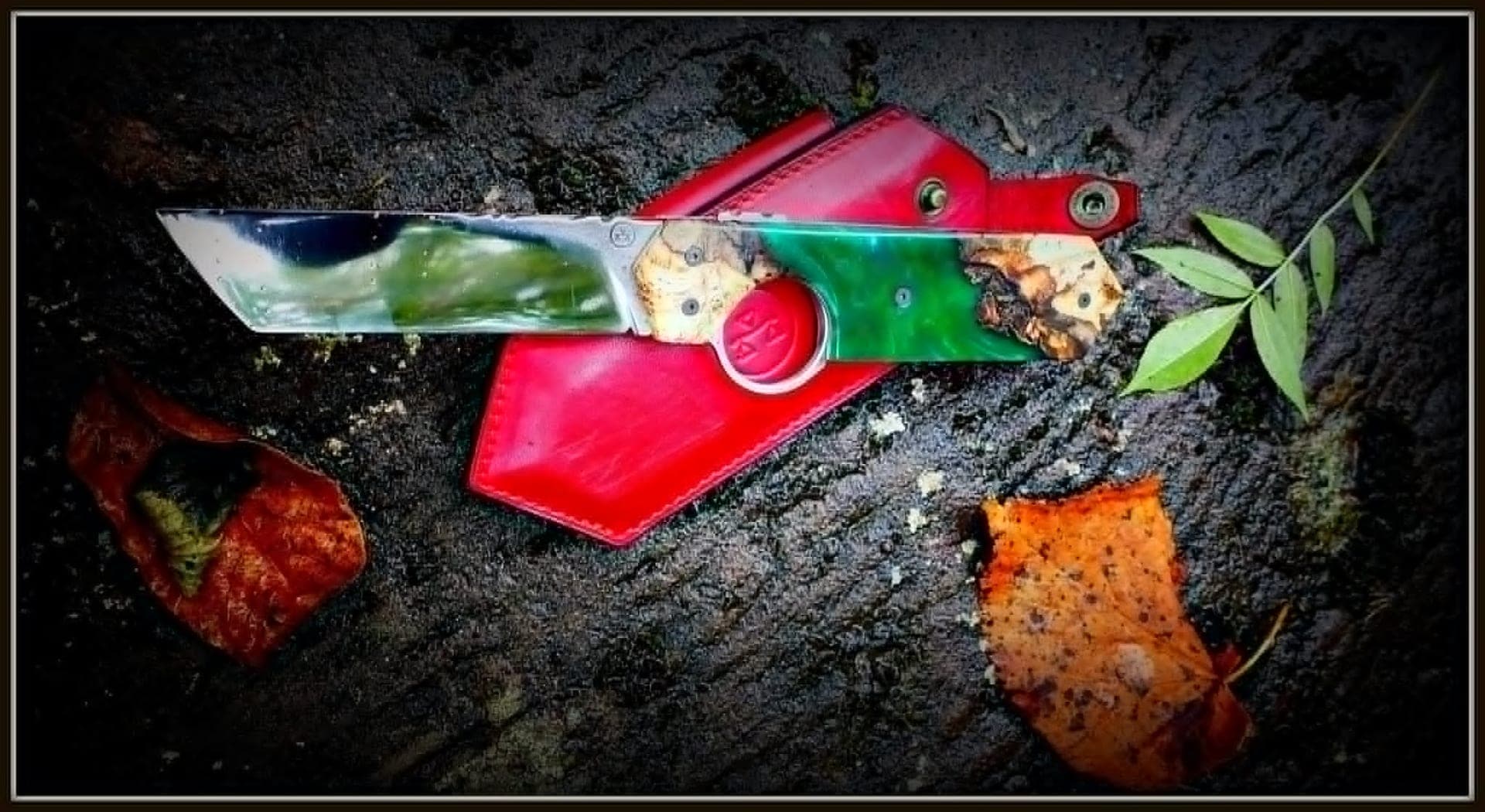
Before ordering a knife, many buyers ask the same question, and the Résiliant workshop in Thiers still hears it regularly: can you carry it on you once you are away from home? The answer comes in two parts. In France, a knife is a bladed weapon classified in category D: buying and owning one is free for an adult, but carrying or transporting it outside the home requires a legitimate reason.
Plenty of received ideas surround this rule: a blade shorter than the palm of your hand would always be allowed, a knife packed away in a bag would not count. The texts say otherwise, and they changed in 2025: a ministerial order and a decree clarified the classification of butterfly knives, automatic-opening knives and so-called "zombie" knives.
This article sets out the framework point by point: category D, legitimate reason, transport, penalties, the 2025 texts and travel. It is for information only and replaces neither the service-public.fr fact sheet, which is the reference, nor the advice of a legal professional.
Owning is free, carrying is not
In France, a knife is a bladed weapon classified in category D. Buying and owning one are free for an adult. Carrying and transporting it outside the home are banned without a legitimate reason. Neither the official fact sheet nor the ministerial answer makes the rule depend on blade length: what counts is the reason.
Category D covers very different objects. In its answer to a written question tabled in the French National Assembly, the ministry recalls that the traditional pocket knife is treated as a category D bladed weapon, in the same way as axes, machetes or daggers.
The rules separate two situations. Buying a knife and keeping it at home is free for an adult. Carrying it on you outside the home, or transporting it, is banned without a legitimate reason. The law targets both, carrying and transporting, and not only the knife in your pocket.
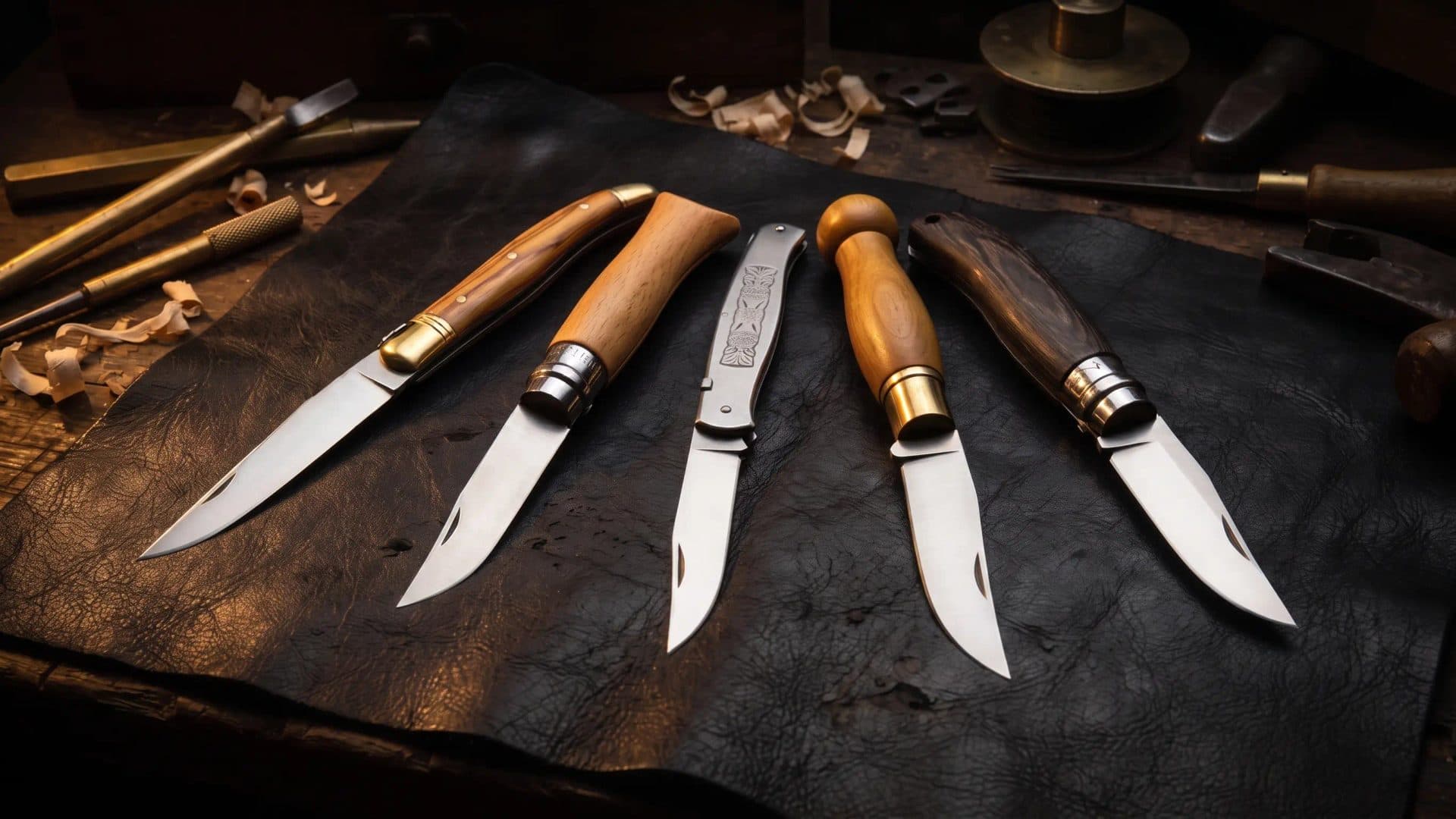
That leaves size. The idea that a blade shorter than the palm of your hand escapes the rule is widespread: it appears neither in the service-public.fr fact sheet nor in the ministerial answer. The great families of folding knives are presented in the guide to French pocket knives.
The legitimate reason, assessed case by case
A legitimate reason is assessed case by case, by law enforcement and, if there is a dispute, by a judge. Three elements weigh in: the place, the circumstances and the context. One reason is excluded: saying that a knife would be used to face an assault or a danger does not amount to a legitimate reason.
A legitimate reason is not something you can declare for yourself: it is assessed by others. First by law enforcement officers during a check, then by a judge if the matter goes further. The same blade may therefore be seen differently depending on where it is and on the circumstances of the moment.
The official fact sheet cites situations that may amount to a legitimate reason: professional use, an outdoor activity such as fishing or camping, or transporting a knife you have just bought. These are examples, not free passes. Each one remains subject to the same examination of place, circumstances and context.
One reason, on the other hand, is ruled out by the official fact sheet: self-defence. Explaining that you keep a knife to face an assault or a danger is not enough to make it a legitimate reason.
- Place: the official fact sheet cites a public demonstration and a public place.
- Circumstances: the moment and the situation in which the knife is found on the person.
- Context: the situation as a whole, as assessed by law enforcement or by a judge.
Packing a knife away does not remove the need for a reason
Putting a knife away does not change the rule. Transporting it outside the home is subject to the same condition as carrying it: a legitimate reason. A knife slipped into a bag, left in a car's glove box or stored in its sheath is therefore still covered, and the reason is assessed in the same way.
Carrying and transporting are two separate words, but they obey a single condition. The official fact sheet subjects both to the same legitimate reason requirement: a knife out of reach, at the bottom of a bag or a suitcase, does not escape the rule for all that.
The car is no exception. A knife left in the glove box, the door pocket or the boot is being transported, even if nobody touches it during the journey. The reason is assessed according to place, circumstances and context, just as it is anywhere else.
That leaves the sheath. It protects the blade and the hand, and it keeps a knife from travelling bare at the bottom of a bag. It does not create a reason, though: a knife in its sheath is still a knife being carried or transported. At the Résiliant workshop, the sheath, hand-stitched in Thiers from vegetable-tanned leather, is an option chosen at the quote stage; the sheaths are shown on the accessories page.
Up to one year in prison and a €15,000 fine
Carrying or transporting a category D weapon, which includes a knife, without a legitimate reason exposes you to penalties of up to one year's imprisonment and a €15,000 fine. These are maximums, imposed by a judge if the case reaches court; the reason itself is still assessed case by case, according to place and circumstances.
These figures are ceilings. They set what the law allows a judge to impose, not what is imposed every time. They do, however, say one thing clearly: carrying a knife without a legitimate reason is not a mere formality, it is an offence punishable by imprisonment.
Self-defence comes back here from another angle. Since it is not a legitimate reason, invoking it during a check does not justify the presence of the knife: it is precisely the reason the official fact sheet rules out.
What changed in 2025: butterfly, automatic and zombie knives
The ministerial order of 4 July 2025 places butterfly knives and automatic-opening lock knives among category D weapons. The decree of 5 September 2025 moves so-called "zombie" knives into category A1 (acquisition and possession banned) and requires businesses selling bladed weapons, including online, to display the ban on sales to minors.
The first text is a ministerial order of 4 July 2025, which sets the list of other weapons classified in category D. Two kinds of knife are named in it. The butterfly knife, or balisong, whose handle is made of two pivoting grips that cover the blade when it is closed. And the lock knife with automatic opening.
The second is decree no. 2025-894 of 5 September 2025, which amends the regulations on bladed weapons. It moves so-called "zombie" knives into category A1, the category of weapons whose acquisition and possession are banned.
The same decree requires businesses selling bladed weapons, including those that sell online, to display the ban on sales to minors. This obligation is a reminder that the freedom to buy a knife applies to adults.
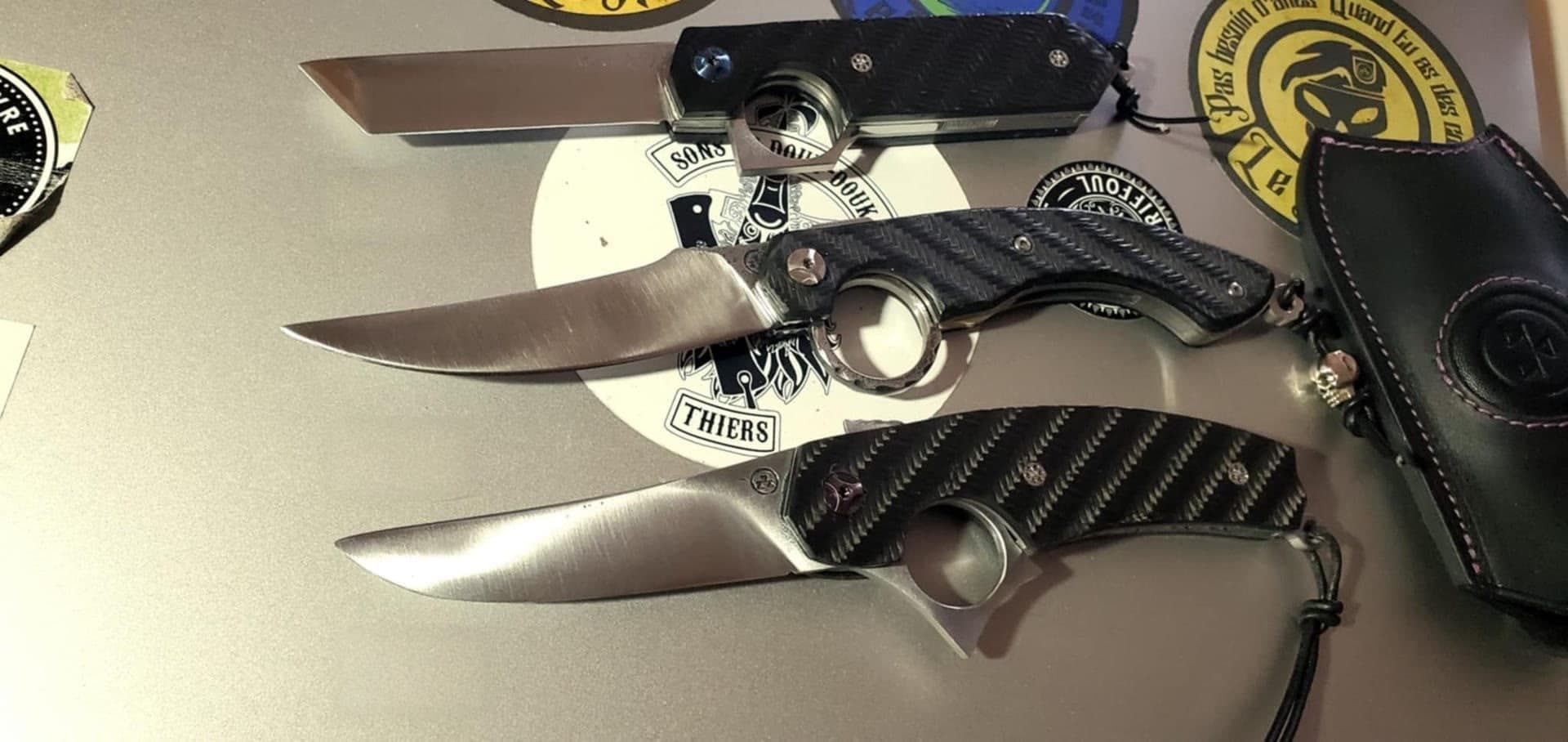
Résiliant knives rest on a different mechanical principle. On all eight of the workshop's models, the blade rises from the top of the handle, driven by the ring through which the index finger passes; no spring pushes it, and opening remains entirely manual. Locking is by a reversed liner lock, with the liner working at the top of the handle. The full gesture is detailed in the article on the reverse-opening knife.
In Thiers, knives designed as tools
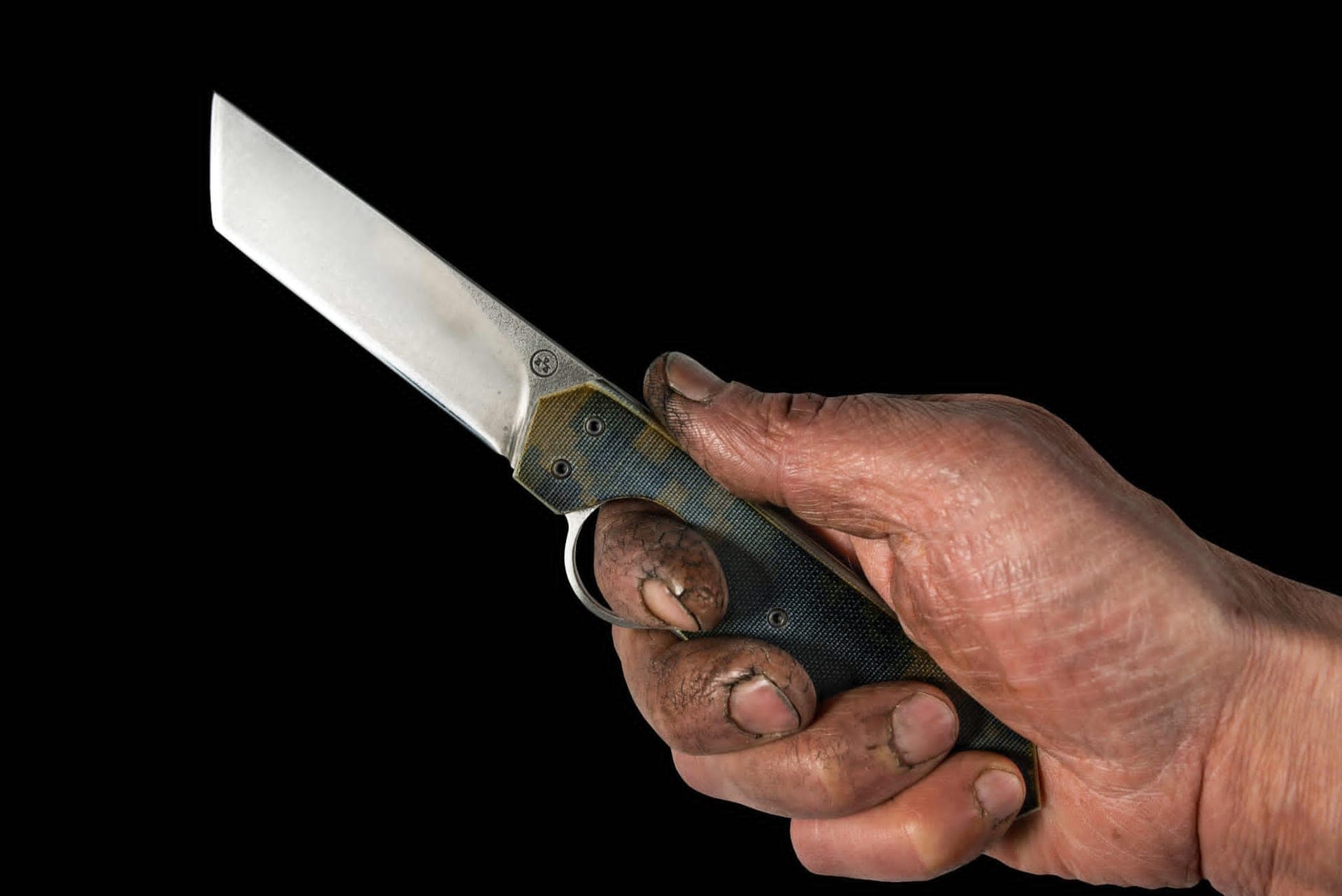
In Thiers, the Résiliant workshop shapes eight reverse-opening models, sold to a quote. Only one, the Mini Tanto, is truly a pocket knife; Le Résiliant Tanto, the first model, was designed as a work tool worn on the belt. Use gives a knife its meaning; the law sets the conditions for carrying it.
Le Résiliant Tanto, the workshop's first model, was designed as a work tool, worn on the belt on building sites, on roofs or in the workshop. That says what it is for, not what the law makes of it: carrying it, like carrying any knife, remains subject to a legitimate reason assessed case by case.
Only the Mini Tanto, a reduced-size Tanto, is truly a pocket knife. The other models are worn in a sheath on the belt or kept in a display cabinet. Le Résiliant 2.0, in 90MCV8 carbon steel, is intended for the casse-croûte, the French snack break. In every case, the same rule applies as soon as the knife leaves the house.
The workshop ships its knives within France and abroad: its first orders came from Belgium, Switzerland and the United States. Outside France, the French rule no longer applies: a knife obeys the rules of the country where it will be carried, and those rules vary from one country to another. By air, on departure from the European Union, EU aviation security rules ban sharp objects such as knives from the cabin: a knife travels in the hold.
Every Résiliant is ordered on a quote: the model, the steel or damascus and the handle material are chosen with the cutler, and the leather sheath is added as an option.
- Can you walk around with an Opinel in your pocket?
- An Opinel is a knife, and therefore a category D bladed weapon. Owning one is free; carrying it outside the home requires a legitimate reason, assessed case by case according to place, circumstances and context. What counts is the reason, not the brand or the length of the blade.
- What fine do you face for carrying a knife without a reason?
- Carrying or transporting a category D weapon, which includes knives, without a legitimate reason is punishable by up to one year's imprisonment and a €15,000 fine. These are maximums: the penalty is set by the judge, who assesses the situation case by case.
- Can you keep a knife in your car?
- A knife in a car, even stored in the glove box or the boot, is being transported outside the home. Transport is subject to the same condition as carrying: a legitimate reason, assessed case by case. Putting the knife away does not replace the reason.
- Is there an authorised blade length in France?
- Neither the service-public.fr fact sheet nor the ministerial answer published by the National Assembly makes the rule depend on blade length: what counts is the reason. The idea that a blade is tolerated as long as it is no longer than the palm of your hand is widespread, but it does not appear in either.
- Can you take a knife on a plane?
- On departure from the European Union, EU aviation security rules ban sharp objects such as knives from the cabin. A knife therefore travels in the hold, in checked baggage. On arrival, carrying it is governed by the rules of the destination country, which differ from one country to another.
- Is carrying a knife for self-defence a legitimate reason?
- No. The service-public.fr fact sheet rules it out: saying that a weapon would be used to face an assault or a danger is not enough to amount to a legitimate reason. Carrying a knife for that purpose alone therefore exposes you to the penalties for carrying a category D weapon without a reason.
Sources
- service-public.fr, fiche F33658, « Peut-on porter une arme pour se défendre (couteau, bombe lacrymogène…) ? » — Établit le classement du couteau en catégorie D, l'interdiction du port et du transport hors du domicile sans motif légitime, l'appréciation de ce motif au cas par cas par les forces de l'ordre ou le juge, l'exclusion de la défense personnelle et les peines encourues.
- Légifrance, arrêté du 4 juillet 2025 fixant la liste des autres armes classées au a de la catégorie D — Établit l'inscription nommée des couteaux papillon (balisong) et des couteaux à cran d'arrêt à ouverture automatique parmi les armes de catégorie D.
- Légifrance, décret n° 2025-894 du 5 septembre 2025 modifiant la réglementation des armes blanches — Établit le classement des couteaux dits « zombie » en catégorie A1, dont l'acquisition et la détention sont interdites, et l'obligation pour les commerces d'armes blanches, y compris en ligne, d'afficher l'interdiction de vente aux mineurs.
- Assemblée nationale, question écrite n° 3073, « Règlementation applicable au port du couteau traditionnel de poche » — Établit que le couteau de poche traditionnel est assimilé à une arme blanche de catégorie D, au même titre que les haches, les machettes ou les poignards, et que son port et son transport supposent un motif légitime.
- EUR-Lex, synthèse « Sûreté de l'aviation civile : règles communes de l'UE » — Établit que la réglementation européenne de sûreté aérienne interdit les objets tranchants, dont les couteaux, en cabine au départ des aéroports de l'Union européenne.