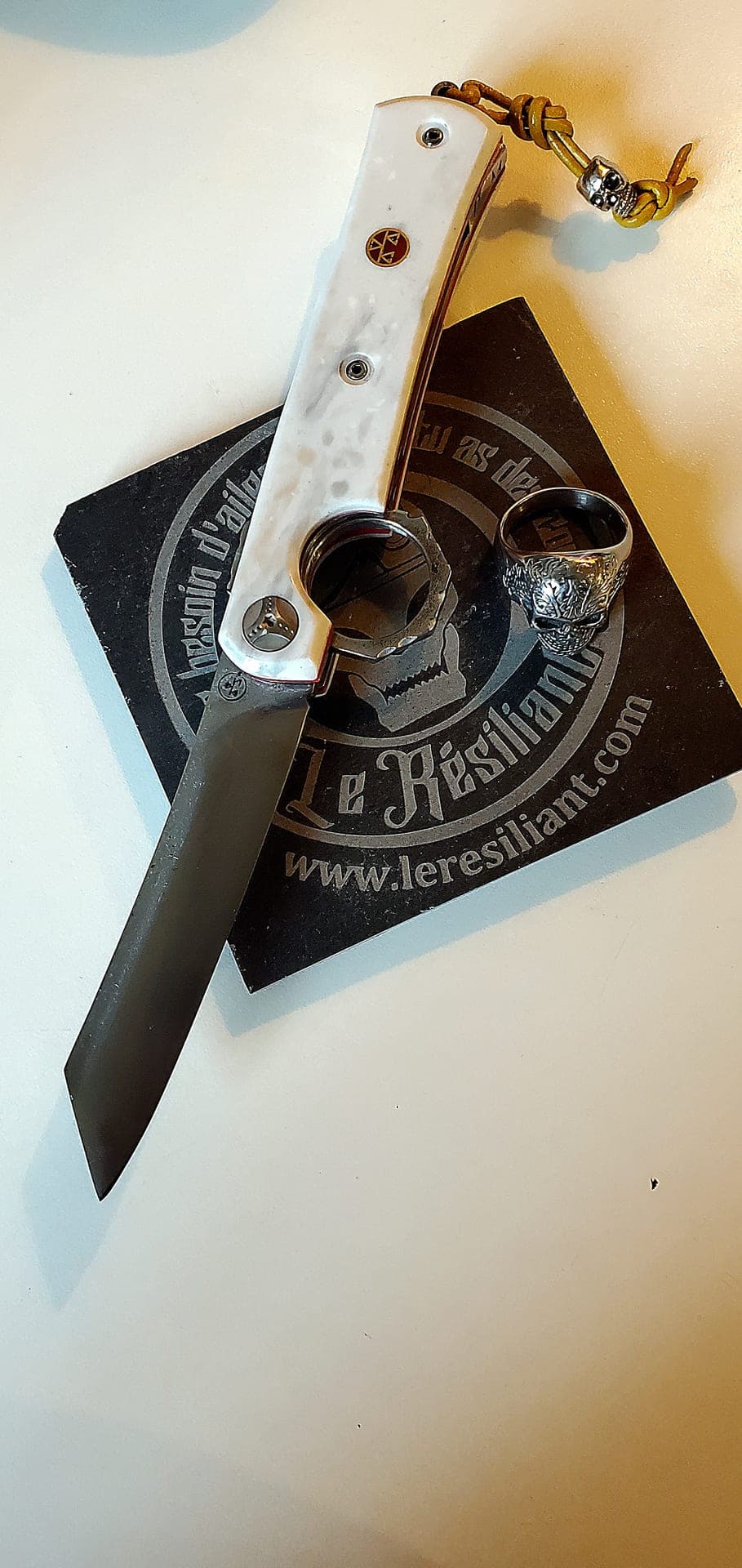
An orange spot on the blade, found one morning, on a knife that seemed well looked after. The reflex is immediate: rub hard, right away, with whatever is at hand. That reflex is often what damages a blade more than the spot itself.
Rust and patina are two words people mix up constantly, even though they describe almost opposite things. A carbon steel blade, like the one on the Résiliant 2.0, changes colour over time: sometimes it takes on a grey-blue haze that protects it, sometimes an orange spot that eats into it. In everyday conversation, both get called "rust".
This article tells the two oxidations apart, explains what makes a carbon steel blade rust, how to remove surface rust without damaging the edge, the bad ideas that cost a blade, what patina actually does, and the daily habits that prevent most of the rest.
Rust and patina: two oxidations that could not be more different
Patina is a stable, adherent layer of oxidation, grey-blue, that protects the steel underneath. Rust, on the other hand, is a porous, non-adherent oxide, orange, that flakes off, constantly exposing fresh metal, and therefore keeps feeding itself instead of stopping on its own.
Iron and steel both oxidise on contact with water and oxygen. Rust is a hydrated iron oxide that forms in porous, non-adherent layers: every flake that comes off exposes fresh metal, which oxidises in turn. The corrosion feeds itself instead of stopping on its own.
This is not unique to carbon steel. Some steels, known as weathering steels, Corten is the industrial example, are designed to deliberately develop a layer of oxidation that becomes, once stabilised, a protective barrier. The same principle applies to a knife blade: an adherent, stable oxidation protects the steel it covers, while a porous, unstable one eats into it.
By eye and by touch, telling them apart is simple: patina forms a grey-blue haze, smooth, firmly attached, that will not come off with a dry cloth; rust is orange, grainy, and comes off in small flakes. The confusion comes from a single word used for two colours that touch the same metal, sometimes on the same knife.
What makes a carbon steel blade rust
Carbon steel contains few alloying elements and no protective chromium; corrosion only needs water and oxygen, so four situations trigger it almost every time: a blade put away wet, prolonged contact with an acidic food, salt or sweat, and a long stay inside a closed sheath.
Carbon steel is defined by its carbon content, from 0.05 to 2.1%, and by how few alloying elements it carries alongside that. The Résiliant 2.0's 90MCV8 is one of them: it takes an edge easily, without relying on chromium to defend itself against corrosion.
A knife steel's resistance to corrosion depends first on the chromium actually in solution within the metal, and it always comes at the cost of some other quality of the blade. It is a trade-off, not a manufacturing flaw.
In practice, rust does not appear without a reason. Four situations come up almost every time:
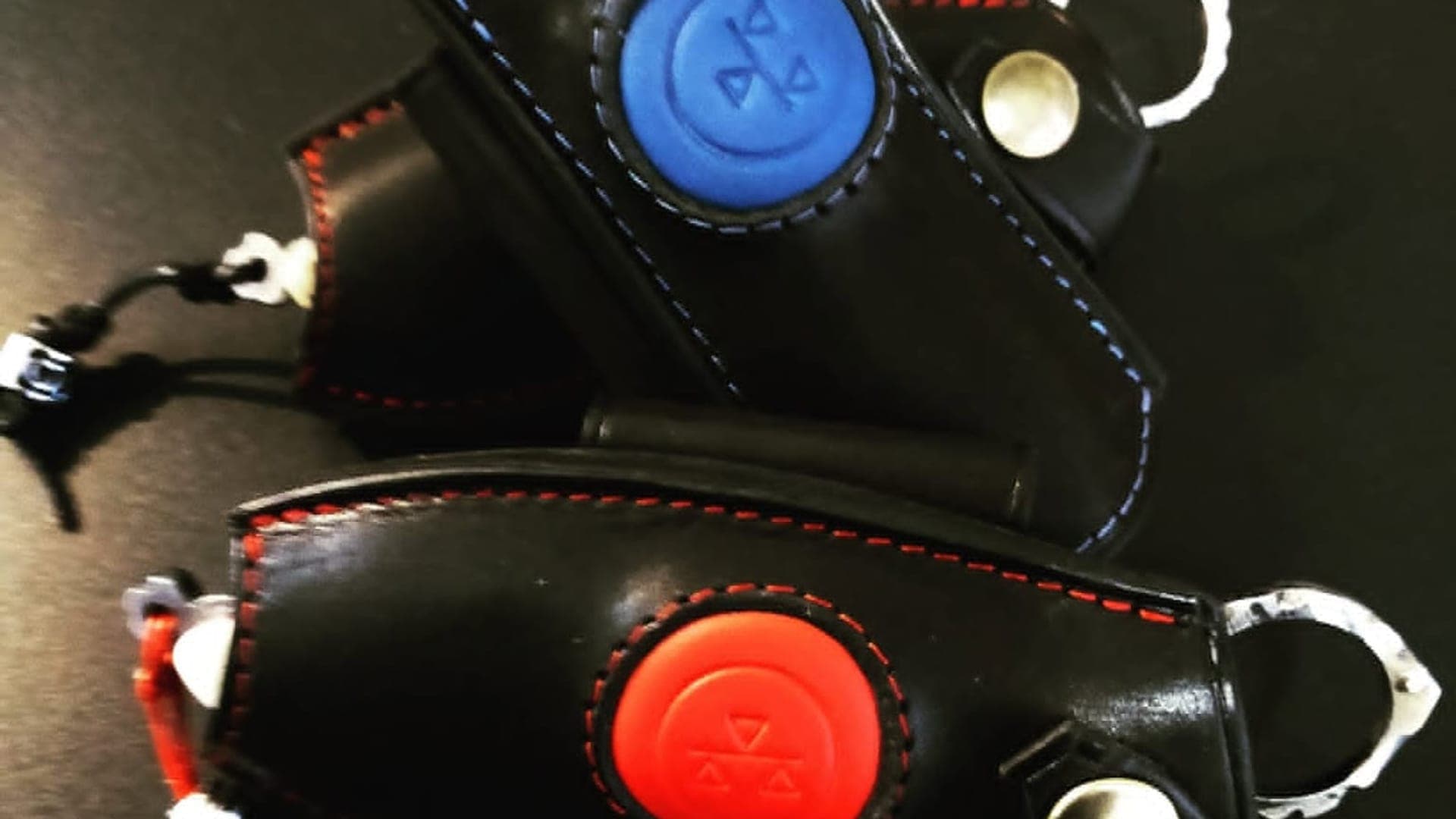
The most common case is also the simplest: a blade put away wet inside its sheath stays exposed to corrosion, whatever the steel. That holds even more for a carbon steel, which has no chromium to slow the process down.
- A blade put away wet inside its sheath.
- Prolonged contact with an acidic food, lemon, tomato, onion, without a quick rinse.
- Salt or sweat, which speed up oxidation as much as plain water.
- A long stay inside a closed sheath, sheltered from air but also from any drying.
Removing surface rust without damaging the edge
The rule is to start with the gentlest gesture and stop as soon as the spot is gone. Work flat, on the side of the blade, never on the edge, without ever heating the metal, then dry and oil it immediately afterwards.
Before anything else, one simple principle: start with the gentlest option, and stop as soon as the spot disappears. Surface rust, which has only coloured the steel without pitting it, almost always comes off with very little. Rust that has been there for a long time takes more persistence, never more force.
Work flat, on the side of the blade, lengthwise, never across it. The gesture only moves from gentle to abrasive if it has to: a dry cloth first, a lightly oiled cloth next, an increasingly fine abrasive only as a last resort, always applied flat.
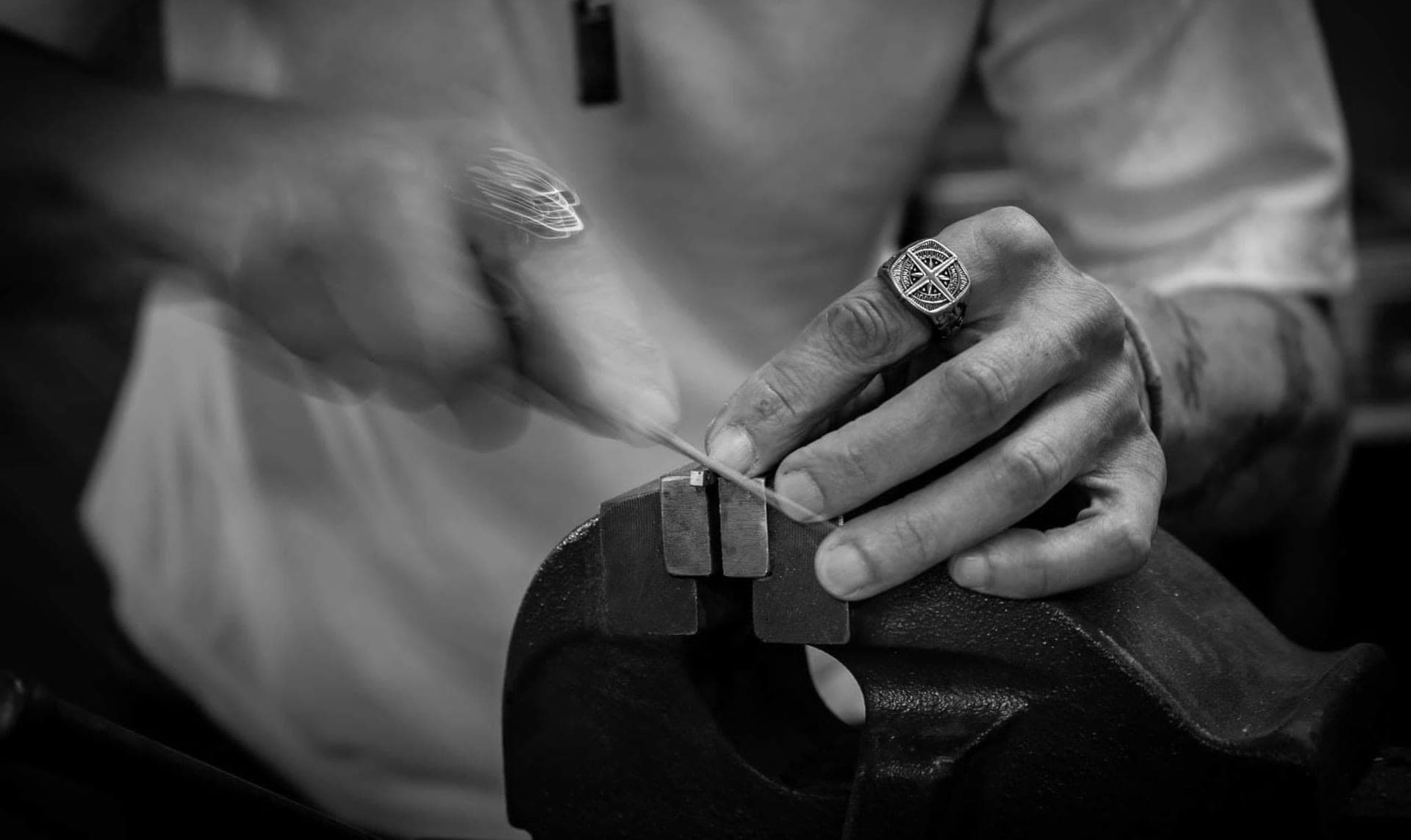
The edge itself is never touched this way: it is what makes the knife, and it does not get sanded at random during a clean-up. Any work on the edge belongs to sharpening, with a stone, as described in the article on the cutler's sharpening method.
The second thing never to do is heat the blade. A grinder or a belt sander quickly go past the steel's tempering temperature: the edge turns blue, the temper is lost locally, and that section no longer holds an edge.
The bad ideas that cost a blade
Four common habits do more damage than the rust itself: a grinder or belt sander, which destroy the temper of the edge; coarse abrasives, which gouge the steel; long acid baths, which pit the surface; and the dishwasher, which combines heat, detergents and impacts.
A grinder or belt sander often looks like a quick fix for rust. It is the costliest mistake: the heat they produce goes past the steel's tempering temperature, the edge turns blue, the temper is lost locally, and that section no longer holds an edge. A blade damaged this way cannot be fixed by cleaning it.
An abrasive that is too coarse removes metal rather than the spot: it gouges the steel and leaves deep scratches. The finer the abrasive, the less it attacks the metal, which is why the progression always runs from gentle to fine, never the other way round.
Acid baths, left to work for a long time to save effort, pit the surface instead of cleaning it. The result looks like rust in miniature: a multitude of tiny pits, spread across the whole soaked area, impossible to remove without taking off a lot of metal.
The dishwasher combines everything a carbon steel blade dreads: heat, harsh detergents and impacts against other dishes. The handle suffers just as much as the blade in that cycle. A blade pitted deep is no longer a matter for a cloth anyway: that question belongs to the cutler.
Patina, the oxidation that works for the blade
On a 90MCV8 blade, patina forms on its own with use, on contact with food and air; it darkens and shifts in tone over the years, and its stable layer slows corrosion down instead of feeding it. Every patina is unique, it is the trace of what the blade has cut.
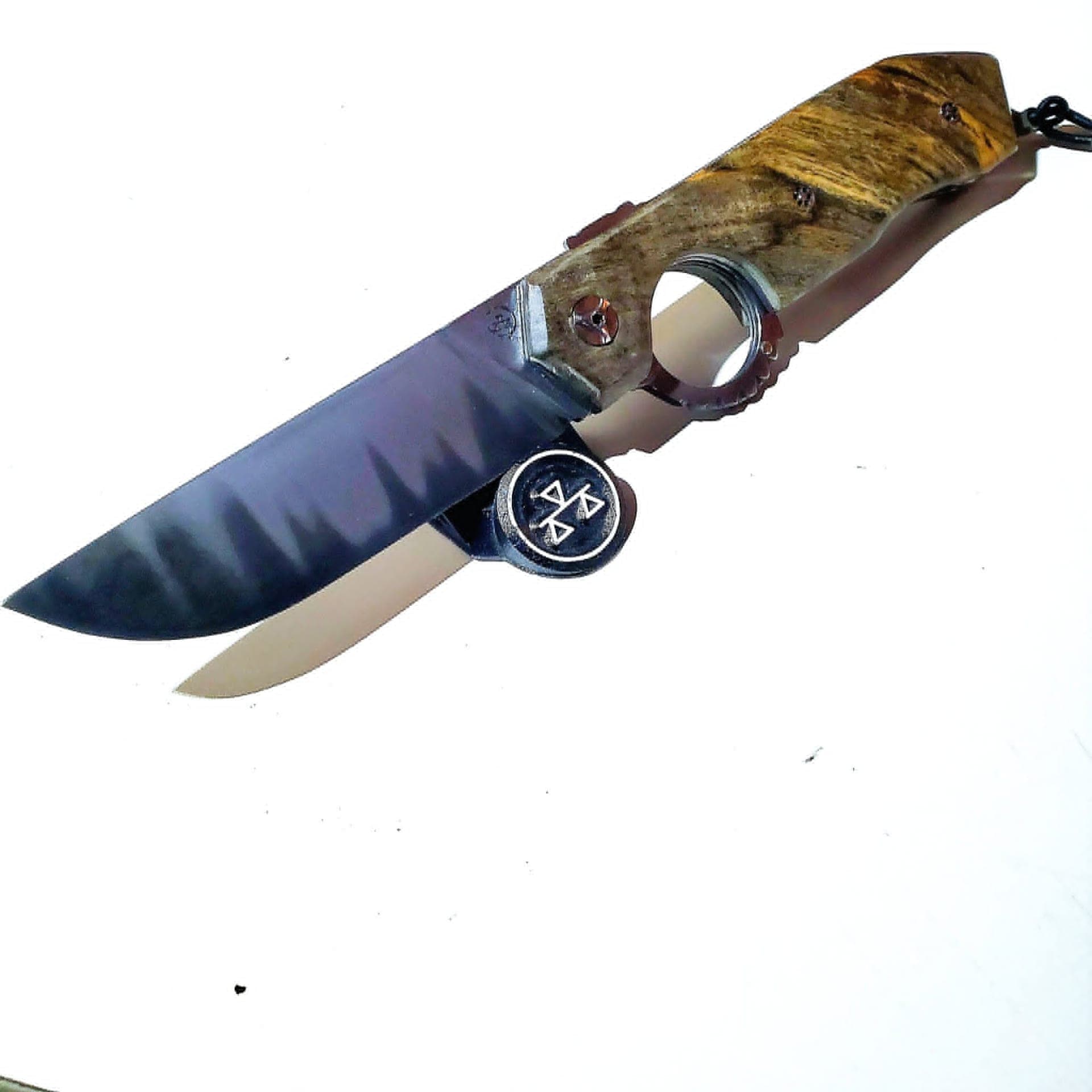
On the Résiliant 2.0, in 90MCV8, patina is not an accident but a normal evolution of carbon steel. It forms on contact with food and air, without anyone doing anything in particular, taking the shape of a grey-blue haze that gradually covers the flat of the blade.
That layer changes what you see and what you feel. By eye, the blade loses its new shine and darkens, in patches at first, then overall; by touch, it stays smooth, without the grain of rust. Two Résiliant 2.0 knives sold the same month no longer look alike a year later, each patina depends on what the blade has cut, how often it has been used, and how it has been wiped.
Patina protects, but it does not excuse any care at all. A patinated blade put away wet stays exposed to rust exactly like a new one.
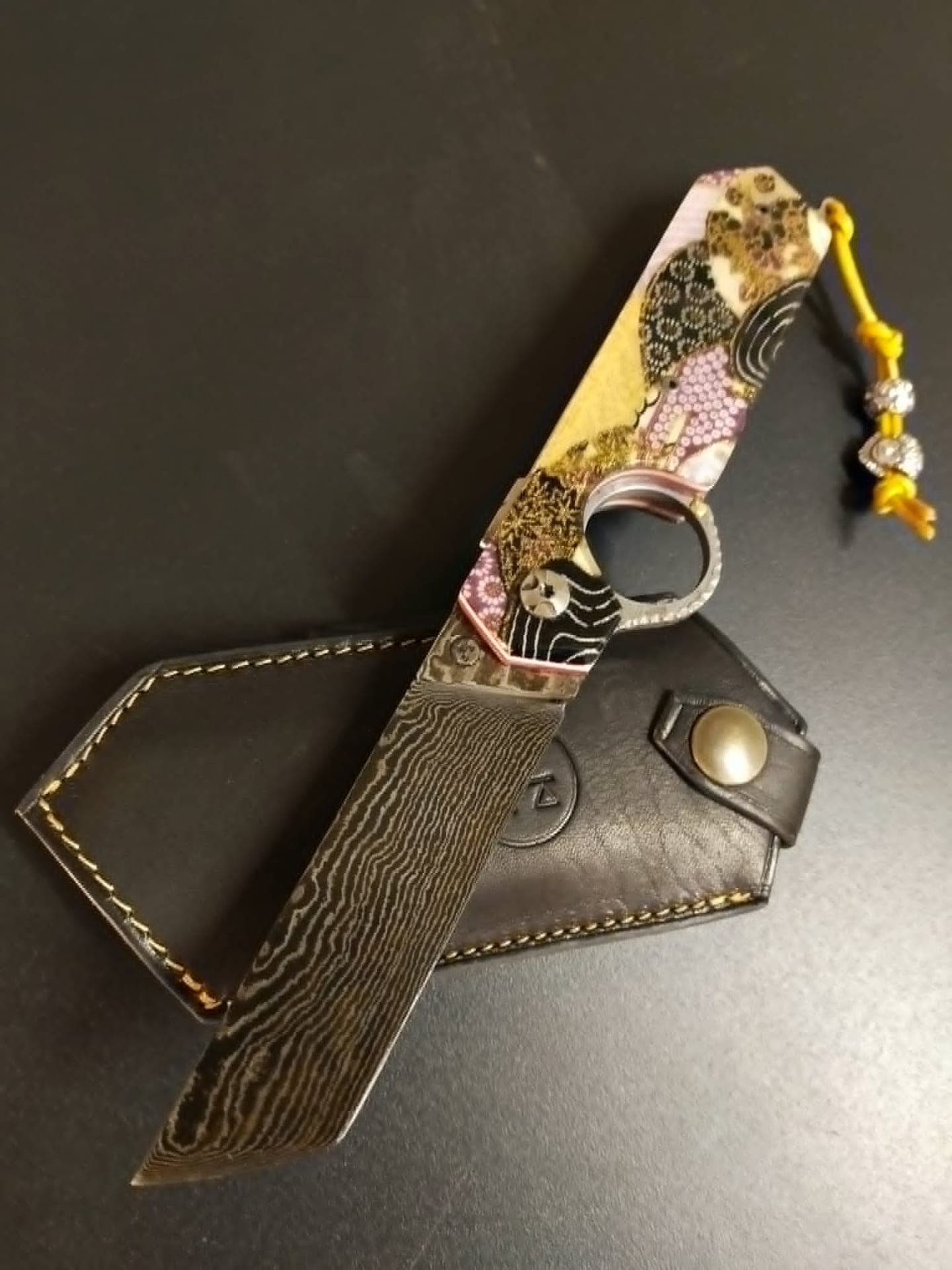
A carbon damascus blade behaves the same way with use and moisture; its care and its patterns are covered in a separate article.
The habits that make a carbon blade last, in Thiers and everywhere else
Wiping the blade after every use, keeping it dry, adding a drop of oil before storing it, never locking it up wet inside its sheath, and taking it out from time to time if it lives in a display case: these five habits take ten seconds and prevent almost all rust.
In Thiers as anywhere else, caring for a carbon steel blade comes down to a few repeated habits:
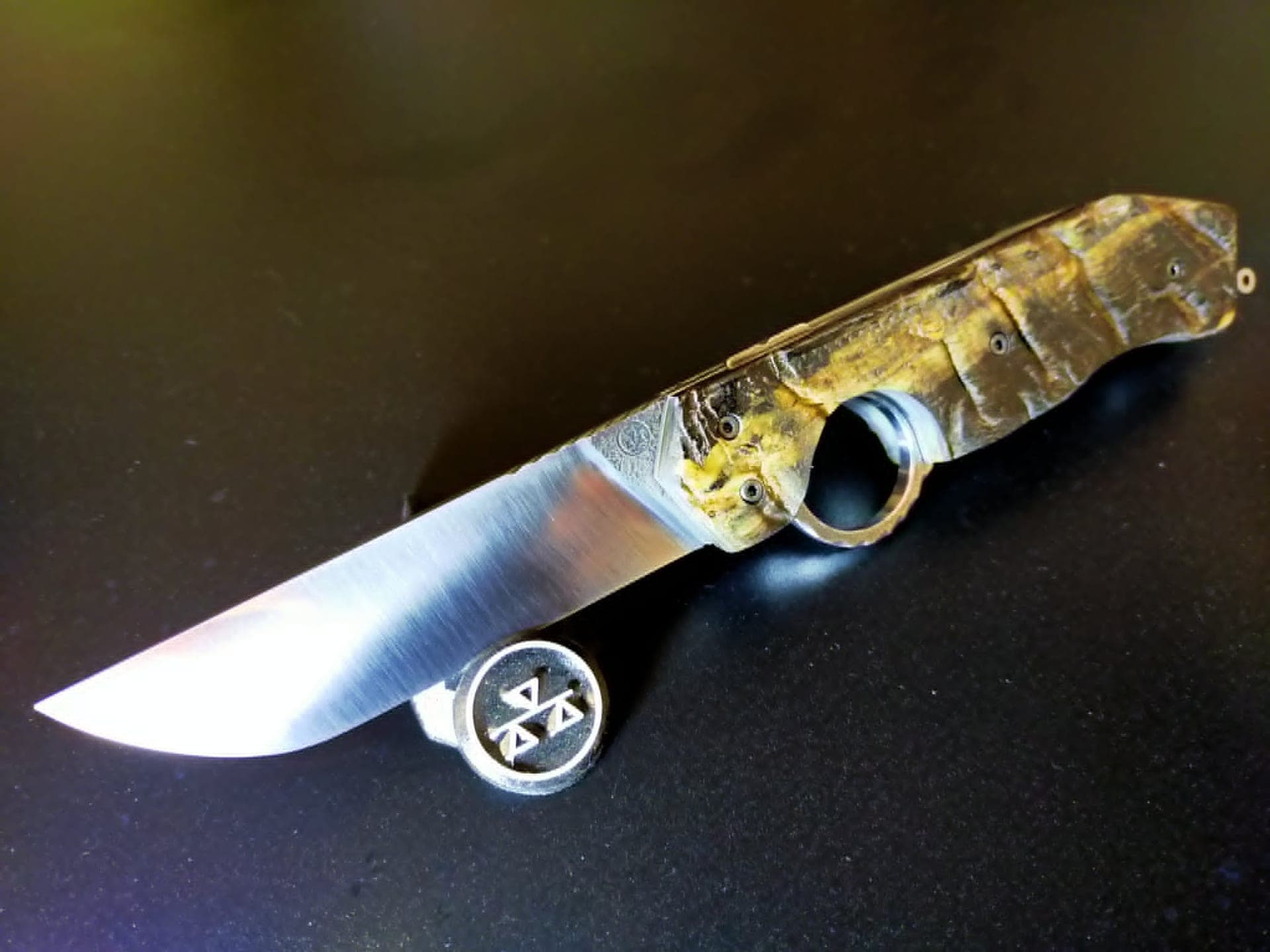
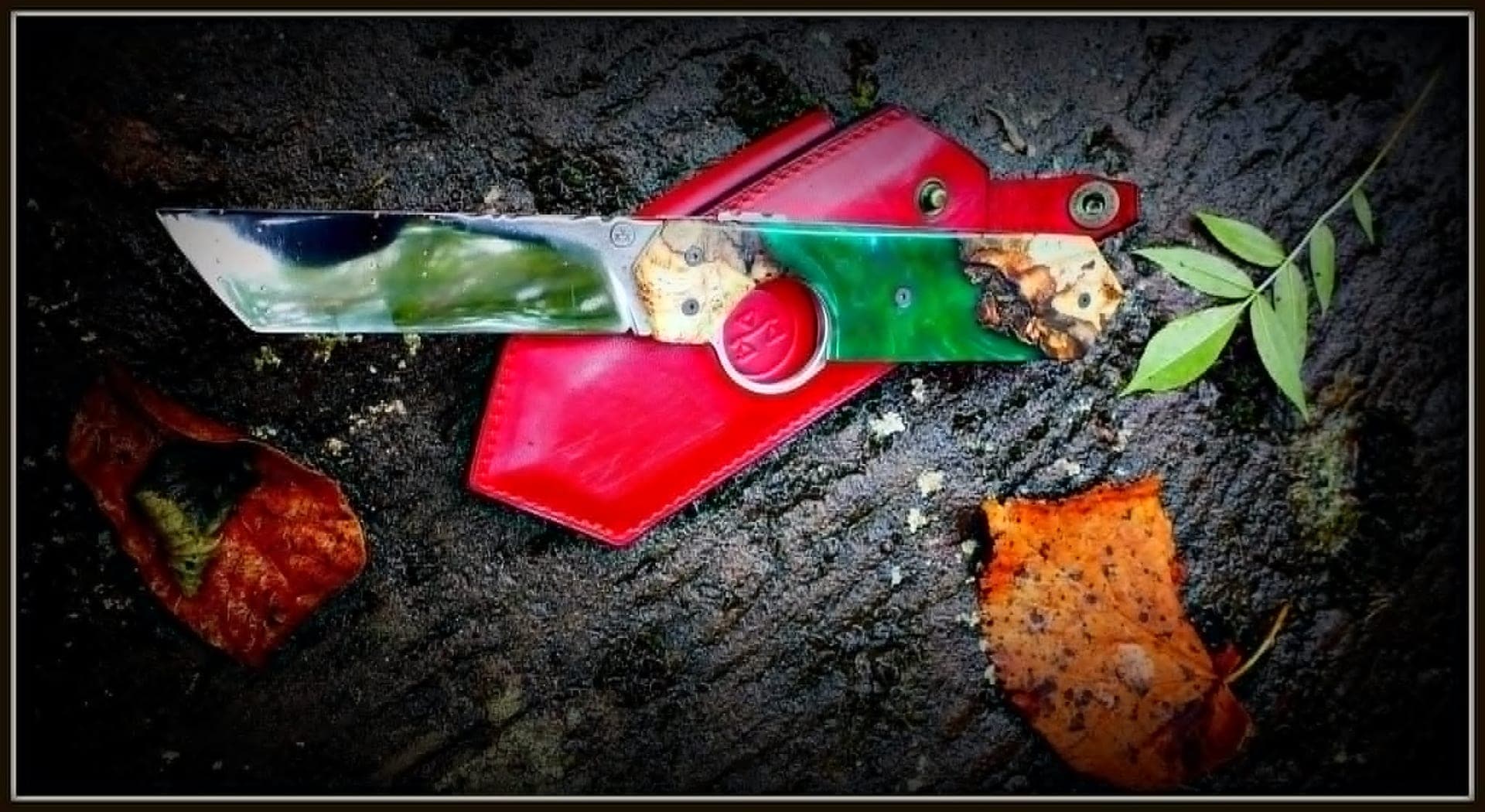
Résiliant knives are assembled, adjusted and fitted by hand in Thiers, and that same care carries into everyday use: a knife that took months to get right deserves those ten seconds with a cloth.
The edge itself is kept up with a butcher's steel with medium ridges, never a diamond one, which straightens the edge without removing metal. Under normal use, that is enough. The stone remains the fallback, for cases where the edge has truly suffered, as covered in the article on choosing a sharpening stone.
Any knife that has left the workshop can be sent back for its edge to be re-established, free of charge: only shipping remains down to its owner. Please get in touch before sending anything. When rust has bitten deeper than the surface, that question belongs to the cutler.
- Wiping the blade after every use, before even putting it away.
- Keeping it dry, including in the corners near the tang and the pivot.
- Adding a drop of oil across the flat of the blade before storing it.
- Never locking it up wet inside its sheath.
- Taking it out from time to time if it lives in a display case rather than being used.
- How do you remove rust from a knife?
- Follow graded principles: start with the gentlest option, a dry cloth then a lightly oiled one, an increasingly fine abrasive only as a last resort. Always flat, never on the edge, never with heat. Dry and oil the blade immediately afterwards, whatever step made the spot disappear.
- Does a rust spot ruin a blade for good?
- Not if it stays on the surface: a progressive clean, from gentle to fine, removes it without a trace. A deeper pit, though, leaves a mark even after cleaning. No timeframe and no promise can be given in advance.
- Should a carbon steel blade be oiled before storing it?
- Yes, lightly, once it has been wiped and dried. A drop is enough, wiped across the flat of the blade, no more than that. What matters is not the product but the principle: never store a carbon blade wet, and never count on oil to make up for a skipped drying.
- Can you speed up the patina on a carbon blade?
- Patina comes from use: it forms on contact with food and air, over time. Methods that claim to speed it up or force it fall outside what the workshop documents today. That question belongs to the cutler before trying anything on a blade.
- Can a folding knife go in the dishwasher?
- No. Heat, detergents and impacts against other dishes damage the blade and the handle, and water sitting inside the mechanism does not help either. Wash by hand, dry immediately, essential for a carbon steel with no chromium to defend itself.
Sources
- Rouille — Wikipédia — Établit ce qu'est la rouille : un oxyde de fer hydraté, poreux et non adhérent, dont le feuilletage expose sans cesse du métal neuf à l'oxydation, ce qui rend la corrosion auto-entretenue au lieu de s'arrêter d'elle-même.
- Acier auto-patinable — Wikipédia — Établit qu'une couche d'oxydation peut être protectrice quand elle est adhérente et stable : le principe métallurgique qui explique pourquoi une patine protège là où une rouille ronge.
- Acier au carbone — Wikipédia — Établit la composition d'un acier au carbone, de 0,05 à 2,1 % de carbone et peu d'éléments d'alliage, et sa sensibilité intrinsèque à la corrosion faute de chrome.
- Knife Steel Nerds — Analyses métallurgiques publiées par un docteur en science des matériaux : la résistance à la corrosion d'un acier à couteau dépend du chrome en solution et se paie toujours sur une autre qualité de la lame.