A Christmas order is entrusted to an artisan you can reach and go and see, who says what he does and what he has others do, and who writes the delivery time into his quote. The date itself is settled in writing, before you confirm the order.
Buying a knife that exists and ordering a knife that does not exist yet call for different checks. The first is judged in the hand, on the piece: you look at the blade, the assembly, the finish. The second is judged on the person you hand a sum, a choice and a wait to, someone you have not necessarily met.
First comes what worries people before an order, then the checks to make before writing to a workshop: where it is and how to reach it, what it says about how it makes its knives, what its quote must contain, how to hold a Christmas date, and what happens after delivery. Each point can be verified; none rests on an impression.
What worries people is not the knife, it is the unknown
Before an order, the worry heard at the workshop is neither the danger of the object, nor the law, nor the price: it is handing a sum and a wait to someone you do not know. At Christmas, there is also a date that cannot move.
Around a third of the workshop's orders are gifts. For choosing the piece itself, a selection by profile already exists; one question remains that no selection settles: who to place the order with, when you know neither the workshop nor the person working in it.
The question that comes back before a first order fits in a few words: am I going to be ripped off? It is not about the steel or the mechanism. It is about the person who will receive the request, set the amount and announce the delivery time, and what happens if something goes wrong.
An existing piece is judged on what you have in front of you. A piece still to be made exists only in an exchange of messages and in a quote: all you can judge is the artisan and the order. Both can be checked against concrete things, remotely or in person.
An artisan you can trust with an order can be found, reached and visited
Three checks come before you even write: a workshop at a real address you can go to, direct contact with the person who makes the knife, and past pieces visible outside any online shop. An artisan who ticks all three can be judged on the evidence.
The address first. The Résiliant workshop is at 15 rue Alexandre Dumas, in Thiers, and can be visited by appointment. It is listed in the Town of Thiers business directory. An address you can check changes the nature of the relationship: the order is no longer placed with a web page but with a place.
Contact next. The workshop's phone and email are public, and it is the cutler who answers: the person who receives the request is the one who will adjust and assemble the knife. A question asked before the quote, about a steel, a handle or a date, gets an answer from the maker.
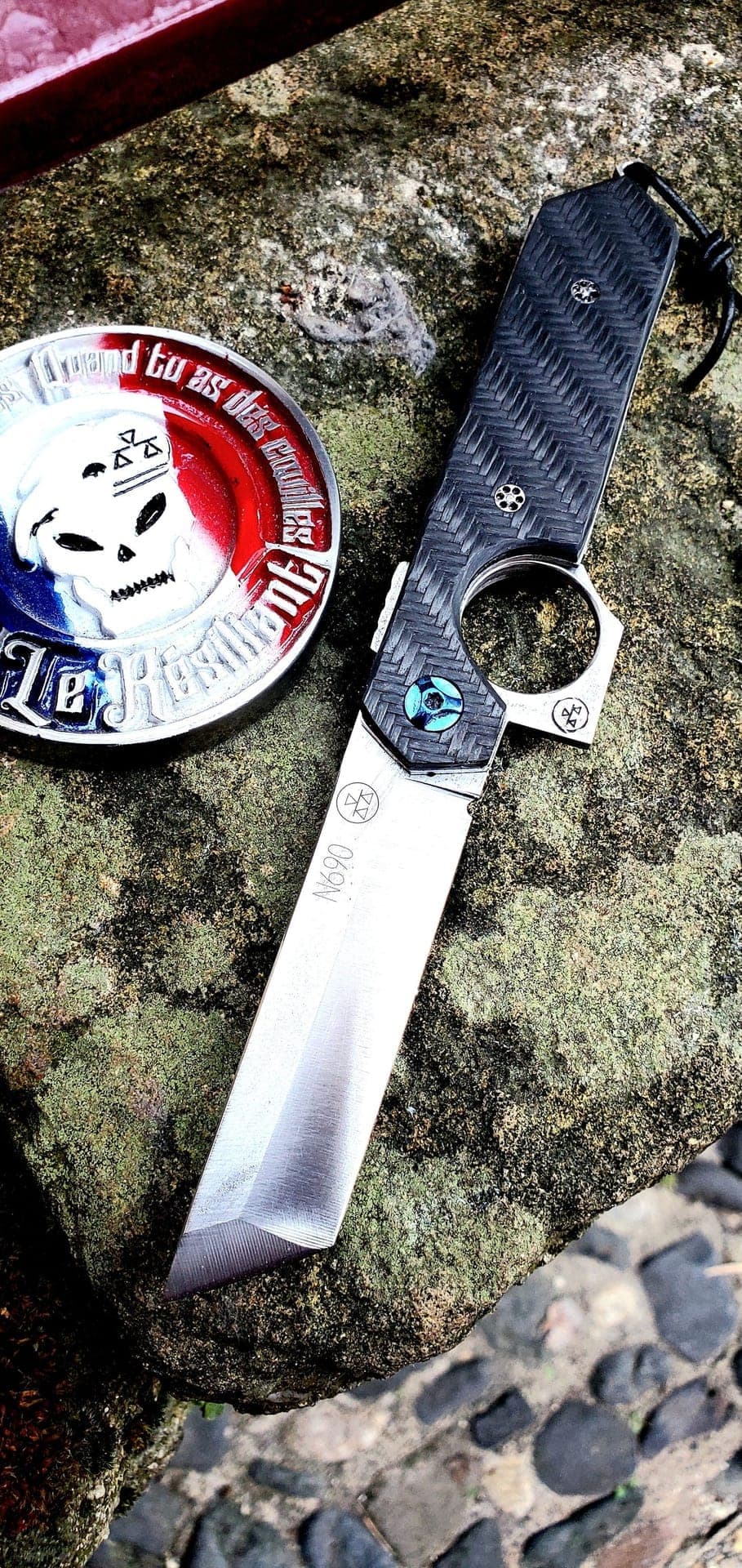
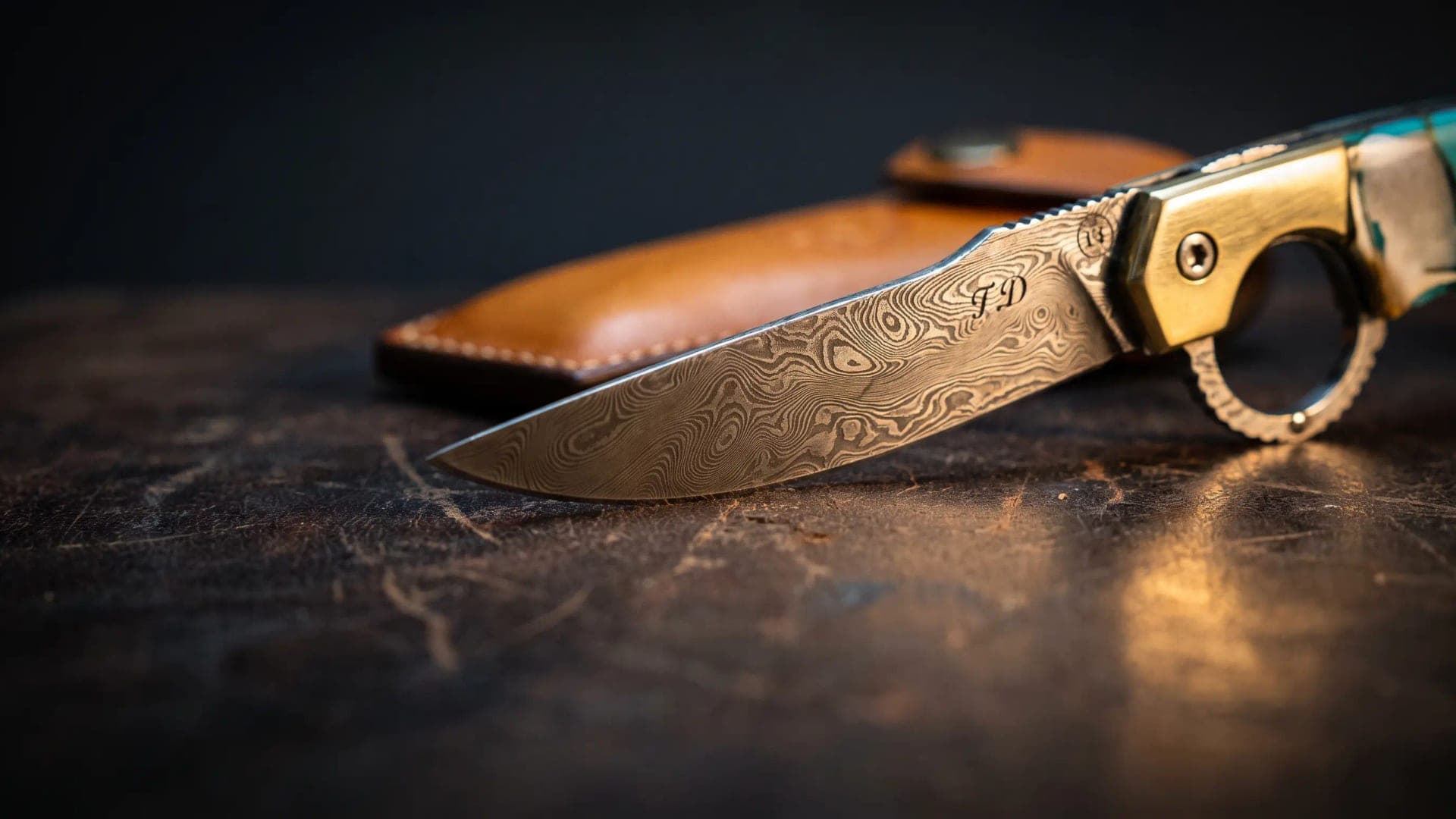
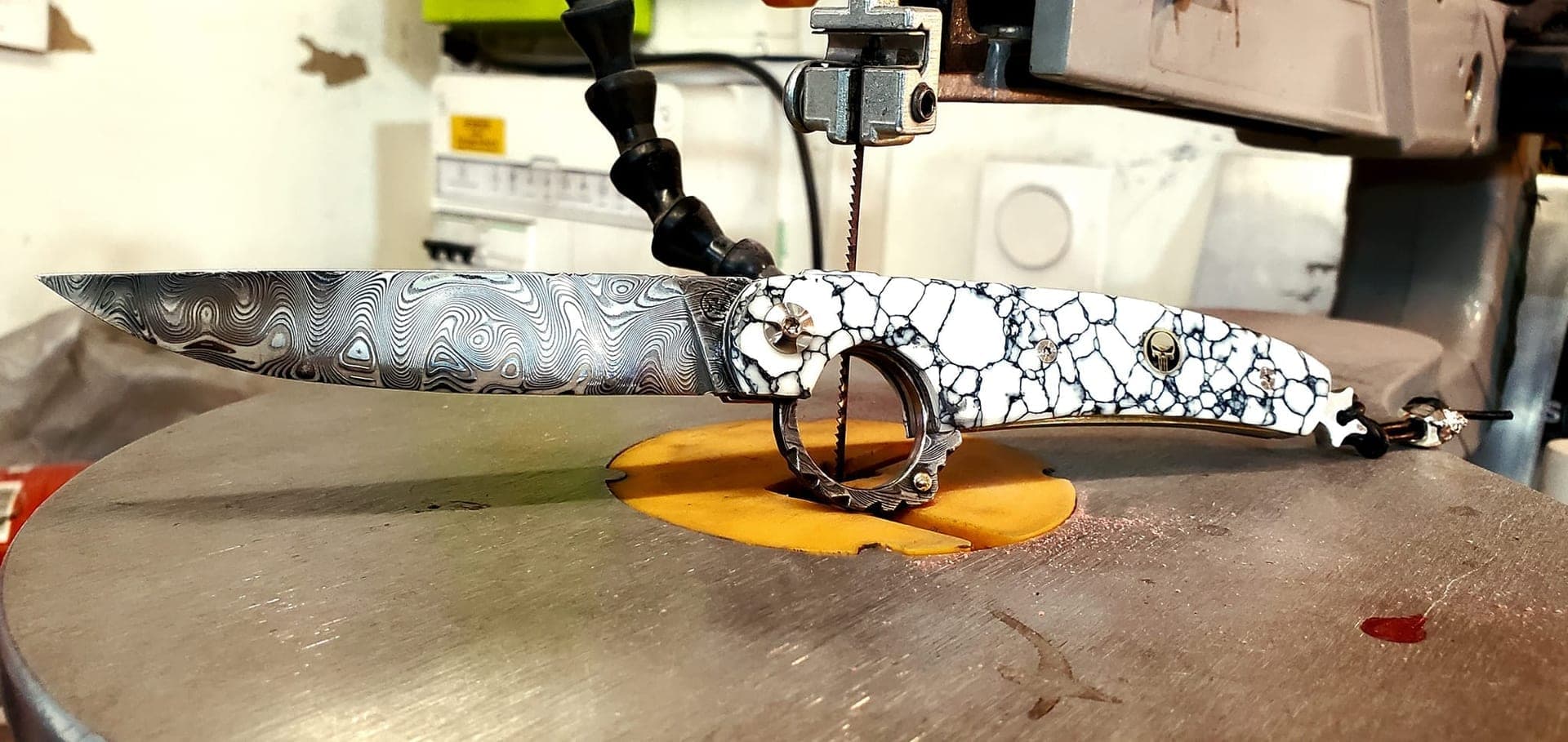
Past pieces, finally. The workshop's work is shown on Facebook, Instagram, TikTok and YouTube. Le Résiliant Tanto is the workshop's first model, and the first orders came from Belgium, Switzerland and the United States, through social media: trust at a distance exists, and rests on what can be seen.
A serious artisan says what he does, what he has others do and what he refuses
Transparency is tested with one simple question: who does what. A serious artisan answers it plainly. At the Résiliant workshop, D2 series blades are cut in a factory, and the Mini Tanto and the Tracker involve other stages handled outside: the workshop says so.
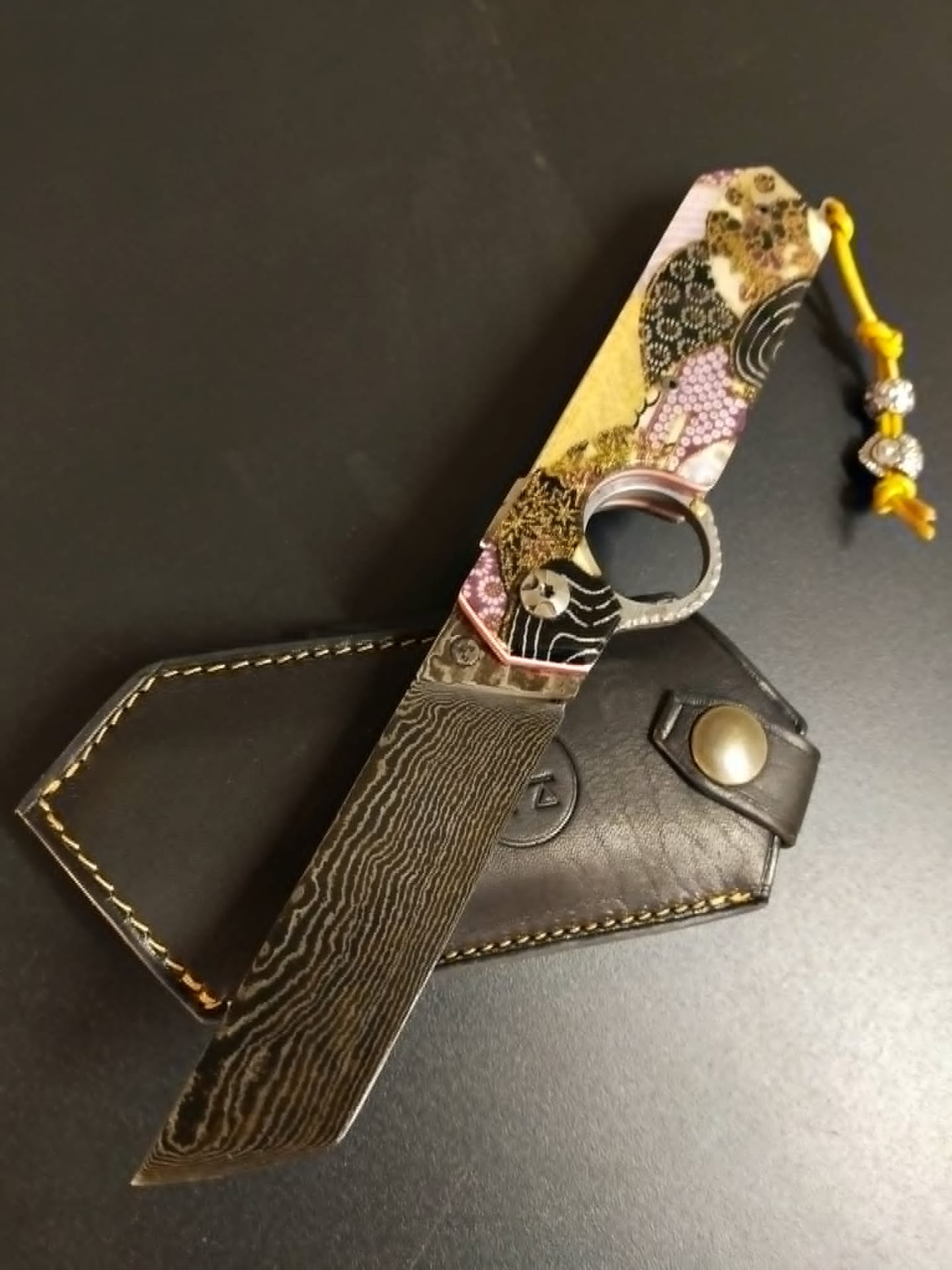
The workshop does not forge. Damascus is bought in plates, and each blade is cut from it by hand. The D2 series are cut in a factory, then hardened in the electric furnace, polished and assembled at the workshop. On the Mini Tanto and the Tracker, cutting, heat treatment, grinds and handles are entrusted to different establishments; polishing and assembly stay at the workshop. These stages are detailed in how a Résiliant is born.
Knowing how to say no is part of the same frankness. The template of each model is not negotiable. The cutler puts it this way: "I can give a client the knife's measurements, he cannot give me his own." The workshop also refuses ivory and any material from protected species.
Those refusals say as much as the answers. A workshop that says what it entrusts to others and what it will not do gives the buyer a way to compare promise and practice. To judge a piece that already exists, the questions to ask about provenance stay the same; for an order, they are put to the artisan before he starts.
The quote is the only document that binds, delivery time included
French consumer law is precise: before the order, the professional must state the essential characteristics of the knife, its price and, if it is not delivered on the spot, the delivery date or time. He must deliver by that date; with no date stated, at the latest thirty days after the contract is concluded.
Article L111-1 of the French Consumer Code requires the professional to communicate the essential characteristics of the goods, their price and, where performance is not immediate, the delivery date or time. Article L216-1 then requires delivery on the date or within the time stated; failing that, without undue delay and no later than thirty days after the contract is concluded.
At Le Résiliant there is no online shop and no stock: every piece starts from a request sent through the contact form, where the model can be preselected. The amount and the delivery time are given in the quote, piece by piece. That is the document to read before confirming, because it binds the workshop.
Everything is decided before that confirmation. A piece made to the buyer's specifications carries no right of withdrawal: Article L221-28 excludes it. The model, steel or damascus, handle material, the optional leather sheath and the optional engraving, entrusted to a neighbouring engraver, are therefore set in the quote, not afterwards.
At Christmas, the date is set in writing, before you confirm
The workshop publishes no order deadline for Christmas: the delivery time depends on the order book and is given in the quote. If the date is essential, it is stated expressly, and in writing, before confirming: French consumer law then allows the contract to be terminated without an additional period if it is missed.
There is no published deadline: the delivery time of a piece depends on the order book when the request arrives, and the workshop gives it in the quote rather than setting one date for everyone. The only date that counts is the one you write in your request, and the one the quote confirms.
The legal framework is set out by the DGCCRF, the French consumer authority. If delivery is late, the consumer can give the professional formal notice to deliver within a reasonable additional period; failing delivery within that period, the consumer can terminate the contract. Where the delivery date is an essential condition of the contract, because of the circumstances or because the consumer expressly asked for it before confirming, termination can be immediate. The professional then refunds the sums paid within 14 days.
This framework does not replace a conversation. A request that states the occasion and the date lets the workshop answer that precise point in the quote. The Mini Tanto, part of whose stages are semi-industrialised, leaves more flexibility than a model with a damascus blade cut by hand.
If time runs short, there is still a path already mentioned in the Journal: giving the choice rather than the object, and turning the gift into an order placed together.
What follows delivery also tells you who you entrusted the piece to
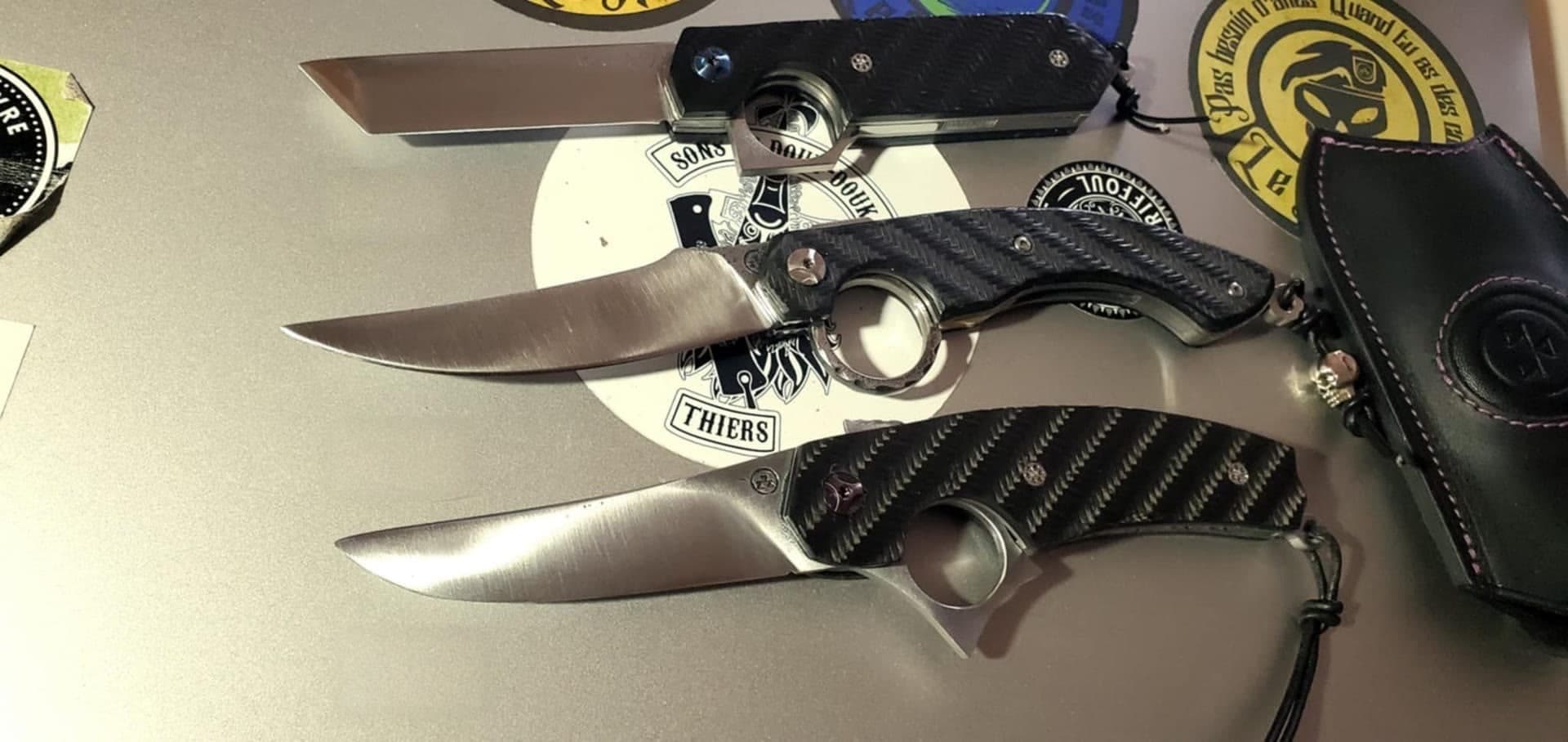
An artisan's knife has an address to return to: for Le Résiliant, it is in Thiers. Any knife that has left the workshop can be sent back for its edge to be re-established, free of charge: only shipping remains down to its owner. Please get in touch before sending anything.
The criterion is where the knife came from, not who owns it: someone who receives a Résiliant as a gift can send it back as if they had ordered it. For a gift, this is no detail: the relationship with the workshop passes to the person who keeps the knife.
Day to day, looking after the edge stays simple: a pass on a honing steel, with medium serrations, to straighten the edge. The stone only comes in when the edge has genuinely suffered, and when it is dead, it is better to entrust the blade to a cutler than to attempt it.
The sheath follows the same logic of proximity. It is stitched in Thiers by the leather maker VD Cuir, the workshop's partner for seven years, in vegetable-tanned leather; it is an option, chosen in the quote.
This is the last criterion, and it sums up the others: an order is entrusted to someone you can find again. An address, a phone number, a written quote and a workshop that re-establishes the edge of its knives say the same thing, at Christmas as at any other time.
- How can you tell whether an artisan cutler is reliable?
- A reliable artisan has a workshop at an address you can visit, answers the phone or email himself and shows his past pieces. He says clearly what he does on site and what he entrusts to others, and he writes the delivery time into his quote.
- Is there still time to order a handmade knife for Christmas?
- The Résiliant workshop publishes no deadline: the delivery time depends on the order book and is given in the quote. The date you want is stated from the first request. The Mini Tanto, part of whose stages are semi-industrialised, leaves more flexibility than a model with a damascus blade cut by hand.
- What should the quote for a bespoke knife state?
- Under Article L111-1 of the French Consumer Code, the professional must communicate before the order the essential characteristics of the goods, their price and, if they are not delivered immediately, the delivery date or time. For a bespoke knife, the quote also sets out the chosen options: steel, handle, sheath, engraving.
- What can you do if the knife you ordered does not arrive on the agreed date?
- According to the DGCCRF, the consumer can give the professional formal notice to deliver within a reasonable additional period, then, failing that, terminate the contract. Termination can be immediate if the date was an essential condition, because of the circumstances or at the consumer's express request. The refund is due within 14 days.
- Can you cancel the order of a personalised knife?
- Not through withdrawal: Article L221-28 of the French Consumer Code excludes that right for goods made to the consumer's specifications. Hence the value of settling everything in the quote. Termination for late delivery remains possible within the framework set by the Code, as explained by the DGCCRF.
Sources
- Article L216-1 du code de la consommation · Légifrance — Établit l'obligation du professionnel de délivrer le bien à la date ou dans le délai indiqué au consommateur et, à défaut d'indication, sans retard injustifié et au plus tard trente jours après la conclusion du contrat.
- Livraison : quelles sont les obligations du professionnel et les recours · DGCCRF — Établit les recours du consommateur en cas de retard de livraison : mise en demeure dans un délai supplémentaire raisonnable, résolution du contrat, résolution immédiate quand la date est une condition essentielle, remboursement sous 14 jours.
- Article L111-1 du code de la consommation · Légifrance — Établit l'information due au consommateur avant la conclusion du contrat : caractéristiques essentielles du bien, prix et, en l'absence d'exécution immédiate, date ou délai de livraison.
- Article L221-28 du code de la consommation · Légifrance — Établit l'exclusion du droit de rétractation pour un bien confectionné selon les spécifications du consommateur ou nettement personnalisé.
- Le Résiliant, coutellerie · Ville de Thiers — Fiche de l'atelier Le Résiliant dans l'annuaire des commerces de la Ville de Thiers : une source institutionnelle, extérieure à l'atelier, qui le référence.